-

How long is the growth cycle of the black Hypsizygus mushroom? A guide to the best-selling season and variety selection
The growth cycle of the black Hypsizygus mushroom is different from that of other mushroom varieties; its growth cycle has far fewer days than ordinary varieties. Inoculate from late September to mid-October, move into the room from late October to mid-November, harvest from early November to late November, and one
-
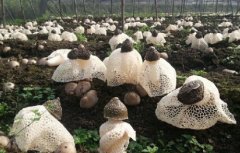
What Varieties of Bamboo Fungus Are There? Growth Environment and Premium Producing Areas Explained
There are many varieties of bamboo fungus, such as yellow-skirt, variegated, spiny-backed, long-skirt, short-skirt, red-skirt bamboo fungus, etc. Among them, the yellow-skirt bamboo fungus is toxic and cannot be eaten, otherwise food poisoning will occur. The biggest characteristic of the yellow-skirt bamboo fungus is that both the skirt and the stipe are yellow.
-
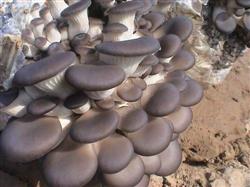
Complete Guide to Oyster Mushroom Varieties and Cultivation Techniques
What oyster mushroom varieties are there? What cultivation techniques are involved? Please provide an introduction. Oyster mushroom is also known as freeze mushroom, abalone mushroom, white shiitake, phoenix-tail mushroom, and delicious northern wind mushroom. It belongs to the class Basidiomycetes, order Agaricales, family Pleurotaceae, genus Pleurotus (mushroom). Oyster mushroom is tender and plump in texture, delicious in taste, and rich in nutrients. It is a health food with high protein and low fat....
-
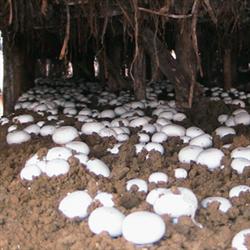
What Are the Types of Mushrooms? Introduction to Common Varieties
What types of mushrooms are there? Please introduce them. What is commonly called a mushroom is a type of fungus, namely the fruiting body of a basidiomycete. The fruiting body is the above-ground part that the basidiomycete sends up from the ground, looking much like an umbrella stuck into the soil. Below ground there is also a white, thread-like mycelium that spreads everywhere; this is the vegetative part of the basidiomycete,...
-
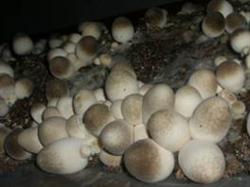
What exactly causes the death of young straw mushroom (Volvariella volvacea) fruiting bodies?
1. The primary condition for early cultivation of straw mushrooms is to have a mushroom house with a certain degree of heat preservation and moisture retention. At present, mushroom houses generally take three forms: those built with vegetable pipe sheds, those built with foam boards, and those converted from brick-and-tile structures. 2. For early cultivation of straw mushrooms, low-temperature strains should be selected: choose low-temperature strains and keep the mushroom house temperature at around 26°C...
-
Two rare mushroom varieties suitable for summer and autumn cultivation
1. EC55 long-root mushroom (Oudemansiella radicata). Its fruiting body is tall and upright, beautiful and attractive, shaped like an open sun umbrella, with a cap (pileus) 8-15 cm wide, light coffee-colored, and a stalk (stipe) 20-55 cm tall, 1-2 cm thick, white to light brown, with white flesh, fine and delicate texture, crisp and tasty stalk, and delicious flavor. It has high nutritional and medicinal value, rich in protein, amino acids, carbohydrates, vitamins and various mineral elements. Regular consumption can strengthen the body and boost human immunity, and for patients with high blood pressure
-
Introduction to the Saiwai Pleurotus cornucopiae No. 8 Variety and Its Main Characteristics
Saiwai Pleurotus cornucopiae No. 8: After 5 years of effort and joint research, the scientific and technical personnel of Luzheng Group Company have now bred a new variety of Pleurotus cornucopiae suitable for field cultivation in northern regions - Saiwai Pleurotus cornucopiae No. 8. This marks another new step forward for Luzheng Group in edible mushroom breeding. This variety is now available to the public, priced at 100 yuan per unit.
-
10 Premium Varieties of Summer Mushrooms and Techniques for Stable Yield and Quality
The vast majority of edible fungi varieties belong to the medium-to-low temperature type, with products concentrated on the market in autumn, winter and spring. The mushroom volume is excessively concentrated, goods are plentiful and prices are low, which affects profitability. However, every summer mushroom products are in short supply, the market is active and prices are high, and mushroom cultivation is highly profitable, but production management is relatively difficult; therefore, developing main summer mushroom varieties and production management has become a hot topic of concern for the broad community of mushroom farmers. Below is an introduction to 10 premium and rare varieties that are favored by the market and suitable for summer mushroom production in both northern and southern provinces, as well as how to promote stable yield and quality of summer mushrooms during the high-temperature season.
-
What are the main varieties of arrowhead? Introduction to common varieties
(1) Shagu is a local variety of Guangdong. The plant height is 70-80 cm, and the spread is 60-70 cm. The corm is oval, 5 cm high, and 4 cm in transverse diameter; both skin and flesh are yellowish white. Each one weighs 40-60 g. It contains a lot of starch, has only slight bitterness, and tastes good. It does not store or transport well. From planting to first harvest is 110-120 days. In February, corms are used for raising seedlings; in July-August they are planted; from December to February of the following year they are harvested. The yield per mu is 1000 kg. (2) Bairou Cigu has a plant height of 70-75 cm and a spread of 80 cm.
-
Introduction to the New Hericium erinaceus Variety Houza 19
Houza 19 (Suhou 19) was developed by the Institute of Vegetable Crops, Jiangsu Academy of Agricultural Sciences, and passed national certification in 2007. It is suitable for cultivation in the main Hericium erinaceus production areas of China. This variety produces solitary fruiting bodies that are medium in size, 10-25 cm in diameter, round and uniform, head-shaped or clump-shaped, firm, with short spines, milky white, stemless, and densely textured. They can be stored at 4°C for 10-20 days and have a tender, smooth texture with a delicate fragrance. The optimum temperature for mycelial growth is 22-26°C, and the optimum pH is 4-5. The mycelial growth phase lasts 30 days, followed by a maturation
条件筛选