-
What is jelly fig (Ficus pumila var. awkeotsang) and how is it grown, and what new variety seeds are available?
Where does jelly fig usually grow, and can it also be planted at low altitude? Let's take a look. What characteristics does it have? It seems jelly fig has been bred into new seeds, so let's find out about that too. Jelly fig is a plant unique to Taiwan, mainly divided
-
Taiwan-endemic plant jelly fig (Ficus pumila var. awkeotsang) pictures and characteristics, how to tell processed aiyu jelly apart?
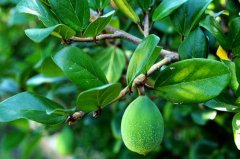
In the scorching summer, the jelly fig looks and is about the same size as the Taiwan native mango. Many people love a bowl of icy aiyu jelly to cool off and beat the heat. Natural aiyu jelly is rich in dietary fiber and enzymes, healthy and delicious; but did you know that 90% of what is sold on the market is processed aiyu jelly?
-

How much does a small-leaf Buddhist pine (Podocarpus macrophyllus var. maki) seedling cost, and why do the leaves of potted plants turn yellow and dry up
The small-leaf Buddhist pine is a common variety of Buddhist pine, mainly distributed in Guangxi, Guangdong, Hainan and other regions of China. Its wood is very fine-grained and strong, making it suitable for making utensils, furniture, farm tools and so on. In addition, the potted small-leaf Buddhist pine has strong ornamental value
-
What Is the Difference Between Haworthia cooperi and Haworthia cooperi var. truncata? Read On to Find Out
Haworthia cooperi is a succulent plant, and its fleshy leaves are as translucent as jade, crystal clear and round, like a work of art that can be placed on a balcony or desk; therefore, it is highly popular among succulent enthusiasts. Today I will introduce the differences between Haworthia cooperi and Haworthia cooperi var. truncata. 1. Different distribution. Grass Haworthia cooperi
-
What is the difference between Haworthia cooperi var. pilifera 'Crystal' and Haworthia cooperi 'Sakura Crystal'? Let us teach you how to tell them apart
Haworthia cooperi var. pilifera 'Crystal' and Haworthia cooperi 'Sakura Crystal' are both succulents. They look alike and have similar colors, so many people cannot tell them apart and think they are the same. In fact, they are different. Below we introduce the differences between Haworthia cooperi var. pilifera 'Crystal' and Haworthia cooperi 'Sakura Crystal'. Difference one: variety
-
A Detailed Guide to the Cultivation and Growing Methods of the Bitter Orange (Citrus aurantium var. amara)
Summary Selection of potting soil and seedlings: choose a purple clay (zisha) flower pot with good permeability; select plants with a relatively vigorous root system and robust growth; the soil should be loose, fertile, nutrient-rich and well-draining. Potting: repot in early March to April or in October to November. Reasonable watering and fertilizing: in summer and autumn, appropriately increase the amount and frequency of watering; in spring and winter, water sparingly; fertilizer should be applied in small amounts but frequently. Repotting, root pruning and branch pruning: prune the roots appropriately, and train the branches according to bonsai shape and flowering and fruiting requirements.
-
Detailed Explanation of Key Techniques for Winter Solar Greenhouse Cultivation of Lettuce
Lettuce (var. ramosa Hort.), commonly known as leaf lettuce, also called goose lettuce, wheat lettuce, or stem lettuce, belongs to the Asteraceae family, genus Lactuca. It is an annual or biennial herbaceous crop with long obovate leaves that densely form cabbage-like heads; it can be eaten raw, is crisp and refreshing, and slightly sweet. Lettuce
-
How to Manage Hydroponic Lettuce? Key Technical Points Explained in Detail
Lettuce (var. ramosa Hort.), commonly known as leaf lettuce, also called goose lettuce, mai zai cai, or wo zai cai, belongs to the Asteraceae family, genus Lactuca. It is an annual or biennial herbaceous crop with long obovate leaves that form dense cabbage-like heads. It can be eaten raw, is crisp and tender with a refreshing taste, and is slightly sweet. Lettuce
-
A Detailed Guide to Propagating the "Smoke-Eating Ghost" (Peperomia obtusifolia var. variegata), Easily Master the Propagation Techniques
The Smoke-Eating Ghost is a common name for the perennial evergreen herbaceous plant Peperomia obtusifolia var. variegata (green-leaf peperomia), so named because it can absorb secondhand smoke. So what are its propagation methods? How should it be cared for? What are the propagation methods of the Smoke-Eating Ghost? The Smoke-Eating Ghost is generally propagated by cuttings and division
-
How to care for Euphorbia milii var. splendens? Here are the correct care methods
Euphorbia milii var. splendens is a thorny shrub, delicate and compact, with red fruit and green leaves, and a graceful tree form, making it a fine potted plant. So how do you care for it? How to care for Euphorbia milii var. splendens? 1. Light Place it in a cool, ventilated spot or somewhere that gets light in the morning and evening. Do not move the pot. In summer, do not let it be exposed to strong direct sunlight. If light and temperature are suitable, it can bloom all year round. If there is not enough light, the flower color will be dull, and if kept in shade for a long time, it will not bloom. Also, be sure to maintain air circulation.
条件筛选