-

-
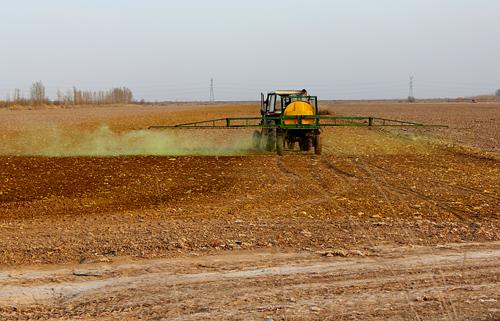
How to kill underground pests? Eight great control methods for you to choose from
Kill underground pests, eight great methods for you to choose from!
-
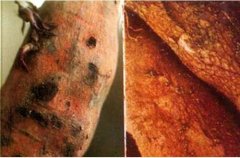
Which pesticides work well for controlling underground pests in sweet potatoes
When sweet potatoes are damaged by underground pests, the consequences can be very serious. In production, we must promptly adopt the following methods for toxic control, as this can increase yield and quality and reduce the damage suffered by sweet potatoes. The first is drenching with tea seed cake liquid. Tea seed cake liquid
-

Control Methods for Major Underground Pests of Potatoes
I. Major Pests 1. Mole cricket, also called lala cricket or earth dog. Both the adults (with fully developed wings) and nymphs (with incompletely developed wings) of the mole cricket cause damage to potatoes. It uses its mouthparts and large front claws (forelegs) to tear the underground stems or roots of potatoes into a tangled mass, causing the above-ground parts to wilt or die. It sometimes also bites the seed pieces, preventing the buds from growing and causing gaps in the stand. It tunnels through the soil, separating young roots from the soil and exposing them to air, causing water loss that affects seedling growth and can even kill the plants. In autumn, it bites the tubers, creating holes in them or making them
-
What are the control methods for underground pests of licorice?
The main underground pests at the seedling emergence stage of licorice are mole crickets and the Oriental beetle (He's Oriental chelifer), while at the mature plant stage the main ones are click beetles, scarab beetles, cutworms and darkling beetles, which cause serious damage. After wild licorice is damaged by underground pests, because the wild root head is deep below the soil surface, it is mainly the underground stem that is eaten and damaged, and after damage the adventitious buds can grow rapidly and regenerate, so the whole plant does not die. In contrast, what is mainly eaten and damaged in cultivated licorice is the root, and the plants are young and small with weak recovery ability; accompanied by rot infection, this often leads to the whole plant rotting and dying. In
-
Construction Method for a Multi-Layer Three-Dimensional Underground Snake House
The multi-layer three-dimensional underground snake house can be used year-round. Ordinarily it serves as a habitat for snakes, and in winter it can also become an ideal hibernation site for snakes. When this snake house is used in the provinces (regions) south of the Yangtze River, its underground coolness is especially evident in the hotter summer weather. It can also be built in a semi-underground, semi-above-ground mode according to the depth of the water table in different regions, to solve the problem in the south, where water resources are abundant and the water table is shallow, that deep digging easily reaches water. In the north, where winter is especially cold, in this season it is only necessary to increase the thickness of the soil layer on top of the snake house to ensure it is below the local frost
-
Semi-underground three-dimensional cultivation of oyster mushrooms yields high output and good returns
Semi-underground three-dimensional bed-frame cultivation of oyster mushrooms is a new approach explored in recent years to achieve high yields and improve economic returns. According to trials, on an area of 20 sq m, with 2000 kg of substrate, the annual output of oyster mushrooms is about 2500 kg, with a biological efficiency of over 120%. The key technical points are as follows: 1. Building the greenhouse: first dig a pit 1.8 m to 2 m deep and 4 m to 5 m wide, with the length determined as needed, and place the three-dimensional bed frames inside. On top, use bamboo poles and plastic film to build an arched shed, pack the surrounding edges firmly with soil, and cover with straw mats. Leave ventilation openings of about 30 square cm on all four sides, east, west, north and south, and build a small door on the west side for workers to enter and exit.
-
Detailed Explanation of Underground Shiitake Cultivation Methods and Techniques
Underground shiitake cultivation uses underground tunnels, natural caves and other underground facilities to grow shiitake mushrooms, allowing year-round spawn production and fruiting in all four seasons. This is another new cultivation site for shiitake production after wild forest areas, mushroom houses and plastic sheds. This cultivation method has developed rapidly in China, with a history of more than 20 years, and a complete set of production models for large-scale underground shiitake cultivation has been formed. It can be done both in bags and in blocks. Underground shiitake cultivation makes full use of the low-temperature and moisture-retaining properties of this site, and with the addition of cultivation bed racks and light sources, it can
-
New technique for semi-underground arched shed cultivation of reishi mushroom
The method of cultivating reishi mushroom by stacking fungus bags into walls and covering with soil in a semi-underground arched shed has many advantages. First, a semi-underground shed costs less to build than a ground-level shed, saving 40% on shed construction costs; second, water management is convenient, as it is only necessary to keep the casing soil layer adequately moist; third, mushrooms emerge from one end, concentrating nutrients, so the reishi mushrooms grown are robust and of good quality; fourth, a semi-underground arched shed is warm in winter and cool in summer. When the outdoor ground temperature is around 40°C in summer, the temperature inside the shed does not exceed 36°C, and in winter it is 3°C--4°C higher than ground level. The skylights on the shed roof can meet the light requirements and provide ventilation. The technique is briefly described as
-
Methods for Controlling Underground Pests of Codonopsis pilosula and Key Technical Points
The main underground pests harming Codonopsis pilosula are white grubs, cutworms and mole crickets; the above-ground pest is spider mites. Control methods for underground pests: use poisoned soil and poisoned bait to lure and kill them. Poisoned soil preparation: use 0.5-1.5 kg of 35% endosulfan per mu, 15 kg of soil, mix and scatter among the seedling roots; poisoned bait preparation: use 1 kg of roasted cake meal per mu, add 35 g of trichlorfon, mix well with water, scatter on the bed surface and beside the beds, in the furrows or on the ridges. Control methods for above-ground pests: the above-ground pest of Codonopsis pilosula is spider mites, generally
条件筛选