-
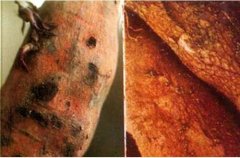
Which pesticides work well for controlling underground pests in sweet potatoes
When sweet potatoes are damaged by underground pests, the consequences can be very serious. In production, we must promptly adopt the following methods for toxic control, as this can increase yield and quality and reduce the damage suffered by sweet potatoes. The first is drenching with tea seed cake liquid. Tea seed cake liquid
-

What pesticide works well for soybean seed dressing
Underground pests are a nuisance that many farmers dread. If seed dressing is carried out before sowing, pest damage can be reduced to a certain extent, so what pesticide should be used for soybean seed dressing? 1. What pesticide should be used for soybean seed dressing? You can use 60% phorate, 40% isofenphos-methyl
-
What pesticides are effective for controlling underground pests in watermelon
Watermelon is a common fruit; in the hot summer, eating one or two slices can cool you down and relieve the heat. It is cultivated throughout our country, so what pesticide should be used for underground pests in watermelon? 1. Seed maggot The seed maggot often gathers to damage the young stems below the topsoil of watermelon seedlings, causing germinated seeds
-
Detailed Explanation of Cultivation Techniques and Management Key Points for Air Potato
Air potato is named for its underground tubers being flat and shaped like a foot sole, and it has strong adaptability and a wide planting range, making it very suitable for cultivation. So what are the cultivation techniques for air potato? 1. Propagation methods. 1. Seed tuber cutting propagation method: At harvest time the previous year, select tubers that are robust in growth, relatively slender in size, have few fibrous roots, smooth skin and no wounds, air-dry them for 1 to 2 days, then store them in a cellar. Before planting the next year, take them out, cut the seed tubers evenly lengthwise into two long pieces, then cut them crosswise into small pieces about 5 to 10 cm long and about 100 to 120 g in weight. Be careful to ensure that each small tuber piece has a bud eye, then coat the cut surface of each small piece fully with plant ash and place it in the sun for 1 to 2 hours. Then place it indoors to air-dry for 1 to 3 days. After the cut surface heals, sow. This can prevent the cut from rotting and promote uniform sprouting. This method produces early seedlings, grows quickly and gives high yield, but the propagation coefficient is low and the amount of seed used is relatively large. If the expansion area is relatively large, you can collect tuber tops (tips) as seed while using them for food normally. That is, during ordinary frequent consumption, leave the tuber tops to 5 cm long, coat the cut surface with plant ash, air-dry them and store them in a cellar as seed. After propagating with the above methods for 2 to 3 years, the variety tends to degenerate, which affects yield, so in production it is often combined with the aerial tuber propagation method. 2. Aerial tuber propagation method: Aerial tubers are airborne tubers borne in the leaf axils of the vines. This propagation method requires appropriately early transplanting and should extend the growth period as much as possible to increase yield. The yield harvested by this method may be relatively low, but it can improve the variety. The specific method is: before the aerial tubers naturally fall off, harvest relatively large ones (egg-sized), with few fibrous roots and smooth, and store them in sand indoors over winter. The next year, when the local temperature is stable above 10°C, take the aerial tubers out and put them in the sun for 2 to 3 hours, then place them in an insulated shed to promote sprouting, with the shed temperature controlled at about 25°C. When the sprouts are 3 to 5 cm long, plant them conventionally. 2. Planting From mid-to-late April to early May, use the two-row-per-bed method, open two 8 cm planting furrows on each bed, then spread lime in the planting furrows to control underground pests, and place the seed tubers at a plant spacing of 33 to 40 cm. Be careful to place the cut side of the tuber downward and the skin side facing east (the direction of the rising sun), then cover with soil and form ridges about 10 cm high. Planting without sprouting promotion results in slower emergence, but the roots develop first and then the sprouts emerge, the root system is well developed and the growth is robust. 3. Management 1. Set up trellises and guide vines, thin seedlings and remove sprouts. When the seedlings grow to 25 to 30 cm, use 2 m long small miscellaneous wood stakes inserted upright to form independent trellises, or use small mountain bamboo to form A-shaped trellises, and help the stems and vines climb up. Keep only 1 strong seedling per hill and remove all the rest. If the stems and vines grow too vigorously and produce too many axillary buds, they should be removed. In July, for the aerial tuber flower buds growing from the leaf axils, except for retaining robust ones for seed, the rest should be removed in time to reduce nutrient consumption and help tuber enlargement. 2. Intertillage and earthing up. Air potato has many roots, and they are mostly distributed on the soil surface. To avoid damaging the roots, only carry out intertillage once during the seedling stage, and scatter oil tea shells between the hills. Oil tea shells are a very good fertilizer, and also have the effects of preventing weeds, loosening the soil and preventing insects. When the stems and vines grow to about 1.2 m, combine fertilization with one earthing up, then cover the whole bed with thatch. This can both prevent weeds from growing densely and save intertillage, and also regulate temperature and humidity. 3. Fertilizer and water management. During the growth period, carry out topdressing 3 to 4 times in total. Seedling-promoting fertilizer: combined with intertillage, dig 6 to 10 cm fertilization furrows between the rows, apply 5 to 10 kg urea per 667 sq m, cover with soil and cover oil tea shells between the hills. Strong-seedling fertilizer: combined with earthing up, apply 10 to 20 kg calcium magnesium phosphate fertilizer per 667 sq m and an appropriate amount of plant ash and farmyard manure; apply one heavy fertilizer each at the flower bud stage and the mid tuber enlargement stage, applying 500 to 1000 kg human urine per 667 sq m. Human urine has a significant promoting effect on tuber enlargement and plays a key role in yield formation. For topdressing, avoid applying human feces and pig or cattle pen manure, because manure fertilizer easily causes the stems, vines and tuber skin color to turn black, leading to disease. Air potato is relatively drought tolerant and is not strict about water requirements. If drought occurs from July to August, appropriate watering 1 to 2 times is enough. 4. Pest and disease control Air potato has relatively few pests and diseases. For small-scale planting, pesticides are generally rarely used. For larger-scale planting, agricultural control is also the main method, with pesticides as a supplement, mainly selecting some high-efficiency, low-toxicity and low-residue pesticides. The main diseases include anthracnose and rust, which can be controlled with carbendazim, thiophanate-methyl, triadimefon and others. Pests include sawflies, cutworms, grubs and other underground pests, which can be controlled by drenching the roots with 800-fold trichlorfon solution. Generally do not use pesticides one month before harvest.
-
Where does lotus root grow? A detailed explanation of the lotus root's growing environment
Lotus root grows at the base of the lotus leaf. The underground stem of the lotus is the root, and the fruit is the lotus seed. Lotus root can be eaten raw or cooked, and is one of the common table vegetables. The root is also a plant of fairly high medicinal value; its roots, leaves, flower stamens and fruits are all treasures, and all can be used as nourishing medicine. 1.
-
What pesticide is effective against soil-dwelling pests of peanuts?
During land preparation, dilute phoxim with a little water and broadcast it together with the base fertilizer to control white grubs; if there are many white grubs, high-efficiency lambda-cyhalothrin can be added. When sowing, treat the seeds with phoxim or chlorpyrifos, imidacloprid, thiamethoxam and other agents to control white grubs and other soil-dwelling pests. Adding thifluzamide when treating seeds can control root rot and stem base rot.
-
What plant is zhe'ergen? Introducing you to fish mint
Zhe'ergen is the underground tender root of fish mint (Houttuynia cordata). At present, zhe'ergen is used as a fresh vegetable; it can be eaten as a dish, served cold, stir-fried, made into soup or pickled, and can be used to make many dishes with a unique flavor. It is rich in nutrients. 1. Where is zhe'ergen a specialty product? Zhe'ergen
-
The potato is hailed as the "underground apple" - what are its places of origin and growing conditions?
The potato is also called Irish potato, taro, and so on. Whether in Western or Chinese cuisine, it occupies an important position and is deeply loved by people. So, where is the potato's place of origin? What are its growing conditions? What are its growth stages? 1. The potato's place of origin is
-
How to Grow Chinese Water Chestnut (Eleocharis dulcis): Cultivating the "Underground Snow Pear" This Way
The Chinese water chestnut, also known as the horse's hoof, water chestnut, or spiny turtle, is both a fruit and a vegetable, crisp and delicious. So, what are the methods for growing Chinese water chestnut? Let's find out together! 1. Site selection. The Chinese water chestnut is not demanding about soil and can adapt to various soil environments.
-
Can Green Potatoes (Potatoes) Be Eaten After Turning Green, How to Handle Them, and What Not to Eat Them With
Potato, also known as Irish potato and taro, is an important food crop in our country. Because of its high nutritional value, low planting cost, easy cultivation, and good storability, it is widely planted. However, because it contains solanine, improper storage can lead to green skin, sprouting, and other phenomena, so when storing it, you must
条件筛选