-

How to Grow Caladiums: A Detailed Guide to Caring for and Propagating Foliage Plants
Caladiums have brilliantly colored leaves and are a common foliage plant. This article introduces the growth habits, daily care, tuber division propagation, and overwintering management of caladiums, helping gardening enthusiasts easily grow caladium potted plants with full, colorful leaves.
-
How to grow tuberose so it thrives? A detailed guide to planting methods
A detailed introduction to tuberose planting methods and care techniques, including practical content such as how to grow tuberose, soil mixing, light and watering, propagation methods, fertilizing and pruning, and pest and disease control.
-
How to Grow Tuberous Begonias: Planting Methods and Care Tips
A detailed introduction to the planting methods and care techniques for tuberous begonias, including how to grow tuberous begonias, soil preparation, light and watering, propagation methods, fertilizing and pruning, pest and disease control, and other practical content.
-

How Long Is the Tuberose Blooming Season? Detailed Guide to Growing Methods and Precautions
In the cool autumn breeze, what you most want to see is that patch of golden fallen leaves, and at this time there is also a flower quietly forming buds, and it is the "tuberose" we are talking about today. Its blooming period can span more than half a year, staying beautiful from June all the way to December. It usually opens in the evening, and its fragrance is rich.
-

Can a Gloxinia still grow leaves with only one tuber left? Detailed guide to the sprouting method
Gloxinia (Sinningia speciosa), as a beautiful indoor flowering plant, has quite tenacious vitality. Even if only the tuber remains, as long as it is cared for properly, it can still grow new leaves again and bloom. The key lies in providing a good growing environment and the correct care methods. Care points: Temperature control: keep the indoor temperature above 15°C
-
When Does Tuberose Bloom? Care and Planting Methods Explained
Tuberose (Polianthes tuberosa), belonging to the Asparagaceae family and the genus Agave, is a perennial herbaceous plant. Its stems are tall, reaching up to one meter in height, with dense dark green linear leaves growing at the base, and snow-white, fragrant flowers blooming at the top. Especially on summer evenings at dusk, these flowers become even more fragrant and intoxicating. The blooming period of tuberose mainly
-

When Does the Double-Flowered Tuberose Bloom? A Detailed Guide to Bulb Planting Methods and Timing
The double-flowered tuberose, with its captivating blooms and fragrant scent, has become a favorite choice among many flower enthusiasts. The choice of planting time is crucial. Generally speaking, spring and autumn are the ideal seasons for planting double-flowered tuberose bulbs. In spring, rising temperatures favor bulb sprouting and growth; in autumn, the suitable climate can
-
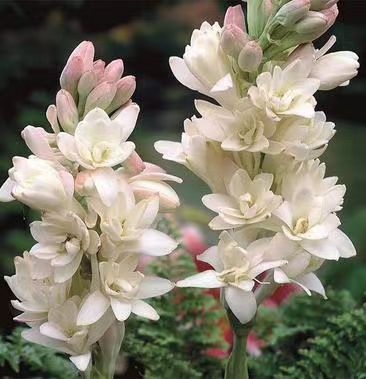
The planting methods and times of double-petaled tuberose bulbs
Double-petaled tuberose, with its charming flowers and fragrant aroma, has become the favorite choice of many flower enthusiasts. The following is a detailed
-
Causes of Yellow Bottom and Yellow Gills in Farmed Swimming Crab (Portunus trituberculatus) (with pictures)
Because the swimming crab (Portunus trituberculatus) has characteristics such as fast growth, large individual size and delicious meat, it has become one of the important economic species in pond aquaculture in China, and artificial farming is now fairly common, so what do pictures of the swimming crab look like? When farming swimming crab, why
-
How to Keep Sea Crabs? Detailed Guide to Sea Crab Farming Methods and Techniques
Sea crabs generally refer to Portunus trituberculatus (swimming crab), an important commercial crab species along the coast of China with rich nutritional value. So, how do you keep sea crabs you have bought? 1. Environment You can keep crabs at home in a concrete pond, a larger plastic basin, or a somewhat bigger
条件筛选