-
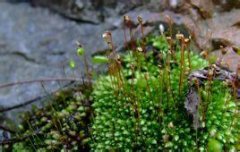
What are the main characteristics of Bryum obovatum, a common moss plant?
Bryum obovatum is a plant belonging to the mosses. Bryum obovatum is uncommon in southern regions; it is mainly distributed in areas such as Xinjiang and Tibet. It generally grows on soil in mountain gullies, on dripping-water rocks at Zhunba, at Zabu Hot Springs and other places. Bryum obovatum in
-
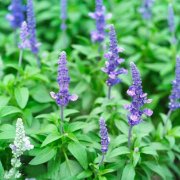
What are the differences and characteristics between true lavender and lavandin?
The difference between lavender and sage is something most people know, but do you know how to tell lavandin and true lavender apart? The biggest difference with lavandin is that it is more "stimulating" and "invigorating," while only true lavender has "calming" and "soothing" properties.
-

Is the claim that baby cabbage causes cancer true?
Baby cabbage is a miniature small-head Chinese cabbage, belonging to the Brassica subspecies of the genus Brassica in the Cruciferae family. It is widely grown and cultivated in our country. This vegetable has a short growing period and strong adaptability, with good resistance to various environments, and is a delicious dish on Chinese people's dining tables
-
How Many Years Can a Rubber Tree Live? Uncovering Its True Lifespan
The rubber tree, scientifically known as a plant of the genus Hevea in the family Euphorbiaceae, originated in the Amazon rainforest. China's dedicated national rubber planting areas are mainly distributed in Hainan, Guangdong, Guangxi, Fujian, Yunnan and other regions; it can also be planted in Taiwan, China, with Hainan being the main rubber planting area. So,
-
Is Wakame a Seagrass? A Clear Look at Its True Identity
Is wakame a seagrass? Yes. Wakame is a seaweed of the brown algae family Alariaceae (kelp family), hailed as a vegetable of the sea. In China, Dalian in Liaoning, and Qingdao, Yantai, Weihai and other places in Shandong are the main production areas, and the Zhoushan Islands in Zhejiang also produce it. Wakame belongs to Phaeophyta, Phaeosporophyceae, Laminariales
-
Is it true that ginseng can run away? A full breakdown of ginseng prices per jin
Ginseng is a perennial herbaceous plant that generally grows under coniferous and broad-leaved mixed forests or deciduous broad-leaved forests. Many people have heard that after finding ginseng you must tie a red string around it, otherwise the ginseng will run away. So is it true that ginseng can run away? What is the current ginseng price?
-
What Plant Are Grass Jelly Seeds From? Get to Know Their True Identity
Everyone knows grass jelly, but few people know what plant grass jelly seeds come from. In fact, grass jelly seeds are also very common and can be found in most regions. Let's take a look at grass jelly seeds together. 1. What are grass jelly seeds? Grass jelly seeds are actually also called climbing fig
-
Is the pineapple radish genetically modified? This article explains its true origins
The pineapple radish is not a genetically modified food; it belongs to non-GMO foods. The pineapple radish is an especially delicious fruit radish, also called Purple Beauty, and is a new variety bred by the Academy of Agricultural Sciences. 1. A case of pineapple radish cultivation: grown by a fellow villager surnamed Li in Yangxin County, Shandong Province
-
What are the effects and uses of cocklebur fruit? Is it true that it can treat rhinitis as rumored online? And what is the story behind cocklebur fruit poisoning?
I wonder if anyone was ever snagged as a child by a prickly oval ball out on the hills. That thing may look fierce, but it has an extremely literary name - cocklebur fruit! And it is also a Chinese herbal medicine with great medicinal value. So what
-
Misconceptions about goji berries as a longevity tonic: it is not true that the redder and bigger the better, and there are food combination taboos
An old folk saying goes, "When the gentleman travels a thousand miles, he must not eat goji berries," which shows that goji berries are not suitable to eat at just any time. But in real life, people always assume that the bigger the goji berries the better and the redder the better, which has driven the price of large goji berries higher and higher. So are goji berries really better the bigger and redder they are? No.
条件筛选