-
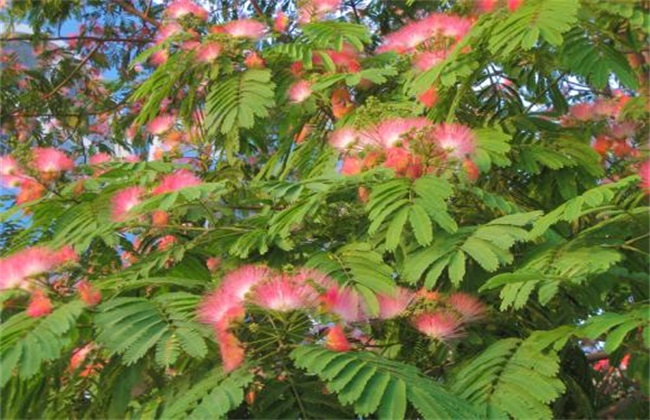
Cultivation Methods and Key Care Points for the Silk Tree Flower
Cultivation Methods for the Silk Tree Flower
-
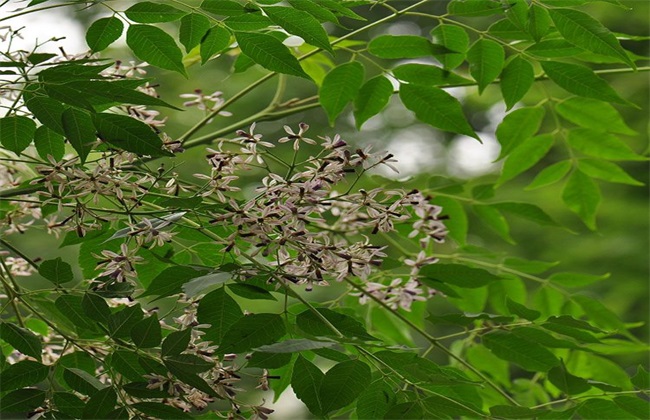
Detailed Explanation of the Cultivation Techniques and Planting Management Methods of Chinaberry Tree
Cultivation Techniques of Chinaberry Tree
-

How to cultivate Chinese tallow tree for high yields? Key technical points explained
High-yield cultivation techniques for Chinese tallow tree
-

What are the precautions for growing Agrocybe aegerita (tea tree mushroom)?
Precautions for growing Agrocybe aegerita
-

Introduction to the New Tree-form Honeysuckle Variety
I. Characteristics and Advantages (1) Wide adaptability. It is drought-tolerant and waterlogging-tolerant, cold-tolerant and not afraid of heat, tolerant of poor soil, and fond of fertilizer and water. It performs well in slightly acidic, slightly alkaline, and neutral soils. (2) High flower-setting rate and many flower needles. The flower needles are thick and long. Compared with traditional honeysuckle, a traditional honeysuckle generally grows 2 flower needles at one node, called "double flowers," while the tree-form honeysuckle can grow 20-50 flower needles at one node, and up to more than 100 in some cases, and they are 1.5 times the length of traditional flower needles. (3) Long flowering period, concentrated flowering
-
Why is intercropping tree peony root bark with Gastrodia elata so profitable?
Tree peony root bark (the root bark of the tree peony) and Gastrodia elata are both precious Chinese medicinal herbs. Intercropping Gastrodia elata in tree peony root bark fields is a new high-yield, high-efficiency cultivation model that is worth promoting to herb growers in Chinese medicinal herb growing regions everywhere. The most notable features of intercropping Gastrodia elata in tree peony root bark fields are: first, it makes full use of the land; second, the two are complementary; third, it eliminates the trouble of having to weed the tree peony root bark field frequently. The cultivation method is described below: 1. Planting tree peonies. 1. Site selection: The tree peony field for intercropping Gastrodia elata requires fertile, deep soil, and a slight slope is best.
-
Detailed Explanation of the Rapid Cultivation Method for Standard (Tree-Form) Honeysuckle
Honeysuckle, as a raw material for pharmaceuticals, beverages, and beauty and cosmetic products, has long been in short supply on both domestic and international markets. Most regions of our country are suitable for its cultivation. At present, ground-covering shrub-type cultivation is mostly adopted in various places. In order to develop toward three-dimensional cultivation, make full use of space, increase light exposure, and improve its yield and quality; and also to provide a new tree species for roadside ornamental greening, the cultivation and development of standard (tree-form) honeysuckle has become an urgent task. For this reason, we carried out a series of studies on the cultivation techniques of standard (tree-form) honeysuckle in Pingyi County, the hometown of honeysuckle. Now
-
Detailed Explanation of the Key Points of Shaping and Pruning Techniques for Young Goji Berry Trees
Goji berry trees generally enter the young tree stage 4-5 years after planting. At this time, the tree body grows vigorously and has a strong branching ability. If the branches are pinched back, they can sprout branches three or four times within a year. The shaping and pruning of young trees is mainly focused on shaping, selecting and retaining strong branches to cultivate the tree crown framework, gradually expanding the tree crown, cultivating branch groups, and increasing fruiting branches. In the selection and cultivation of tree shape, flexible adoption should be made according to cultivation conditions, with the principle of favoring high yield, laying the foundation for future high yields. Although there are many tree shapes for goji berry trees, the principles of shaping and pruning are basically the same; only the
-
Pruning Methods for Goji Trees in the Late Full-Bearing Stage
In the late full-bearing stage, the tree grows weakly, produces fewer shoots, and has short branches, with a marked decline in yield. At this time, the main task of pruning is to strengthen the tree's vigor. In addition to the general pruning carried out for trees in the full-bearing stage, the weakened scaffold branches or branch groups should also be renewed and rejuvenated. The specific method is to pinch off the growing tips of water sprouts in summer, and after side branches emerge, train them into new branch groups, while cutting back the scaffold branches above the water sprouts. If there are no water sprouts, cut back in spring pruning to the middle of 3-5 year old scaffold branches, or even a bit more severely, to stimulate the latent buds below the cut to sprout water sprouts,
-
Detailed Explanation of Key Pruning Techniques for Goji Berry Trees
I. Pruning in the Young Stage 1. Trunk-establishing pruning: During the bud-break period of the nursery stock, remove the buds below 40 cm (the branching zone) on the main trunk base stem, and cut the top at a plant height of 60 cm~70 cm. 2. Summer pruning: From late April to late July, at 15-day intervals, remove the shoots within the branching zone of the main trunk, and cut back the lateral branches retained on the branching zone at 20 cm~25 cm to promote the sprouting of secondary fruiting branches; from the strong upward-growing branches on the lateral branches, select and retain 2~3 branches growing in different directions close to the main branch, and cut and join them at 30 cm
条件筛选