-

To grow tree-stump bonsai well in winter, you need to master these methods
Based on years of experience, the author believes that as long as the following three aspects are done well, tree-stump bonsai will have no trouble overwintering safely. 1. Moderate water, no fertilizer. In winter, watering should follow the principle of preferring dry over wet; do not water until the soil turns white. Water at noon, and it is best to water thoroughly in one go; do not water in the evening, otherwise it is prone to freeze damage. For coniferous types, wax-leaf types, and landscape trees with thick, dense, lush and graceful foliage, spraying water to rinse the leaf surfaces is also very beneficial. Bonsai trees should not be fertilized in winter, but 15 days before the start of winter, along with weeding and loosening the soil and killing pests and diseases,
-
Practical Tips for Selecting Bonsai Tree Stumps in Winter
1. Types of tree stumps. From a cultivation standpoint, they should tolerate pruning and be easy to wire; from an aesthetic standpoint, the stump's appearance should meet conditions such as small leaves, curved branches, abundant flowers and bright fruit. Common evergreen types include: Ilex aquifolium (bird-lime holly), Quercus acutissima (sawtooth oak), Syzygium buxifolium (boxleaf syzygium), Elaeagnus pungens (thorny elaeagnus), Mahonia fortunei (Chinese mahonia), Nandina domestica (heavenly bamboo), Pyracantha fortuneana (Chinese firethorn), etc.; common deciduous types include: Euonymus alatus (winged euonymus), Adina rubella (Chinese buttonbush), Sageretia thea (Chinese sweet plum), Lagerstroemia indica (crape myrtle), Acer buergerianum (trident maple), Ligustrum quihoui (waxyleaf privet), Ulmus parvifolia (Chinese elm), Wisteria sinensis (Chinese wisteria), etc. Deciduous types can be purchased in both winter and spring. 2. Vitality of the tree stump. ① Scrape the rough outer bark of the trunk; if the inner layer is greenish and fine water droplets seep out, it is a fresh stump;
-
Which tree species in stump bonsai are suitable for leaf pruning?
Q: Which tree species in stump bonsai can have their leaves pruned, and what should be noted? A: There are many bonsai tree species suitable for leaf pruning, including Chinese elm (Ulmus parvifolia), Japanese bush cherry (Sageretia thea), ginkgo, Chinese wolfberry (Lycium chinense), red maple, pomegranate, Chinese hackberry (Celtis sinensis), banyan (Ficus microcarpa), and Chinese chaste tree (Vitex negundo), etc. The main benefits of leaf pruning on stumps are: 1. It can make the leaves smaller, which helps display the artistic effect of bonsai in shrinking a dragon into an inch. For example, after leaf pruning on Chinese chaste tree, the newly sprouted leaves can shrink to 1/5 the size of the original leaves; when the banyan has all its leaves and buds removed in early summer, under controlled water and sufficient sunlight, the new leaves can grow
-
Detailed Explanation of the Climbing and Binding Shaping Methods for Suzhou Tree-Stump Bonsai
Suzhou tree-stump bonsai relies mainly on pruning, with binding as a supplement; coarse binding and fine pruning, using both pruning and binding together. Among these, climbing-binding and pruning are the keys to shaping the tree stump. Now the focus is on introducing its climbing-binding of branches. Suzhou tree-stump bonsai traditionally uses palm fiber for climbing-binding. The palm fiber harmonizes with the color of the bark, and after climbing-binding the tree stump is already ornamental. The key is to grasp the focal points for applying the palm fiber and to select the appropriate thickness of palm fiber. 1. Full binding method: all materials are nursery stock, and everything from the trunk (main trunk) to the branches (branch pads) must be fully climbed and bound. Its branch pads are divided into three types: "platform, support, top." "Platform" refers to the branch pads on both sides of the main trunk
-
How to preserve tree stumps for bonsai against rot? These practical methods are a must-know
A fine bonsai work can only be completed after 5-8 years of careful management, but during the care process, how to prevent dead branches from continuing to rot is the most worrying thing. The most common way to preserve tree stumps against rot is to coat them with lime-sulfur mixture (a mixture of lime and sulfur). The preparation method of lime-sulfur mixture: one part quicklime powder, 2 parts sulfur powder, 10 parts water, boiled and prepared. One point to emphasize is boiling! That is, boil it in a pot and then use it, because sulfur powder generally does not dissolve in water. Tree stumps can be treated during both the growing season and the dormant season; in winter it is mainly for prevention, and the effect is very good.
-
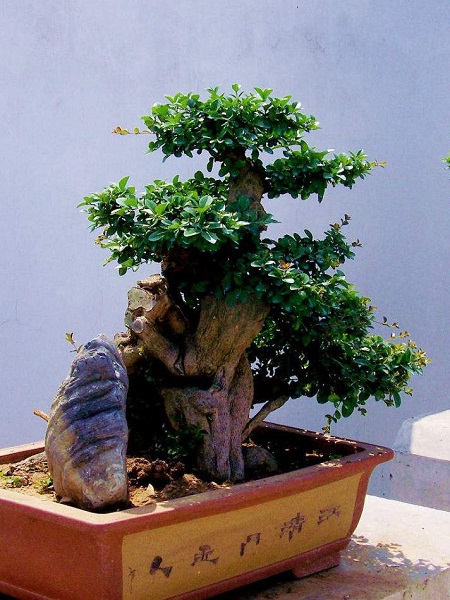
What kind of tree stump is best for bonsai? Mastering these three points is enough
What kind of tree stump is best for bonsai? Master these three points!
-
条件筛选