What kind of tree stump is best for bonsai? Mastering these three points is enough
Selection of species:
If you want to appreciate the stump, you cannot just choose plants with luxuriant branches and leaves; it is best to choose species with twisted stems, relatively small leaves, but relatively abundant flowers and heavy loads of fruit. For example: firethorn (Pyracantha), heavenly bamboo (Nandina domestica), Mahonia, Elaeagnus, red nanmu (Syzygium buxifolium), oak (Quercus), Ilex cornuta, etc. These are all evergreen varieties.
There are also deciduous varieties: wisteria (Wisteria), Chinese elm (Ulmus parvifolia), small-leaf Ligustrum, trident maple (Acer buergerianum), crape myrtle (Lagerstroemia indica), Japanese apricot (Prunus mume), water willow (Adina rubella), Euonymus, etc. Deciduous varieties are also divided into winter types and spring types, and their tree stumps are all suitable for bonsai.
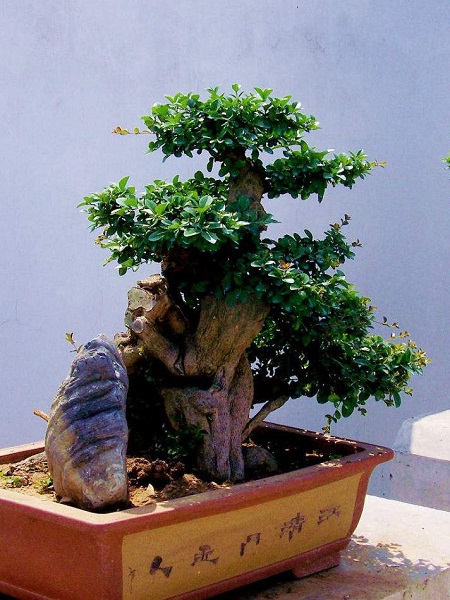
Selection of vitality:
How do you tell whether a tree stump has strong vitality? First start with its bark: cut open the bark of the tree stump with a knife; if the inside is green and small water droplets are seeping out, then look at its branches; if they can be bent gently and tolerate bending, or if after breaking it is obvious that they have relatively strong moisture, then finally look at its roots; if after cutting them open small water droplets are also seeping out, then such a tree stump is very suitable for bonsai.
Selection of appearance:
First of all, it should have a thick and sturdy appearance, an upright posture, and the whole plant should grow relatively smoothly, and it should have many relatively fine roots, its leaves should also be relatively broad and thick with obvious luster, etc. The arrangement of its branch growth should also have a certain order. Those that do not need extra shortening or binding, and can create a natural tree shape with only slight pruning, are all suitable as stump bonsai.
Precautions:
In the maintenance process of stump bonsai, special attention should be paid to watering. The watering method is not just watering the roots; watering the leaves is also very important. It is best to choose plants with relatively small leaves for bonsai, so that the proportions will not be unbalanced.