-

Why oyster mushroom transplanting gives such good yield increases
Practice has shown that thinning and transplanting densely clustered mushroom buds gives good yield increases. The transplanting method is as follows. 1. Transplant at the right time: transplant when the mushroom buds have just appeared. 2. Planting material: there are no strict requirements; they can be planted on either spawn material that has not yet fruited or material that has already been harvested. Spawn material that has not yet fruited helps the mycelium wounds from transplanting heal and the fruiting bodies develop well. 3. Transplanting method and management: transplanting should be done by digging holes in the spawn brick or spawn bed. Place the small clump of mushroom buds that has been picked into the hole that has been dug, and press firmly around it so that the mushroom buds and the spawn material on the surface of the spawn brick or bed
-
Detailed Explanation of High-Yield Cultivation Techniques for Transplanting Oyster Mushroom Buds
In bed-style cultivation of oyster mushrooms, it is common for mushroom buds to grow unevenly, and this is even more serious in outdoor sunken-bed cultivation. Of these densely packed small mushroom buds, no more than 3 to 4 grow into edible mushrooms, and the vast majority gradually wither after three to five days. On one hand, this consumes a large amount of nutrients; on the other hand, if the withered mushroom buds are not dealt with in time, they will rot and deteriorate, causing pests and diseases and reducing the yield of the next crop. If these mushroom buds are selectively transplanted and cultivated, it can not only reduce pest and disease damage, but also increase yield by 20%. The method for transplanting oyster mushroom buds is introduced as follows: 1. Preparatory work. For transplanted
-
Transplanting oyster mushrooms is a new way to achieve high yields
Researchers at the vegetable supply base of Shengli Oilfield, through repeated experiments, have found a new way to achieve high yields of oyster mushrooms - transplanting. The key technical points are introduced as follows: 1. Choosing a good transplanting bed There are no special requirements for choosing a transplanting bed. As long as the mycelium is growing normally, the substrate surface is free of contaminating microorganisms, there are no pests, and the dryness and moisture levels meet the standard, the key point is that any mushroom block or bed that has not yet produced mushrooms can be used as a transplanting bed. 2. Key technical points of transplanting First, strictly disinfect the small shovel or small knife used for transplanting according to conventional methods. Then select mushroom buds that are growing densely in a coral-like shape
-
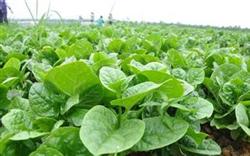
Methods for Raising Seedlings and Transplanting Ceylon Spinach (Malabar Spinach) and Key Technical Points
Prepare the seedbed well, sow dry seeds, and seedlings emerge in 3 to 5 days at a suitable temperature of around 28°C; if the soil temperature is on the low side, the seeds should be pre-germinated before sowing. During the seedling stage, keep the temperature appropriately low, and transplant when the plants have 4 to 5 true leaves. For harvesting tender shoots, use a row spacing of 20 to 25 cm and a plant spacing of 15 to 20 cm; for growing on trellises to harvest tender leaves, use a row spacing of 60 cm and a plant spacing of 25 to 35 cm, keeping...
条件筛选