-
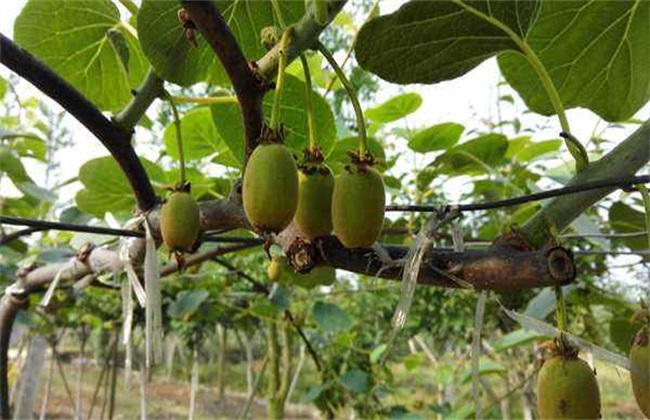
Detailed Explanation of the Key Points of Red-fleshed Kiwifruit Training and Pruning Techniques
Red-fleshed Kiwifruit Training and Pruning Techniques
-
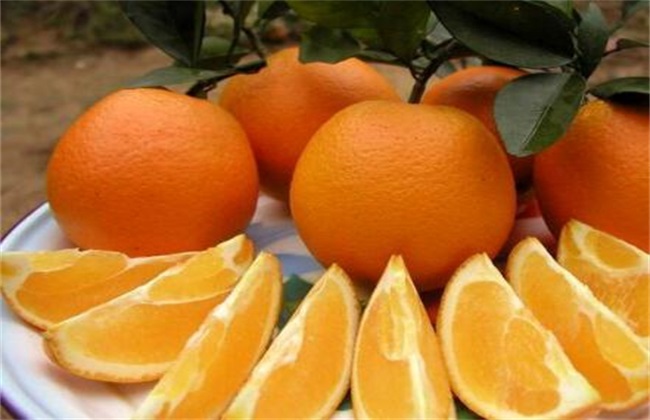
What are the benefits, effects and contraindications of oranges?
The benefits, effects and contraindications of oranges
-

What are the common problems in fruit tree training and pruning?
Common problems in fruit tree training and pruning
-

Detailed Explanation of Olive Tree Training and Pruning Methods and Techniques
How to Train and Prune Olive Trees
-

Introduction to Xianghongmi, a New Semi-Dwarf Pear Strain
Xianghongmi was bred by the Chinese Academy of Fruit Tree Research from a cross between Aixiang as the female parent and Hexincun as the male parent. In Xingcheng, Liaoning, the fruit ripens in mid-to-late August, with a development period of i00d (days). The fruit is round, with an average single-fruit weight of 175g and a maximum of 240g. The background color of the fruit is yellow-green, with a purplish-red blush on the sunny side. The flesh is milky white and fine-textured; after ripening, the flesh softens, is juicy, and has a fragrant aroma. The flavor is sweet and sour and palatable, containing 15%-17% soluble solids and 0.37% acid, of superior quality. The fruit does not store well and can be kept at room temperature for about 20
-
Characteristics and Key Cultivation Techniques of the Han Xing No. 1 Strain
Han Xing No. 1 was introduced from South Korea by the author. Cultivation trials over several years have shown that this strain has a club-shaped stipe of fairly uniform thickness (see photo), and firm, crisp, tender fruiting bodies with an excellent taste. It is an outstanding variety among king oyster mushrooms. The main characteristics and key cultivation techniques of this strain are described below: 1 Biological characteristics 1.1 Nutrition Han Xing No. 1 requires relatively abundant nitrogen and carbon sources; the richer the nitrogen source, the better the mycelial growth and the higher the yield. It is generally believed that when the carbon-to-nitrogen ratio of the substrate is around 20:1,
-
Detailed Explanation of Key Points of Jujube Tree Training and Pruning Techniques
The training and pruning of jujube trees is based on the jujube tree's unique branching habits and its strong light-loving characteristics. Through pruning, a fixed framework suitable for the jujube tree's growth habits is formed, thereby improving the transparency of the canopy, increasing the fruiting positions, achieving three-dimensional fruiting, improving jujube fruit quality and yield, and extending the fruiting years. There is no issue of retaining flower buds: the flower buds of most fruit trees are differentiated in the previous year, so during winter pruning the number of flower buds to retain must be determined according to the target yield, in order to reduce the consumption of large amounts of tree nutrients caused by flowering and fruit set.
-
Korla Fragrant Pear Open-Center Training Technique and Cultivation Key Points
In order to continuously raise the level of orchard industry development, the "dwarf, dense, early, high-yield" cultivation technique should be adhered to in fragrant pear orchard management, and management should follow the six-character policy of "slow, drop, control, promote, cut, even." 1. Conditions and methods for open-center reshaping. 1. Fragrant pear trees over 25 years old are basically the traditional three-main-branch delayed open-center form, and the tree form has already set. If the tree form is complete, the three or four main branches at the base are sound, and the canopy has already filled the space, the central leader can be directly dropped for open-center; if the lower main branches are incomplete, with only 1~
-
Cultivation Points for the Extremely Late-Maturing Peach Strain Dongxuewang
Dongxuewang (tentative name) is a new strain bred by the Yimin Fruit Tree Research Institute of Qingzhou City, Shandong Province, using Dongxue Honey Peach as the female parent and Zhonghua Shoutao as the male parent. It was crossed in 1998, seedlings were raised in 1999, top-grafted in 2000, fruited in 2001, and multi-point trials were conducted in 2004. The strain characteristics and cultivation points are described below. 1 Characteristics 1.1 Botanical characteristics The Dongxuewang peach tree has a relatively open growth habit, 1-year-old mature branches are reddish-brown, and the main branches and perennial branches are grayish-white. Leaves are dark green, large, with a length of
-
Detailed Explanation of Pruning and Training Techniques for Kernel Apricot
Apricot trees are extremely sun-loving. In other countries, tree forms with 2 main branches and no lateral branches on the trunk, or with 4 main branches and no lateral branches on the trunk, are often used. In China, the natural round-headed form or the open-center tiered form is usually adopted, and a few regions use the natural spindle form. In short, there should not be too many main branches, the spacing between tiers should be large, sunlight should be able to enter the inner canopy, there should be many small branch groups and few large branch groups, and then high yields can be achieved. 1. Pruning of young trees Young trees need to expand their canopy as quickly as possible. When pruning, moderately cut back the leaders of the main branches, remove competing branches, crowded branches and whorled branches, and let the main branch leaders grow outward at an angle as single leaders.
条件筛选