-
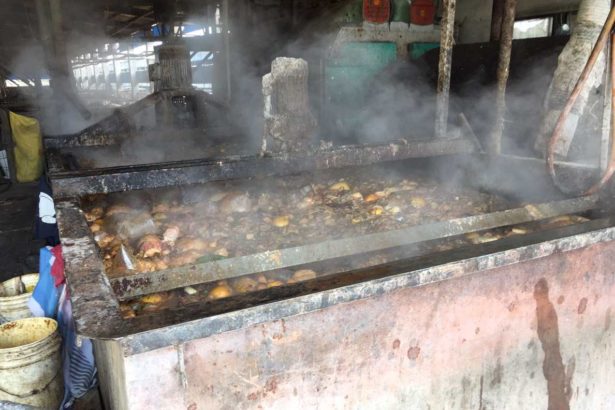
Comprehensive Inventory of Kitchen Waste Production and Disposal Capacity in Yunlin and Pingtung, and Epidemic-Prevention Kitchen Waste Processing
The Battle of Epidemic Prevention and Kitchen Waste 07"(Yunlin and Pingtung) Taiwan-wide Comprehensive Inventory of Kitchen Waste Production and Disposal Capacity (Yunlin and Pingtung)
-

A Detailed Guide to Snake Farming Techniques and Processing Methods
Snakes are a precious biological resource. Snakes can be eaten, used for medicine, used to make musical instruments, and so on; the whole body is a treasure, and they are praised as a "mountain delicacy." Snakes sell well and fetch high prices. In China, the purchase price per kilogram of live snakes and snake meat is 40-60 yuan; for the five-paced snake (Deinagkistrodon acutus), it is 250-400 yuan per kilogram; 1 gram of banded krait (Bungarus multicinctus) toxin is priced at 1000 yuan; raw snake gallbladder reaches as much as 2000-3000 yuan per kilogram. On the international market, 5 grams of snake venom is priced at as much as 1000 US dollars, 20 times more expensive than gold. Farming snakes artificially has a short cycle and high returns, and is a good way for farmers to escape poverty
-
What Is the Dog Birth Process Like? A Detailed Guide to the Full Whelping Process in Female Dogs
Dogs are polytocous animals, and because breeds differ, the number of puppies per litter also varies. Generally, small breeds have 1-4 puppies per litter, at most 6. Medium and large breeds usually have 6-9, at fewest 1-2, at most 12-13, and the recorded maximum is 25. Whelping in dogs occurs through contractions of the uterus and the abdominal wall muscles and diaphragm, which push out the fetuses and their associated tissues. The contractions of the uterus come in waves, with intervals, so uterine contractions are usually called "labor pains." The contractions of the abdominal wall muscles and diaphragm are called "straining." Stra
-
A Detailed Guide to the Processing and Preparation Methods of Raccoon Dog Feed
The feed of raccoon dogs includes animal-based feed, plant-based feed and supplementary feed. The supply and composition of feed have a great influence on the health, reproduction and fur quality of raccoon dogs. To practice scientific raccoon dog farming, one must understand the effects of the nutrients in feed on raccoon dogs, so as to reasonably and correctly formulate and process feed, and obtain the best economic benefits with the least feed consumption. Therefore, the processing and preparation of feed is very important. I. Feed Processing (1) Processing of fish and meat feed Fresh marine mixed fish, and the meat, liver,
-
A Complete Guide to Indian Jujube Processing Techniques and Methods
Indian jujube, also known as hairy-leaf jujube, is a new fruit tree variety introduced from Taiwan, China and abroad in recent years, and is widely popular for its early fruiting and high yield. Indian jujube does not store well, generally lasting only 4-5 days, so post-harvest handling directly affects economic returns. Therefore, Indian jujube can be processed into two types of products: candied jujube and preserved fruit (for example, Thailand has popular foods made from processed Indian jujube). The processing techniques are as follows: 1. Candied jujube process flow: material selection -> grading -> washing -> slitting -> sugar boiling -> drying -> shaping -> finished product packaging.
-
A Detailed Guide to Yellowfin Tuna Processing Techniques and Methods
Yellowfin tuna is an oceanic fish, generally living in tropical and temperate waters. Its main habitat range is usually at depths of 50m to 250m, and the depth also depends on the season and different regions of the sea surface. The catch from tuna longline fishing is mainly yellowfin tuna and bigeye tuna. These two fish account for more than 80% of the catch and have high commercial value. Bigeye tuna is usually kept refrigerated and processed into sashimi, while yellowfin tuna is frozen and stored on freezer vessels, then sold to seafood companies to be processed into fish fillets for sale. Yellowfin
-
Potato waste turned into treasure, can be processed into protein feed
Recently, researchers at Harbin Institute of Technology have made encouraging progress in research on using discarded potato waste to produce single-cell protein feed. The researchers not only screened out an excellent combination of bacterial strains for producing cell protein, but also designed and formulated a complete process route for producing single-cell protein feed from potato waste. The use of potato waste with juice for liquid fermentation to produce cell protein is the first proposal and application of its kind both domestically and internationally. China produces more than 70 million tons of potatoes annually, and more than 3.4 million tons of potato waste remain after starch processing.
-
Detailed Guide to Processing Technology for a Series of Potato Snack Foods
Potatoes have rich nutritional value. They contain protein, phosphorus, iron, inorganic salts, vitamins B1 and B2, and carotene, and their protein quality is relatively good, closest to animal protein, and easy for the human body to absorb. According to determination with an amino acid analyzer, potatoes contain 18 kinds of amino acids required by the human body and various trace elements. Potatoes can also supply the human body with a large amount of mucoprotein. Mucoprotein is a mixture of polysaccharides and proteins, can prevent fat deposition in the cardiovascular system, maintain the elasticity of arterial blood vessels, and prevent
-
Detailed Explanation of Key Points in Panax notoginseng Cultivation and Processing Techniques
Panax notoginseng, also known as Tianqi, Tiansanqi, Shenqi, Sanshenqi, Shanqi, Jinbuhuan, Dianqi, etc., is a perennial herbaceous plant of the Araliaceae family. Its root is used as medicine; it is neutral in nature and sweet in taste. It functions to invigorate blood circulation and stop bleeding, reduce swelling and relieve pain. Cultivating the medicinal herb Panax notoginseng not only benefits agricultural structural adjustment but also helps farmers increase income. I. Cultivation Techniques 1. Land preparation and basal fertilizer application: Choose sandy loam soil with relatively high terrain, wind-sheltered and sun-facing, deep soil layer, rich in humus, and good drainage. The previous crop should preferably be corn, peanuts, or legumes, and solanaceous crops must never be the previous crop. Plow repeatedly to about 20 cm to
-
Detailed explanation of potato crispy candy slice processing technology, master all steps and methods
1. Selecting potatoes and slicing: Choose fresh potatoes weighing 50-100g with no pests or diseases, wash the soil off the skin, then place them in a 20% alkaline solution and stir constantly with a wooden stick to peel them. After all the skin has come off, scoop them out, rinse once, and drain for later use. For slicing, cut into diamond-shaped or triangular thin slices 1-2mm thick as needed; after cutting, immediately soak them in clean water to prevent the starch on the surface from discoloring. 2. Boiling and drying: Scoop out the cut slices soaked in water and put them into boiling water to cook. When they are 80% cooked, immediately turn off the heat and dry them. In this step, you must master
条件筛选