-

How to open a bonsai shop? A detailed explanation of the opening process and preparatory work
When it comes to developing bonsai production, many people say that this project takes too long to get going, the production procedures are hard to master, and the market is limited. In fact, this is an incomplete understanding. If you produce medium and large bonsai, then it is indeed too long a cycle, the procedures are hard to master, the market is limited, and it will also lead to the destruction of wild resources
-

How to make a black pine bonsai? A detailed explanation of the production process
The black pine's trunk is lean and ruggedly aged, mottled like fish scales, with thick, sturdy and vigorous needles, and small branches that droop yet are full of strength, combining softness with firmness, possessing a kind of unadorned masculine beauty, natural in form yet full of spirit, rich in painterly charm. Below let us look at the making of a black pine bonsai
-

How to Propagate Pothos? A Detailed Guide to the Soil-Culture Cutting Process
Can soil-cultured pothos be propagated by cuttings? How is it done? Below, the editor has put together a detailed guide to the soil-culture pothos cutting process. Let's take a look.
-
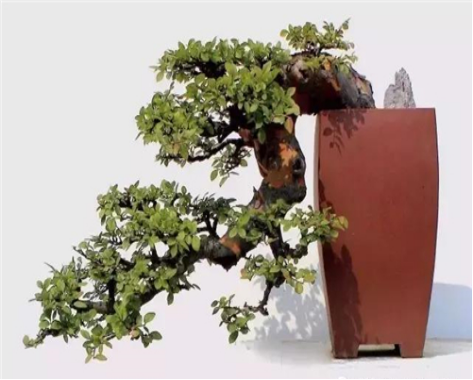
A detailed guide to the entire process of making an elm bonsai
Step 1: Pruning the roots and branches. Before planting, we first need to prune the branches and root system. The purpose is to make it easier to plant and also to help it grow better. Step 2: Treating the cut surfaces. Sticky sap often flows from the cuts on an elm. If the elm exudes too much liquid
-
A Detailed Guide to the Harvesting and Processing Methods of Camellia Oil
I. Harvesting: There are many varieties of camellia oleifera, and the fruit ripening period is generally from October to early November. Ripe fruit has the following characteristics: the camellia fruit is bright in color, red or yellow, with a glossy sheen; the fuzz on the fruit skin has fallen off completely; the hairs at the base of the fruit are hard and coarse; the fruit shell is slightly split; the seed shell turns black and shiny; and the kernel shows oil. Camellia fruit should be harvested promptly once ripe. For different varieties, harvest early-ripening fruit first and late-ripening fruit later, picking as they ripen; for ripe fruit of the same variety, harvesting should also be completed within about 7 days. The harvested camellia fruit should be piled indoors for 6 to 7 days to let
-
A Detailed Guide to the Entire Processing Flow of Dragon Whisker Tea
Dragon Whisker Tea is a special congou black tea created by Ninghong Tea Village in Manjiang Township, Xiushui County, Jiangxi Province, using a unique craft. It rose together with "Ninghong" during the reign of Emperor Daoguang of the Qing Dynasty, and was named for its finished tea "wearing a red robe and shaped like a whisker." Dragon Whisker Tea is particular about material selection, finely made, unique in style, and excellent in quality. In the past, the tea firms (factories) of Manjiang each year would place 5-24 Dragon Whisker Teas as a topping layer in the first batch of high-quality "Ninghong" tea chests for export (commonly known as tribute chests), as a decorative flourish and mark, and the product sold well in Soviet Russia and the countries of Europe and America. This tea is also packed in refined small
-
Characteristics of the Fuding Damao Tea Cultivar and an Introduction to the Tea Types It Is Suitable For Processing
It belongs to the clonal propagation line. It is a national-level improved cultivar. It originates from Fuding County, Fujian Province. It has a cultivation history of one hundred years to date. It has been introduced and cultivated in Zhejiang, Jiangsu, Jiangxi, Hubei, Anhui and other provinces. It is one of the high-yield, high-quality cultivars suitable for growing in low-hill red soil. Morphological characteristics: small tree type, large-leaf, early-budding cultivar. The plant is relatively tall and upright, with plump buds and leaves covered in abundant silvery-white downy hairs, and strong tenderness retention. Spring buds sprout in mid-March, and the peak period of one bud and three leaves is in early April, with a hundred-bud weight of 104 grams. It can be processed into famous teas of different appearances. It is not only a premium raw material for processing "
-
A Detailed Guide to the Processing and Making of Persimmon Leaf Tea
Persimmon leaf tea is a new type of health drink made from persimmon leaves. Persimmon leaves contain tannins, choline, protein, minerals, sugars, flavonoids and other substances useful to the human body, and are especially rich in vitamin C, with 1s of vitamin C per 100g of fresh persimmon leaves. Regular drinking of persimmon leaf tea has various health functions such as relieving constipation and promoting urination, purifying the blood, and resisting bacteria and reducing swelling. The key processing techniques are as follows: 1. Harvest leaves at the right time. The best time to collect persimmon leaves is summer and autumn, when the fruit has basically taken shape and the persimmon leaves are thick and large
-
How Is Asparagus Tea Made? A Complete Guide to the Production Process
1. Process flow: raw material picking - spreading to air-dry - drum fixation - air cooling - second hot-air fixation - rolling - spreading the batch and cooling - hot-air drying - finished product - packaging. 2. Key operating points: 1. Raw material picking: length 3-3.5 cm, and the cut lengths must be highly uniform. 2. Spreading to air-dry: gather the picked raw material and spread it out flat in a room with good ventilation and air convection; generally use bamboo mats or plastic film as a ground liner, and let the surface moisture dry off under natural conditions. 3. Drum fixation: place the spread
-
A Detailed Explanation of the Origin and Development History of Black Tea ⟧2⟧Black tea originated in the Ming Dynasty in the 16th century. During the tea manufacturing process, it was discovered that sun-drying could replace the fixing (kill-green) step
Black tea originated in the Ming Dynasty in the 16th century. During tea manufacturing, it was discovered that sun-drying could replace fixation (kill-green), and after rolling the leaves turned red, thus producing black tea. The earliest black tea production began with Souchong black tea in Chong'an, Fujian. In the Qing Dynasty, Liu Jing's "Pian Ke Yu Xian Ji" records: "At the ninth bend of the mountain there is Xingcun town, where tea experts gather. Tea produced elsewhere in the province such as Shaowu and Jiangxi Guangxin, with black leaves and red soup, locally called Jiangxi Wu, is all privately sold to the various firms of Xingcun." After the appearance of Xingcun Souchong black tea, Congou black tea gradually evolved. In the 1920s, India crushed tea leaves during processing to make broken black tea, and in the 1950s our country also began trial production of broken black tea.
条件筛选