-
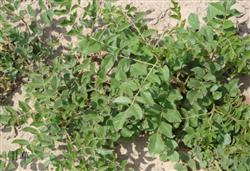
Detailed Guide to Harvest Time and Processing Methods of Licorice
Key technical measures for high-yield cultivation: choose fertile, loose-textured, well-drained sandy loam soil for planting. Treat seeds before sowing to improve germination rate, water during the seedling stage to keep seedlings alive, and apply sufficient phosphorus and potassium fertilizer every early spring. Harvest and processing 1. Harvest: Licorice propagated by seed generally grows for 4...
-

A Detailed Guide to the Artificial Cultivation and Processing of Litsea cubeba
Artificial Cultivation and Processing Techniques for Litsea cubeba
-
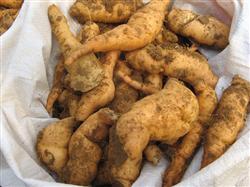
How to harvest and process Rehmannia (Chinese foxglove) during cultivation? A detailed guide to the methods
How is Rehmannia harvested and processed? Please introduce the methods. Rehmannia harvesting and processing can be carried out with reference to the following methods: 1. Harvesting Rehmannia: the leaves, flowers, and rhizomes of Rehmannia can all be used as medicine. For Rehmannia leaves, in the late growth stage of Rehmannia, select robust, disease-free plants, pick some leaves appropriately, and dry them in a cool place...
-

A Detailed Guide to the Harvesting Standards and Processing Methods for Goji Berries
1. Harvesting requirements: Medicinal goji berries (Lycium barbarum) ripen successively from June to November and should be harvested at the right time. They can be picked when the fruit turns from green to red or orange-red and the fruit stalk and flesh become slightly soft. If picked too early, the fruit is not plump and its color after drying is dull; if picked too late, the sugar content is too high and the fruit easily drops off, becoming dark purplish-black after sun-drying or oven-drying (commonly known as oil seeds) and losing its commercial value. Picking is best done after 10 a.m. on a clear day. Never pick fruit after rain or when covered with dew. Handle it gently when picking and remove it together with the fruit stalk. Otherwise, the juice will flow out and affect its internal quality.
-
Detailed Guide to Dried Goji Berry Production: Processing Methods from Fresh Fruit to Dried Fruit
I. Sun-Drying Method 1. Mix freshly picked goji berries evenly with alkaline water, then spread them evenly in goji trays ("goji tray": a specialized tool for sun-drying or oven-drying goji berries. Generally, it is a wooden frame nailed together from wooden strips, 90 cm long and 60 cm wide, with window screen nailed to the bottom of the wooden frame, and a crossbar nailed below the window screen. The goji berries are spread on top of the window screen. Note: some use cardboard or bamboo mats, but none have better breathability and ventilation than window screen). Dry in a shaded, well-ventilated place (one day is preferable). Wait
-
A Detailed Guide to Goji Berry Cultivation Techniques and Harvesting and Processing Methods
Goji berries are a commonly used traditional Chinese medicinal material and also a tonic food, with effects such as nourishing the kidneys, moistening the lungs, tonifying the liver, and improving eyesight. They are a good medicine for treating liver-kidney yin deficiency, soreness and weakness of the waist and knees, dizziness and blurred vision, excessive tearing, consumptive cough, and seminal emission. In recent years, they have also been used to make health foods such as candies, wine, canned goods, and beverages, and they are also the main raw material for producing Chinese patent medicines such as "Qiju Dihuang Wan." Their uses are becoming increasingly widespread, and sales are growing day by day. In places with suitable conditions, cultivating goji berries has broad prospects. Goji berries are mainly produced in Ningxia, Gansu, Qinghai, **
-
A Detailed Guide to the Harvest Time and Processing Methods of Angelica sinensis
This product is the dried root of Angelica sinensis, a plant in the Apiaceae family. (1) Origin: mainly produced in Minxian, Wudu, Zhangxian, Chengxian, Wenxian and other places in Gansu, and also produced in Yunnan, Sichuan, Shaanxi, Hubei and other provinces. It is mainly cultivated. (2) Processing at origin: dug up in late autumn, the fibrous roots and sand and soil are removed, and after the moisture has evaporated slightly, it is tied into small bundles, placed on racks, and slowly smoked dry with smoke and fire. (3) Characteristics: slightly cylindrical, with 3-5 or more branch roots at the lower part, 15-25 cm long. The surface is yellowish-brown to brownish-brown, with longitudinal wrinkles and transversely elongated lenticels. The root head (gui head) is 1.5-4 cm in diameter, with
-
A Detailed Guide to Harvesting and Processing Methods for Schisandra (Schisandra chinensis)
Harvest from late August to early October, picking as they ripen. For processing, they can be sun-dried or oven-dried; keep the room temperature at 60°C, and when the schisandra berries are half-dry, lower the temperature to 40-50°C; when they are 80% dry, move them outdoors to sun-dry until fully dry, then rub off the fruit stalks and pick out the black berries before storing them in the warehouse.
-
Detailed Guide to Harvesting and Processing Licorice Root (Part Two)
For seed propagation, harvest after 3 to 4 years; for rhizome and division propagation, harvest after 2 to 3 years. Digging can be done from late autumn to early winter and before spring sprouting. Those dug in autumn are the best, with a high glycyrrhizic acid content and a firm texture. After the licorice is dug out, clean off the soil, remove the stem base, branches and fibrous roots, cut into sections of appropriate length, sun-dry until half dry, tie into small bundles, then sun-dry until completely dry.
-
A Detailed Guide to Processing and Making Licorice Watermelon Seeds
Ingredients: 500 g watermelon seeds, 10 g peanut oil, 25 g refined salt, 3 g licorice, 50 g quicklime. Method: 1. Pour the quicklime into a large bowl, add 500 ml of clean water, stir well to make lime water, then add the watermelon seeds and soak for 4-5 hours, then remove them, rinse thoroughly with clean water, and remove the mucous membrane on the shells. 2. Put the refined salt and licorice into a pot, pour in 150 ml of clean water, place over high heat and boil for 10-15 minutes, filter out the licorice to make licorice salt brine
条件筛选