-

What new changes have been made to the provincial governor responsibility system for the "rice bag"
Strengthening the sustainable grain production capacity, protecting farmers' enthusiasm for growing grain, enhancing local grain reserve capacity, ensuring grain market supply, and ensuring grain quality and safety... Recently, the General Office of the State Council issued the "Measures for Assessing the Provincial Governor Responsibility System for Food Security," which clearly stipulates
-
Jinan releases reserve vegetables to the market, cabbage just over 1 yuan per jin
In recent days, snow, falling temperatures and a cold wave have hit Jinan, causing vegetable prices to soar. To stabilize vegetable prices and ensure the supply of the "vegetable basket" in the Jinan urban area, on the 23rd Jinan used the government's emergency reserve vegetables and officially released them to the market, at prices far below market price. It is understood that
-
Shenzhen Fourth Quarter Agricultural Product Monitoring: Cabbage and Others Found Non-Compliant
Recently, the Municipal Food and Drug Administration released the results of routine monitoring of agricultural product quality and safety in Shenzhen for the fourth quarter of 2015. According to the monitoring, a total of 1,080 samples of edible agricultural products were monitored across the city, with 39 non-compliant samples, giving a sample compliance rate of 96.4%. Among the various products sampled,
-
Farmland reduced to a garbage dump exposes the problem of officials' inaction
There is an old Chinese saying: it is hard to leave one's native land. After many urban villages in Zhengzhou were demolished, the villagers all hoped to be resettled in their original villages. But the people of Tangzhuang Village, Longyuan Office, Zhengdong New District, Zhengzhou, are unwilling to return to their old home in the demolition and resettlement, and they strongly
-
To keep the public's "rice bag" secure, three mindsets must be established
The provincial grain circulation work conference held in Chengdu on January 20 proposed to promptly formulate implementation opinions and assessment measures for the "Several Opinions of the State Council on Establishing and Improving the Provincial Governor Responsibility System for Food Security," break down, refine and quantify the indicators, and put the "rice bag" provincial governor responsibility
-
How to respond to falling Chinese cabbage prices? Ordinary cabbage prices down 40% year-on-year
Editor's note: As the saying goes: turnips at the Start of Winter, cabbage at Light Snow. Right now, many areas in northern China are successively entering the peak marketing period for Chinese cabbage. Compared with last year, Chinese cabbage prices have fallen in many places this year, with declines in some areas approaching 40%. What are the reasons causing
-
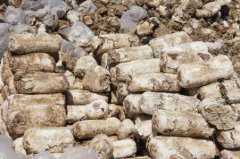
How to Handle Discarded Mushroom Sticks and Bags, and the Effects of Eating Raw Shiitake Mushrooms
Xinshe in Taichung is the main production area for shiitake mushrooms in Taiwan, China, supplying about 80% of the shiitake mushrooms for the whole of Taiwan, China. With large-scale shiitake cultivation comes the problem of handling a huge number of discarded space bags. Because the price of waste bag disposal has soared, mushroom farmers have no choice but to pile the waste bags in their mushroom sheds.
-
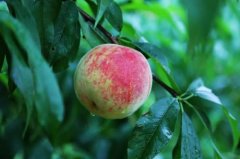
When is the best time to bag peaches? Detailed explanation of fruit thinning and pinching methods
Bagging peaches can be discussed in several parts, and I hope it will help farmer friends who grow peaches. Let's take a look together! 1. Central region: because the cold snap each winter differs, the bagging time also differs slightly. (Generally, the time for pruning peach branches. The older generation taught me that it is within 10 days before and after the winter solstice, that is, from December 12 to January 2 of the following year.) February 24, 2009. In 2010 it was February 26. In 2011 it was March 10. It changes a little almost every year.
-
A Detailed Guide to Identifying and Controlling Common Pests and Diseases of Chinese Cabbage
Chinese cabbage has a long history of cultivation in China and is a major vegetable for winter and spring in Northeast and North China. The leaves can be stir-fried, eaten raw, salted, or pickled in sauce, and the outer fallen leaves can still be used as feed. However, because Chinese cabbage is relatively cold-tolerant and prefers a cool climate, when it encounters high temperatures, it is prone to pests and diseases.
-
Symptoms and Control Methods of Black Rot in Chinese Cabbage
Chinese cabbage is a very common vegetable, cultivated in all parts of our country, and there are many ways to eat it. Whether stir-fried plainly or pickled, it has its own unique flavor. Chinese cabbage has low requirements for the growing environment and is easy to manage. A common disease of Chinese cabbage is black rot,
条件筛选