-

Grain prices too low hurt farmers again, with low grain prices and piled-up stockpiles the main causes
China had a bumper grain harvest this year, but farmers are hardly happy, because the sharp drop in grain prices could send their incomes plunging. Since the start of autumn, corn and wheat prices in the main grain-producing areas have all fallen to varying degrees. The drop in corn prices has been especially pronounced, with farm-gate prices falling by an average of
-
Why the Northern Wheat Purchasing Peak Is Slow to Appear
The 4-month concentrated wheat purchasing period has quietly passed its halfway point. Since the 2015 summer harvest, the buying and selling of new wheat has been less active than in previous years, and market conditions appear weaker year on year. Good wheat prices have stabilized, while low-quality wheat is cheap and hard to sell. Since mid-July, the heat in the new wheat purchase and sale market in the main producing areas has
-
Oils and fats market expected to see a wave-like upward trend in the future
After rebounding from a year-to-date low last week, the three major domestic oils and fats varieties as a whole remained in a choppy consolidation this week (July 13-19, 2015). On the 16th, soybean oil, palm oil and rapeseed oil futures varieties fell collectively once again. The main 1601 contracts of soybean oil, palm oil and rapeseed oil futures all opened lower and moved lower, closing down 1.08%, 1.54% and 0.79% respectively at the end of the session.
-
Why has chemical fertilizer off-season storage decreased for the first time?
Since China established the commercial off-season storage system for chemical fertilizer in 2004, the volume of off-season chemical fertilizer storage had only increased and never decreased, rising from 800 million tons at the beginning to 1800 million tons in 2013, with an average annual growth of 125%. However, this year the volume of off-season chemical fertilizer storage fell for the first time. In this round, storage enterprises with an off-season chemical fertilizer storage volume of 50000 tons or less made no change, those with 100000 to 200000 tons reduced their contracted storage volume by 20%, and those with more than 200000 tons reduced their contracted storage volume by 25%.
-
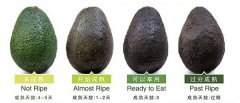
How do you tell if an avocado is ripe? When is the best time to eat it
Avocado is a high-energy, low-sugar fruit. In terms of health benefits, avocado helps strengthen the stomach and cleanse the intestines, and has important physiological functions such as lowering cholesterol and blood lipids and protecting the cardiovascular and liver systems. It is suitable for infants, young children and the elderly, and it is recommended to eat one a day
-
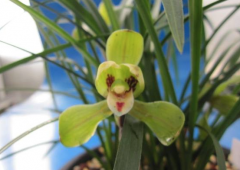
A Detailed Guide to the Appearance and Variety Characteristics of Chunlan 'Yongfengmei'
The Yongfengmei orchid is an old variety of Chunlan (Chinese orchid), selected in 1920 by a flower farmer from Shaoxing in Fenghua. It also has another name, Yuanmei. Its flowering period differs from that of other orchids - it blooms 10 days to half a month later than ordinary Chunlan! Characteristics of Yongfengmei:
-
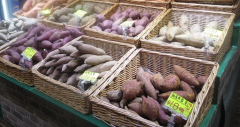
What about egg-yolk sweet potatoes? A comparison of yellow-fleshed and purple-fleshed sweet potatoes in appearance, taste and price
The "hidden" yet "sinful" purple sweet potato desserts are all the rage, and the method for growing purple sweet potatoes is not difficult. Is purple really so special? If you know how to eat, what color should you eat? Yellow sweet potatoes, purple sweet potatoes, and even orange sweet potatoes and white sweet potatoes - how do you choose a sweet potato? From the owner of the local organic vegetable stall "Ran She"
-
Is Cuban oregano (touch-me-not scented plant) toxic? Explaining the causes of yellowing leaves in potted cultivation
also be used to make tea, brew soup and so on, so it has quite a few uses. Let us take a look below at <strong>Is Cuban oregano toxic? Why do potted plants show yellowing leaves?</strong></span></p> <p style="text-align: center;"></p> <p style="text-indent:2em;"><strong>1. Is Cuban oregano toxic?</strong></p> <p style="text-indent:2em;">Cuban oregano is not toxic and can emit an inviting fragrance, as fresh as mint and carrying a faint apple scent. Cuban oregano is a small potted plant that can be both viewed and enjoyed for its scent, with an aroma like mint yet slightly appley. It refreshes the mind, clears heat and relieves summer heat, and repels mosquitoes. Cuban oregano can be kept indoors. Except for some friends who are allergic to the scent, everyone else can safely grow Cuban oregano at home; it can freshen the air and give off a faint fragrance.</p> <p style="text-indent:2em;"><strong>2. Why do potted Cuban oregano plants show yellowing leaves?</strong></p> <p style="text-indent:2em;">1. Too much watering</p> <p style="text-indent:2em;">Overwatering is a mistake many flower lovers make; too much water easily causes root rot. So first you need to check whether you have watered too much. Cuban oregano does not tolerate water; too much water causes root rot, and rotten roots make the leaves turn yellow.</p> <p style="text-indent:2em;">Cuban oregano likes to grow in dry soil, so when cultivating it the soil needs to be kept alternately dry and moist; on rainy days reduce or stop watering as much as possible, because soil that is too dry or too wet can both easily cause the plant's roots to rot.</p> <p style="text-indent:2em;">In late autumn, when the temperature gradually drops, gradually reduce the frequency of watering Cuban oregano, and water appropriately when the soil surface looks dry. You can also let it get a little rain. At ordinary times it still needs to be kept in sunlight. Moreover, plants placed in the open air clearly grow better than those indoors.</p> <p style="text-indent:2em;">When the temperature is below zero, do not water. When the temperature is too low, at this time both day and night it must be covered well with plastic sheeting or plastic bags, and watering is forbidden. If it is placed in the open air, let it get some sun during the day, and at night something must cover it, otherwise it will freeze to death overnight.</p> <p style="text-indent:2em;">2. Improper fertilizing</p> <p style="text-indent:2em;">Potted Cuban oregano has limited soil, and the fertility of the soil alone is certainly not enough, so it needs fertilizing. However, too much fertilizer or a lack of fertilizer can both cause the leaves to turn yellow. Too much fertilizer causes fertilizer burn; too little fertilizer means insufficient nutrients.</p> <p style="text-indent:2em;">During its growing stages Cuban oregano does not need much fertilizer; we do not need to fertilize it deliberately, and we should keep the fertilizing frequency at about once a month. By all means avoid too much fertilizer, which causes root burn.</p> <p style="text-indent:2em;">3. Natural causes</p> <p style="text-indent:2em;">As time goes on, the stems of Cuban oregano gradually become woody, and the surrounding leaves also turn yellow and gradually wither; this is normal, and after withering new branches gradually grow.</p> <p style="text-indent:2em;">4. Insufficient light</p> <p style="text-indent:2em;">Cuban oregano loves sunlight and is slightly shade-tolerant; its suitable growing temperature is about 5°C to 10°C. We need to place it in an environment with abundant sunlight for care, so only under strong light will the fleshy leaves of Cuban oregano be thick.</p>
-
Where are tomatoes native to, and why do they only flower without bearing fruit when grown?
Tomato is a very healthy vegetable, with bright red skin that looks quite appetizing. Tomatoes taste sweet and sour, and have a certain flavor whether eaten raw or cooked. Tomatoes are cultivated in various places; let's take a look below at tomatoes
-
What does a rosewood tree look like? Get to know its appearance and features
Rosewood is a general term for several kinds of wood from trees, shrubs or woody vines of the genus Dalbergia in the Fabaceae (papilionaceous) family; it does not refer to a single plant. Depending on the species, it can be divided into black rosewood, red rosewood and white rosewood, among others. The reason it is called rosewood is that when the tree is cut open
条件筛选