-

Food security strategy should be actively and steadily adjusted to adapt to the new normal
At present, China's grain sector is marked by the simultaneous coexistence of "six highs": high output, high imports, high reserves, high waste, high trans-regional transport, and high consumption. Food security is an important component of national security and must always be given a high degree of attention. During the 13th Five-Year Plan period, we should proactively adapt to the new normal and actively and steadily adjust
-
Agricultural outward investment must adapt to the new normal and accurately grasp development opportunities
In 2014, China's outward investment scale exceeded the scale of absorbed foreign investment for the first time, making it a net capital exporter. This means that since reform and opening up, the development pattern that mainly relied on exports and attracting investment has undergone a major transformation. Under this new normal, agricultural outward investment is facing
-
The downward trend in the market is hard to reverse; operators must adapt to change
In recent years, China's cotton production has undergone profound changes. Affected by continuously rising labor prices, cotton production costs have continued to rise. Compared with major cotton-producing countries internationally, China's cotton production is at a disadvantageous competitive position. Although from 2011 to 2013 the state adopted
-
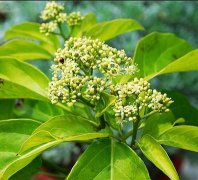
How to Grow Nothapodytes nimmoniana in Xishuangbanna? Detailed Guide to Suitable Climate and Cultivation Techniques
Nothapodytes nimmoniana is a medicinal plant with relatively high medicinal value, having effects such as detoxification, reducing swelling and dispelling wind, and its medicinal value is fairly broad. So do you know how to grow this plant? Let us find out together. Nothapodytes nimmoniana is a plant that lives in tropical and sub
-
How to Plant Jujube Seeds? A Detailed Guide to Sowing and Raising Seedlings
Jujube is a temperate crop with strong adaptability and a wide growing range. Long known as the "ironclad crop," it is drought-tolerant and waterlogging-tolerant, making it the top choice of good variety for developing water-saving fruit forestry. So, how do you plant jujube seeds? 1. How to Plant Jujube Seeds? Remove the shell of the
-
How to Grow Astragalus? Detailed Explanation of Planting Methods and Key Techniques
Astragalus has very strong adaptability and can be grown in general soil. It is relatively drought-tolerant and afraid of waterlogging. It is cold-resistant and can overwinter in the field, but deep, loose, fertile soil can yield high production. Continuous cropping is prohibited. Cultivation management: ① Planting method: Propagate by seed. Both pre-winter sowing and spring sowing are possible. Pre-winter sowing is done at the Frost's Descent to Start of Winter solar terms, and spring sowing at the Spring Equinox to Grain Rain solar terms. It should be noted that the seeds have many hard seeds, poor water absorption, and a relatively low germination rate, so the seed collection season and collection period should be well controlled. Harvest when the seeds turn brown; when the seeds are fully mature and turn black with spots, they become hard seeds and rarely germinate. To improve the germination rate, seed priming treatment should be done before sowing. Soak the seeds in warm water at 50°C, stirring constantly until cool, with the amount of water just enough to cover the seeds. After soaking for 6—12 hours, remove the seeds, put them into a cloth bag to promote germination, and then sow. Astragalus seeds generally germinate in 3 days. If sowing cannot be done in time, losses will be caused, so generally no germination-promoting treatment is done and seeds are sown directly, but a germination test should be done in advance. Use 1—1.5 kg of new seeds per mu. Before sowing, choose sandy soil with high terrain, deep soil layer, good drainage, and strong water permeability, apply sufficient base fertilizer, plow and harrow finely, make wide beds and level them. After watering and 3—5 days, when one can enter the bed to work, use an iron rake to level the bed surface, open shallow furrows 2 cm deep at a row spacing of 23—27 cm, evenly scatter the seeds into the furrows, push along the furrows once with the corner of a large hoe, and closely combine the seeds with the moist soil at the bottom of the furrows. Then rake the loose soil on the bed surface level and fine. Due to different varieties, some produce only stems and leaves in the first year, do not bloom or set seed, and only bloom and set seed after the second year, while some varieties bloom and set seed in the same year. People customarily call them hard-stem and soft-stem Astragalus. ② Field management: Keep the soil moist before emergence; after emergence, water less and loosen the soil more to promote downward root growth. When the seedlings are 6—7 cm tall, thin to a plant spacing of 10—13 cm. When the seedlings are 17—20 cm tall, apply topdressing, with 10—15 kg of ammonium sulfate and 25—40 kg of fermented cake fertilizer per mu. When about to bloom, water demand gradually increases, so the number of waterings can be appropriately increased. The seeds mature at Minor Heat, and at this time watering should be reduced or stopped. If there is a lot of rain, drain promptly to prevent root rot. Harvest and processing: In the autumn of the planting year or the autumn of the second year, dig and harvest when the aboveground stems and leaves wither. Carefully dig out the roots, shake off the soil, remove the reed stems, dry in the sun, tie into small bundles, and sell. Generally, the yield of dried product per mu in the same year is 250—300 kg.</p><p>Main diseases and insect pests: Red root disease (also called yellow flower purple root rot) easily occurs in July—August. Insect pests include stem borers and cutworms. Treat the disease accordingly.</p>
-
Pig Farming Tutorial: A Detailed Guide to Scientific Breeding Techniques and Daily Management Methods
Summary Correct breed selection: It is necessary to choose breeding pigs with strong adaptability and good fattening results. Control the farming quantity well: when just starting out, it can be kept at around 30-40 head, and once more experienced, it can be expanded to 50-80 head. Control farming costs well: in order to increase economic returns, you can mix
-
A Detailed Guide to Scientific Feeding Methods for Wild Ducklings
The wild duck is a specialty poultry with strong adaptability, a wide range of foods, tolerance of coarse feed, and ease of rearing. Under good nutrition and feeding management, it grows quickly and has a high feed conversion rate; at 60-70 days of age, it can reach a market weight of 1.3 kg, with a meat-to-feed ratio of 1:3. So how do you distinguish male from female wild ducks
-
How to Plant a Willow Tree? Detailed Planting Methods and Tips
The willow tree is a highly adaptable tree species with a beautiful shape, often planted in parks, courtyards, along shaped roads, and so on. So how do you plant it? Let's find out together with the editor of Tuliu.com. How to plant a willow tree. Cuttings: 1. Carry out cuttings in early spring, selecting fast-growing, pest- and disease-resistant superior plants as mother trees for cutting collection, and before budbreak cut 2-3 year old branches, cutting them into 15-17 cm lengths as cuttings.
-
How to Grow Cilantro (Coriander): Choose the Variety First, Then Adapt to Local Conditions
Cilantro is a vegetable that many people enjoy eating, but some people find it hard to swallow because of its smell, making it a green food with rather polarized opinions. The scientific name of cilantro is coriander, and it was introduced to China from Europe. Whether eating hot pot or cooking
条件筛选