-

Production Method and Management Technique Highlights for Sanghuang (Phellinus linteus) Cultivation Substrate
Production and Management Techniques for Sanghuang Cultivation Substrate
-
How to use fermentation aids in mushroom cultivation substrate
Using fermentation aids to make edible mushroom substrate has the characteristics of fast fermentation, thorough fermentation, being able to ferment at both high and low temperatures, greatly shortening the conventional fermentation production time, reducing labor intensity, and lowering costs; it also has the characteristics of "broad-spectrum" fermentation (it can ferment almost all organic materials that need fermentation) and "strong adaptability" (it has relatively loose requirements for environmental conditions). Comparative trial demonstrations of the Jinbaobei edible mushroom cultivation substrate fermentation aid produced by Beijing Huaxia Kangyuan Technology Co., Ltd. show that this fermentation microbial agent is more
-
Detailed Explanation of Key Techniques for Oyster Mushroom Cultivation on Sterilized Substrate
1. Preparation of the culture substrate: Select fresh materials free from mold, uniform in coarseness, and remove impurities. Mix the raw materials together in proportion until evenly blended, then add water and stir; control the moisture content at 60%, so that when squeezed into a ball in the hand, slight moisture appears between the fingers but no water drips out. Then fill into bags. 2. Sterilization: Use the high-pressure cabinet sterilization method, holding at 120°C under stable pressure for 2-3 hours; or the steam sterilization method, steaming thoroughly at 100°C and holding for 4-6 hours. A steamer pot can also be used for sterilization: first add water to the pot, attach a steaming rack on top, and cover tightly with pressure. After steam rises from the top layer, sterilize for 10-15 hours.
-
High-yield technique for bag cultivation of oyster mushroom on fermented coarse sawdust substrate
At present, with the development of the edible mushroom industry, the demand for raw materials is also growing. In recent years, the price of fine sawdust in the three northeastern provinces has soared, while coarse sawdust has become waste (such as the coarse sawdust sifted out through the electric sieve on the chipper and the coarse sawdust produced by the branch and twig crusher). The author used the locally abundant coarse sawdust as the main fermentation ingredient to cultivate oyster mushrooms, and the summary is as follows: 1 Test strain Oyster mushroom 2026, whose mother culture was provided by the Shijiazhuang High-tech Edible Mushroom Station in Hebei. The stock culture was a corn kernel medium, with corn kernels 99% and gypsum 1%. Soak or boil the corn kernels,
-
Key Technical Points for Field Cultivation of Shiitake Mushrooms on Substitute Substrates
With the advancement of science and technology and the development of the market economy, shiitake mushroom cultivation is also continuously improving and innovating. Not long ago, the editor received phone calls from farmers such as Li Xiliang of Baigenli Village, Kele Town, Nenjiang County, asking about the techniques for field cultivation of shiitake mushrooms. We have specially selected and compiled the manuscript "Cultivation Techniques for Field Cultivation of Shiitake Mushrooms on Substitute Substrates," hoping it will be of help to you. 1. Preparation of the cultivation substrate There are many formulas for the culture medium used in field cultivation of shiitake mushrooms on substitute substrates. Two are introduced here: one is 80% hardwood sawdust, 10% wheat bran, 7% rice chaff, 1% gypsum powder, 2% soybean cake powder, and 0.1-0.2% 50% wettable
-
Key Technical Points for Winter Management of Lentinula edodes (Shiitake) Cultivation on Substitute Substrate
After the onset of winter, temperatures drop and relative air humidity is low, so management should center on raising the bed temperature, controlling ventilation, and keeping warm and protecting against cold. Corresponding management measures should be taken for different strains. For medium- and high-temperature-type strains, there is almost no hope of further fruiting below 10°C; at this time, water should be sprayed in the afternoon each day along with brief ventilation, just keeping the logs moist so they can overwinter smoothly. For medium-temperature-type or slightly lower-medium-temperature-type strains, there is still hope of fruiting in provinces where winter is not pronounced. Based on weather forecasts, cold waves can be avoided, and the brief periods when temperatures rise can be used
-
Detailed Explanation of High-Yield Cultivation Techniques for Ganoderma lucidum Using Short Logs with Sterilized Substrate
Short-log sterilized-substrate cultivation is a relatively fast-developing new technique for cultivating Ganoderma lucidum (reishi) in recent years. On average, more than 20 kg of dried mushrooms can be harvested per cubic meter of wood, with high yields reaching more than 30 kg, a 20% increase over conventional cultivation methods. The reishi produced is firm and thick in texture, glossy, and higher in acid content than bag-cultivated reishi, with more than 90% of the product meeting export requirements. 1. Cultivation season: Ganoderma lucidum belongs to the medium-to-high temperature type of fungi, and its yield is related to the tree species of the logs, cultivation time, and cultivation techniques. Inoculation time can be arranged from late October to December
-
Detailed Explanation of Bag Cultivation Technology for Shaggy Mane (Coprinus comatus) Using Fermented Substrate
I. Cultivation Timing and Spawn Selection (1) According to the actual conditions of each mushroom grower, substrate production is carried out in winter, spring, and autumn respectively. Since shaggy mane has the characteristic of not fruiting without casing soil, spawn bags can be mass-produced during the slack farming season, and casing soil applied 20-30 days in advance according to market demand for fruiting. (2) Select varieties with plump fruiting bodies, moderate individual size, few scales, disease resistance, and high yield. For fresh sales, choose solitary-growing varieties; for salting, choose cluster-growing varieties. II. Substrate Formulas Formula 1: cottonseed hulls 58%, corncob 30%, nitrophosphate-potassium 2%
-
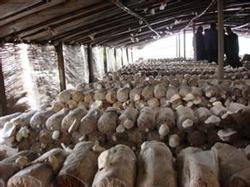
Detailed Explanation of Fermentation Methods for White Bailing Mushroom Cultivation Substrate
White bailing mushroom is a rare mushroom species developed in recent years. Its cultivation technology is becoming increasingly mature, and the marketability of its products is also getting higher and higher. It is believed that in the near future, white bailing mushroom will, like enoki mushroom and shaggy mane mushroom, become an ordinary member of the edible mushroom family and be commonly cultivated by the vast number of mushroom farmers. From the current situation, white bailing...
-
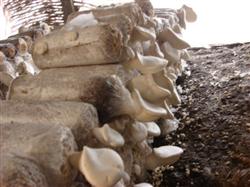
White King Oyster Mushroom Cultivation Techniques: Preparation and Sterilization of Growing Substrate
How do you prepare and sterilize the growing substrate for White King Oyster Mushrooms? Please refer to the following methods for preparing and sterilizing White King Oyster Mushroom growing substrate: 1. Substrate preparation: 100 kg cottonseed hulls, 5 kg cornmeal, 5 kg wheat bran, 3 kg lime, 2 kg gypsum. 2. Pile fermentation: The material for pile fermentation is best at around 300 kg...
条件筛选