-
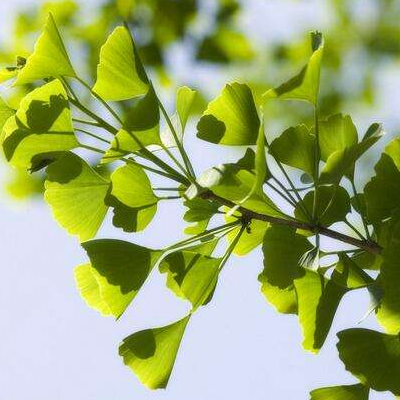
Detailed Guide to Ginkgo Cutting Propagation Methods and Suitable Timing
Ginkgo, this is something many people absolutely love. The ginkgo bears fruit, and the fruit it produces is called white fruit. How do you propagate ginkgo by cuttings? When can ginkgo be propagated by cuttings: For ginkgo cutting propagation timing, ginkgo can be propagated by cuttings in both spring and autumn. In spring, take cuttings
-
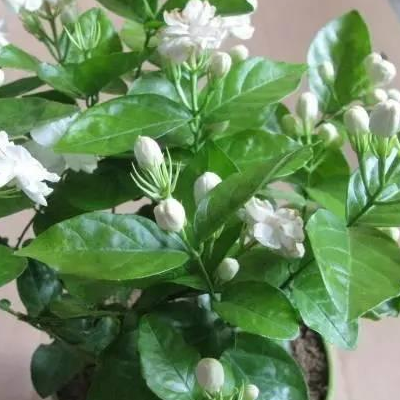
How to grow jasmine to extend the flowering period? Timing of fertilization matters
Jasmine, this is something many people absolutely love; as soon as jasmine blooms, it is incredibly fragrant. How to grow jasmine to extend the flowering period? When to fertilize jasmine: How to grow jasmine to extend the flowering period: besides the usual light but frequent fertilizing to make the plant grow stronger, environmental ventilation and appropriate light
-
Can Geraniums Repel Mosquitoes? A Detailed Guide to Cutting Propagation Timing
Geranium is a plant with a certain ornamental value. Can geraniums repel mosquitoes? When should they be propagated by cuttings? Can geraniums repel mosquitoes: Geraniums can repel mosquitoes. The geranium that repels mosquitoes is the scented geranium (rose-scented geranium), which, as the name suggests, is a plant that gives off fragrance, just like night-blooming jasmine, jasmine, and rosemary.
-
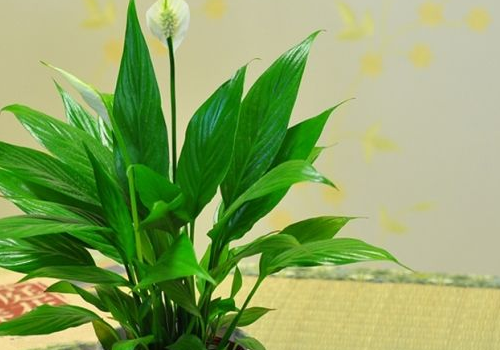
Peace lily: division timing and division method
Peace lily is also one of the plants, and it is something that a huge number of people know about, so when should a peace lily be divided? What is the division method: When to divide a peace lily: Peace lilies can be propagated by division and by sowing. A robustly growing plant can be divided about once every two years
-

Cultivation Timing and Management Key Points for Licorice
I. Seed Germination Habits (I) Water Absorption and Germination of Licorice Seeds Licorice seeds have a low emergence rate, generally around 10%, so they must be treated before sowing. Untreated seeds absorb water very slowly, and most seeds do not imbibe; seeds treated with concentrated sulfuric acid absorb water very rapidly, reaching over 100% within 4 hours. Generally, once water absorption exceeds 100%, the seeds have a very uniform germination capacity. If water absorption differs, the germination rate differs accordingly. At 20°C, after absorbing water for more than 1.5 hours, the germination rate reaches over 80%, at which point the moisture content is about 95
-
Autumn Fattening of Geese Is in Season, Goose Farmers Should Not Miss the Good Timing
Autumn weather is cool, green grass is abundant, and there is plenty of by-product after the autumn harvest, making it the best season for fattening meat geese. During this period, after 20 to 25 days of fattening, geese can generally gain 1.5 kg to 2.2 kg. For breed selection, choose meat-type hybrid breeds such as Lion Head geese and Xupu geese that are over 70 days old, lively, with glossy feathers, good at foraging, healthy and disease-free. Fattening methods: 1) Grazing fattening. During the day, drive the flock of geese to harvested fields to let them eat leftover grain heads, grass seeds, etc., and after returning to the shed at night, feed them 1 to 2 more times with concentrated feed and provide clean drinking water. 2) Shed fattening. Build a rack with bamboo or wooden sticks, with the rack 0.6 m to 0.7 m above the ground to make manure cleaning easier. Put 5 geese per square meter, make a small pen around them, place the feed trough and water trough outside the pen, and let the geese stretch their heads through the gaps to eat and drink. 3) Pen fattening. Use bamboo or reed stalks to enclose small pens, with 3 to 5 geese per pen. The height of the enclosure should be such that the geese can stand but not raise their heads. Place the feed trough outside the pen and let the geese eat and drink through the gaps. During pen raising, the shed should be quiet, grazing should not be done, activity should be restricted, and energy consumption should be reduced. For shed fattening and pen fattening, the feed should be diversified and combine concentrated and green feed. It can mainly consist of rice bran, broken rice, corn, blighted grain, vegetable leaves, etc., plus about 6% cake-type feed, 0.3% table salt, and concentrated feed ground fine, mixed into a wet feed for feeding, 5 to 7 times a day, with 1 to 2 additional feedings at night. In addition, adding 19 g manganese sulfate, 17 g zinc sulfate, 12 g ferrous sulfate, 2 g copper sulfate, 0.7 g potassium iodide, and 0.1 g cobalt chloride to every 100 kg of concentrated feed can increase weight gain by about 20%. However, when mixing the feed, it must be mixed evenly to prevent individual geese from being poisoned by eating too much. 4) Forced fattening. Mix powdered feeds such as corn, sweet potato, rice bran, and soybean cake with an appropriate amount of table salt and trace elements, add water and mix well, make strips 1 cm to 1.5 cm thick and 6 cm long, and after drying in the shade, manually stuff them into the goose's esophagus. When force-feeding, clamp the goose's body between your knees, grasp the goose's head with your left hand, open the goose's beak, dip a feed strip in water with your right hand, and use your index finger to stuff the feed into the esophagus. After each strip is inserted, gently push along the goose's neck with your hand to help it swallow. Feed 4 to 6 times a day, with 1 feeding at night. The amount of forced feeding depends on the goose's weight and digestive capacity. One hour before feeding, if a groove appears at the swollen part of the esophagus, digestion is normal; if it appears earlier than 1 hour before feeding, more feed is needed; if it appears later than 1 hour before feeding, reduce the feed or delay the feeding time. When force-feeding, also be careful to prevent the feed strip from being inserted into the trachea. In addition, attention should be paid to supplying sufficient clean drinking water.
-
How should the timing and method of cotton chemical growth control be handled?
Although cotton was sown late, the cotton seedlings also developed late. By early June, well-growing cotton fields in the north had already produced 7-8 true leaves, and some had already produced squares. Around June 10, most cotton fields will successively enter the squaring stage. In previous years on June 10, most cotton fields had already produced 3 fruiting branches; this year there will be two fewer fruiting branches, with no pre-dog-days bolls or few pre-dog-days bolls. This is not necessarily a bad thing: it can save the operations of removing early squares and removing the lower 1-2 fruiting branches, and it helps reduce rotten bolls and hard-walled bolls. According to the fixed-plant survey results of Guoxin Cotton Institute: June 10 to July 10 is the main
-
Stocking fish fingerlings in cages in autumn has many benefits, and the timing of release matters
After autumn fertilization in the pond, fish fingerlings are generally in robust health and adapt easily to the cage environment. At the same time, overwintering in sunken cages in large water bodies not only consumes less body weight in the fingerlings than overwintering in ponds, but also, after overwintering ends and the cages are raised in spring, the fish begin feeding earlier, and their growth period is extended by about 1 month compared with fish stocked in spring, so the fish grow quickly and production increases noticeably. Compared with fingerlings stocked in spring, fingerlings overwintered in sunken cages grow about 30% faster and are about 35% larger in size when removed from the cages. Therefore, stocking fingerlings in cages in autumn for overwintering is a relatively scientific
-
Bagging and Unbagging Peach Fruit: Proper Timing and Classification Are Key
Editor's note: Fruit bagging can effectively reduce fruit cracking and mechanical damage, improve the color of the fruit surface, greatly enhance the fruit's marketability, and also prevent and control pests and diseases, reduce pesticide use, and lower pesticide residues. To help farmer friends master this technique, we have specially invited relevant experts to introduce bagging techniques for peach, kiwifruit, citrus, pear, grape, and other fruits. In this issue, we introduce kiwifruit and peach bagging techniques. The kiwifruit bagging technical measures are: bag selection, fruit thinning, fruit setting, pesticide spraying, bagging, protection,
-
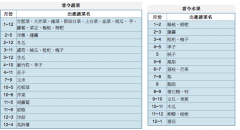
What does "in-season vegetables" mean? A guide to the timing of in-season vegetables now
In the past, vegetables were only produced within limited time periods, but now with new technology we can see any vegetable all year round; however, today's vegetables are not as nutritious as before. Every fruit and vegetable has a season best suited to its growth, called "
条件筛选