-
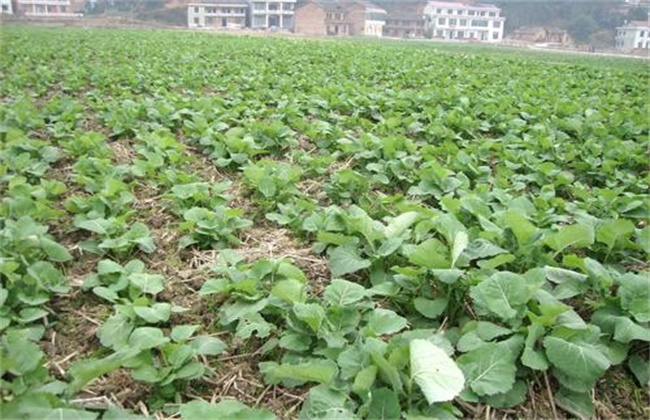
What are the measures for keeping rapeseed seedlings alive through winter? A full breakdown of the key points
Measures for keeping rapeseed seedlings alive through winter
-
8 vegetables that are toxic if not cooked through, absolutely must not be eaten
Eating more vegetables means getting sick less often, but some vegetables themselves contain toxins, and if they are not cooked through, they absolutely must not be eaten! Otherwise, you will get sick instead. 01 Green beans not cooked through...
-

Detailed Explanation of Mechanized Potato Production Technology Throughout the Entire Process
Shawan County has an annual potato planting area of 2,250 hectares, which has become a new highlight for increasing the income of farmers and herders in cool and cold regions. Because the traditional manual planting and harvesting methods are backward, labor-intensive, and low in efficiency, it is difficult to achieve large-scale operation. Through practice, advanced potato seeders and harvesters were introduced, and a mechanized technology for the entire potato production process was summarized. At present, this technology has been fully promoted. 1. Pre-planting preparation 1. Soil conditions Choose loam or sandy loam with deep soil layers, high organic matter content, loose and easily crumbled texture, good permeability, and medium or higher fertility.
-
How to Add Value to Sweet Potato and Rice Through Processing
Sweet Potato Starch Production Technology Wash the sweet potatoes, drain the water, crush them into pieces about 2 cm in size with a crusher, feed them into a stone mill or electric pulp grinder, add 3 to 3.5 times their volume of water, and grind into a starch slurry. Pour the starch slurry into a sieve with a mesh size of 60 and sieve out the potato residue to obtain starch milk. Place the starch milk in a settling tank and let it stand overnight so that the starch settles to the bottom of the tank. Drain off the supernatant, take out the crude starch, repeatedly rinse and settle it with clean water to obtain pure starch, then sun-dry, crush and sieve the starch to obtain
-
Important breakthrough made in hybrid japonica rice breeding
On the 18th, the reporter learned from the Shanghai Academy of Agricultural Sciences that agricultural scientists in Shanghai have made a breakthrough in hybrid japonica rice breeding in the Yangtze River Basin. Following the acquisition of the first hybrid late japonica rice restorer line in the Yangtze River Basin to obtain national plant variety protection rights, the first southern hybrid late japonica rice combination to pass national variety approval has also been bred. At present, a series of strongly heterotic combinations have become an important support for the "seed source" of hybrid japonica rice in the Yangtze River Basin. Researchers from the Crop Breeding Institute of the Shanghai Academy of Agricultural Sciences used intermediate materials between indica and japonica subspecies as "bridge parents"
-
Super-healthy watercress developed through genetic technology
Watercress was originally just an ordinary vegetable in the housewife's shopping basket. British scientists used transgenic technology to make watercress rich in the polyunsaturated fatty acids found in chicken and fish, turning it into a "super-healthy" vegetable. The Omega-3 and Omega-6 polyunsaturated fatty acids contained in this transgenic watercress can regulate blood pressure and immune responses and participate in cell signaling activities. Omega-3 is also believed to promote brain development and reduce the incidence of heart disease and rheumatoid arthritis in adults. Seaweed and mushrooms are rich in natural polyunsaturated fatty acids. British Bristol
-
Rice quality amylose tester successfully developed through the 948 Program
To fundamentally improve the current rice quality, namely the amylose content of rice, in 2001 the Ministry of Agriculture included the "Rice Quality Amylose Tester" project in the "948" Program. Organized and implemented by China Agricultural University, the project aimed to develop, through this research, a high-quality paddy quality testing instrument suitable for all stages and all levels. Under the leadership of project leader Professor Jia Guiru, Director of the Department of Applied Physics at China Agricultural University, the project has now been completed and has achieved remarkable results. It is reported that the rice
-
Haemanthus albiflos stays green through all four seasons and is full of vitality all year round
Haemanthus albiflos (white paintbrush lily) is a perennial evergreen herbaceous plant of the genus Haemanthus in the Amaryllidaceae family, native to southern Africa. The broad-leaved plants grow 20-30 cm tall, with a shortened or flattened-globose rhizome that is jointed. The leaves emerge from the base, are opposite, spreading and broad, usually 4-6 in number and neatly arranged. Haemanthus albiflos likes a sunny, warm, humid and well-ventilated environment. It is fairly drought-tolerant but not cold-tolerant, with an optimum growing temperature of 15-25°C, and requires well-drained, slightly acidic loam. The growing medium for cultivating Haemanthus albiflos can be made by mixing peat, leaf mold and river sand evenly. During the growing season
-
A new late japonica rice variety Xiushui 110 achieves source-sink optimization through morphological type innovation
Xiushui 110 was bred by the Yao Haigen project team of the Jiaxing Academy of Agricultural Sciences in Zhejiang Province using the hybridization method, with the combination Jia 59 Tianza/Bing 95-13. In 2001 it passed variety approval by the Shanghai Municipal Variety Approval Committee, and in 2002 it passed variety approval by the Zhejiang Provincial Variety Approval Committee. In 2004 it received a post-variety subsidy from the Ministry of Science and Technology and the Ministry of Agriculture for the selection and breeding of new high-quality specialized crop varieties and research on breeding technology. In 2004 it won the first prize of the Zhejiang Provincial Science and Technology Award. 1 Morphological type innovation, achieving source-sink optimization
-
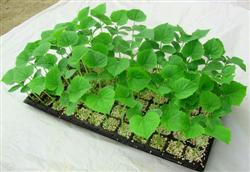
Detailed explanation of key techniques for raising cucumber seedlings through the summer
Normally, vegetable growers mostly sow summer cucumbers directly, thinking that since summer temperatures are high there is no need to raise seedlings, and besides, raising seedlings takes labor and time and is rather troublesome. According to my years of experience, in fact, growing summer cucumbers by raising seedlings is much better than direct sowing. Specifically, there are two major benefits: first, it favors early transplanting and early marketing, and growers...
条件筛选