-

What is going on with geese pulling white droppings, shaking their heads, coughing and having difficulty breathing?
1. Clinical symptoms: Sick geese are listless, with ruffled feathers, unwilling to move, standing apart and dazed, with reduced appetite or even complete loss of appetite, pulling white or green watery droppings, showing respiratory symptoms such as head shaking and sneezing, and neurological symptoms such as twisted necks, circling and head tilting appearing in the flock. 2. Treatment: 1. Emergency injection of avian influenza-paramyxovirus bivalent yolk antibody, 2 ml per bird. 2. Zhongmu Hudu Kuaike (100 g), two bottles per day, once in the morning and once in the evening, concentrated in drinking water, for 3 consecutive days. 3. Changganqing (100 g
-
Three things to note when cultivating oyster mushrooms in winter
Mushroom yard selection The ideal site suitable for winter cultivation is a mushroom yard with warming and insulation conditions, such as an indoor mushroom house equipped with warming conditions, a warmer underground mushroom yard, and a raised-bed mushroom yard using plastic greenhouse cultivation, etc. The temperature of this type of mushroom yard can be controlled above normal temperature, which is beneficial to mycelial growth and can also promote earlier fruiting. Usually, for early winter cultivation, an outdoor mushroom yard can be chosen; for late winter cultivation, an indoor mushroom house should be chosen. Strain selection Winter-cultivated oyster mushrooms can be divided into two types according to the fruiting period arrangement: winter cultivation with winter fruiting and winter cultivation with spring fruiting. For the former, low-temperature type varieties
-
Feeding pigs dry feed has many benefits; these advantages are something farmers should know
The traditional method of feeding pigs with watery feed is not conducive to the growth and development of pigs. Because adding too much water to the feed will prevent pigs from chewing the feed thoroughly, affect saliva secretion, dilute gastric juice, be unfavorable for digestion, and cause frequent urination, creating an extra physiological burden and consuming nutrients. According to measurements, when pigs eat 200 grams of dry feed, they secrete 335 milliliters of saliva; if 200 grams of water is added, saliva secretion drops to 196 milliliters; when 600 grams of water is added, saliva secretion is only 115 milliliters. Therefore, when pigs eat watery feed, it will seriously affect digestion and absorption, leading to dry feces
-
Things to note when potting and repotting azaleas
Azaleas should be potted once the cuttings have taken root. For pots, clay pots with good permeability are best, purple sand pots come second, and glazed pots and porcelain pots are the worst. When potting, pay attention to choosing the size of the pot, and never use a large pot for a small seedling. If the pot is too large, the potting soil stays wet for a long time, aeration will be poor, and at the same time the roots can easily fail to reach the pot wall, affecting the development of the seedlings. Generally, for rooted cuttings you can choose a clay pot with a diameter of about 10 cm, and after one year repot into a flower pot of about 15 cm. When potting, pay attention to making a good drainage layer: first cover the drainage hole with a piece of tile, then put
-
What to do when the white part of scallions is short, thin, and hollow? Control measures and integrated management
1. Select excellent long-white scallion varieties, such as Zhangqiu scallion, grain scallion (whip-pole scallion), etc. 2. Choose a plot with deep soil, fertile texture, and good drainage, and carry out deep plowing and fine harrowing; generally plow deeper than 30 cm, dig 20-30 cm deep, 15-30 cm wide or more, with ridges 70-80 cm wide between furrows to facilitate earthing up. Before planting, open furrows and apply fertilizer, applying 1000-5000 kg of farmyard manure per mu, then subsoil the furrows deeply so that manure and soil are combined. 3. Plant between Grain in Ear and Minor Heat; earlier is better than later. If planted too late,
-
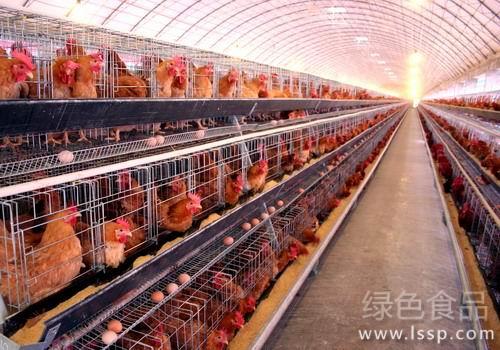
Calcium Supplementation Methods for Caged Laying Hens Producing Soft-Shelled and Thin-Shelled Eggs
Laying Hens Producing Soft and Thin Eggs Need Calcium Supplementation: Calcium Supplementation Methods for Caged Laying Hens
-
Northeast "Strange Rice" succeeds in trial planting in Heilongjiang and begins to be promoted to farmers within the province
Sitting on a pile of plump rice sacks with a beaming smile, Jin Yushi, a farmer from Xiangfang District, Harbin, is very gratified by the bumper harvest of the 8 mu of "Northeast Strange Rice" he planted this year. This year, low temperatures and scant sunshine caused reduced yields in some rice-producing areas of Heilongjiang Province. However, some rice growers who applied new technologies and new varieties still steadily achieved high yields. Among them, rice farmers Jin Yushi, Zhang Zibin and others obtained a good harvest by accepting the suggestions and guidance of scientific and technical personnel, introducing "Northeast Strange Rice" and applying biological technologies such as "three agents and two fertilizers",
-
How to prevent short, thin, and hollow scallion white? Management must not be relaxed next year
Scallions (Welsh onions) are one of the indispensable vegetable varieties on people's dining tables. In consumers' eyes, scallions with long, thick, and not easily hollow scallion white are truly good scallions. 1. Reasons why scallion white is short, thin, and prone to hollowing. 1. Variety type. Scallions are divided into two types: long-white and short-white. The length of the scallion white is related to the variety, so long-white varieties should be used in production. 2. Soil quality and cultivation conditions. The selected plot has heavy clay soil, shallow and coarse plowing, and untimely intertillage and hilling during the growing period, causing soil compaction below the roots.
-
Can Turtles and Fish Be Kept Together? A Few Things to Know Before You Start
Turtles and fish can be kept together. For mixed turtle-fish culture, the stocking ratio is as follows: per 0.07 hectares, stock 300 silver carp (specification 20-25 g each), 80 bighead carp (specification about 25 g each), 120 grass carp (specification 50-125 g each), 80 common carp (specification about 25 g each), and 80 blunt snout bream (specification 12.5-25 g each). Then stock about 1,200 turtles aged 3-6 years. Fish fingerlings are best stocked before the Spring Festival, while turtles are best stocked after the beginning of spring, when the water temperature has stabilized above 15
-
How to fatten thin cattle in spring? Master these key points
1. Choose good cattle for fattening The key to choosing good cattle for fattening lies in discovering the fattening potential of thin cattle. Thin cattle caused by poor feeding management, low-quality feed, or excessive labor can be chosen as the first choice. Never buy sick cattle that are too old, suffer from digestive tract diseases or infectious diseases, and are extremely weak. 2. Build good pens Create a quiet, comfortable, and clean living environment for thin cattle to minimize stress responses. 3. Group reasonably: Group newly purchased thin cattle by age, sex, and nutritional status. This not only
条件筛选