-

Ten Methods for Preserving Edible Fungi and a Complete Guide to What You Need to Know About Introducing Them
Ten Methods for Preserving Edible Fungi
-
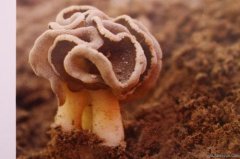
Differences Between Helvella and Morel Mushrooms, Prices and How to Eat Them Explained
How much do Helvella mushrooms cost? Helvella is a very rare type of mushroom, and the price is very high; dried Helvella generally sells on the market for 250 yuan to 500 yuan per jin. Many people mistake Helvella for morel mushrooms, so let's take a look at the differences between them.
-

Why can edible mushrooms treat diseases? A popular science analysis of the principles behind them
NO.1 Why edible mushrooms can treat many kinds of diseases Edible mushrooms strengthen the body's constitution and have therapeutic effects of supporting healthy qi and consolidating the foundation, and supporting healthy qi to dispel pathogenic factors, so for many...
-
What types of mushroom compost are there for straw mushrooms? How to prepare them
The raw materials needed for cultivating straw mushrooms come from a wide range of sources. Currently, the most commonly used are rice straw, wheat straw, waste cotton, and cottonseed hulls. Some spent substrate left over from cultivating other edible fungi can also be used to grow straw mushrooms. 1. Rice straw Choose golden-yellow, mold-free dry rice straw, and sun-dry it for 1-2 days before use to prevent the appearance of coprinus or other contaminating fungi during cultivation. There are generally two ways to treat rice straw. One is to cut the rice straw into pieces about 5 cm long, then soak them in 3% limewater for 1-2 days, then add dry pig manure or dry cow manure equal to 20%-25% of the straw weight and compost the mixture
-
Common mistakes in mushroom cultivation: growers need to avoid them
Insufficient pre-wetting: Wheat straw and rice straw should be fully soaked to facilitate fermentation. When turning the pile, insufficiently soaked wheat straw and rice straw require a large amount of water replenishment. If the water cannot be replenished sufficiently before two turnings, not only will it be difficult to replenish the water later, but it will also affect the growth of mycelium. Uneven turning: When turning the pile, the principle of "raw material in the middle, cooked material on both sides; the middle goes to both ends, and both ends go to the middle" should be followed. However, many people do not follow the above principle when turning the pile, resulting in uneven fermentation of the compost and failing to achieve the purpose of turning. Soil collection does not meet requirements: Some growers use undisinfect
-
What are the methods for keeping mushrooms fresh? Learn these tricks to store them longer
Storage and preservation of mushrooms 1. Kinetin preservation method. Soak fresh mushrooms in a 0.01% 6-aminopurine solution for 1015 minutes, take them out, drain them, and then store them. 2. Sodium metabisulfite treatment method. First rinse the mushrooms with a 0.01% sodium metabisulfite aqueous solution for 35 minutes, then soak them in 0.1% sodium metabisulfite for half an hour, take them out and drain them, put them into plastic bags for storage; the preservation effect is better under room temperature conditions of 1015°C.
-
Poisonous mushrooms are highly dangerous; be on guard against picking and eating them in the wild
In forests, in grassy areas, and beside piles of manure and straw, people often see wild mushrooms pushing up through the ground. Because many people do not know the difference between poisonous and non-poisonous mushrooms, they sometimes pick poisonous mushrooms and take them home to eat. Cases of accidentally eating poisonous mushrooms occur from time to time, and there have even been deaths. For this reason, the relevant authorities remind the public not to blindly pick and eat wild mushrooms, so as to ensure food safety. Recently it has also been found that some farmers' markets are selling poisonous mushrooms. Wild mushrooms that you do not recognize and have never eaten must absolutely not be easily bought and eaten.
-
How to control edible mushroom pests? Eight methods to help you deal with them skillfully
In the process of edible mushroom production, the control of pests (mushroom gnats, mushroom midges, springtails, mites, nematodes, etc.) is a headache for mushroom growers. Now I would like to introduce several methods for skillfully controlling edible mushroom pests to mushroom grower friends, for their reference. 1. Use fermented or sterilized substrate cultivation as much as possible to control the insect population in the cultivation site; the cultivation beds for button mushrooms (Agaricus bisporus) should use fermented substrate. When mixing the substrate, add 0.5% salt, 3% lime, 5%-8% plant ash, etc., which has a good insect-repellent and preventive effect. 2. Before the mushroom bags or substrate are brought into the shed, empty-shed disinfection should be carried out: use 0
-
High-yield cultivation method of cutting oyster mushroom blocks into pieces, standing them upright and covering with soil
Mushroom farmers in Dongkan Town, Binhai County, Jiangsu Province, through years of oyster mushroom cultivation practice, worked out the six-character high-yield formula for oyster mushrooms of "cutting into blocks, standing upright, covering with soil", which increased the oyster mushroom yield per mu by more than 2000 jin compared with the past, with an increase rate of about 30%, and at the same time, production costs dropped greatly. Their high-yield experience mainly consists of three steps: "cutting into blocks, standing upright, covering with soil". The so-called "cutting into blocks" means that at the end of harvesting the second flush of mushrooms in furrow-bed cultivation, the dead mushrooms, stipes and the like remaining on the bed surface are cleaned up, and a sharp knife is used to cut the cultivation substrate into multiple pieces of about 50 cm
-
There are six things to avoid in mushroom cultivation; steer clear of them to grow better
1. Insufficient pre-wetting: The straw should be soaked thoroughly. Straw that has not been soaked enough requires a large amount of water replenishment when the pile is turned. If the water cannot be made up before the second turning of the pile, it will affect the growth of the mycelium. 2. Uneven turning of the pile: It should be turned according to the principle of "put raw material in the middle, put cooked material on both sides; put the middle at the two ends, and put the two ends in the middle"...
条件筛选