-

Reform to Open the Channel for Farmers to Become Blue-Collar Middle-Income Group Members
The "Decision" of the Third Plenary Session of the 18th CPC Central Committee pointed out that the urban-rural dual structure is the main obstacle restricting urban-rural integration. It is necessary to improve the institutional mechanisms, form a new type of urban-rural relationship featuring industry promoting agriculture, cities supporting rural areas, mutual benefit between industry and agriculture, and urban-rural integration, so that the broad masses of farmers can participate equally in the modernization process
-
Technical Recommendations for Field Management of Early Rice in Southern China at the Middle and Late Stages, issued by the Ministry of Agriculture in 2015
Website news: Currently, early rice in southern China has entered the middle and late stages of field growth, with the South China region entering the grain-filling stage and the middle and lower reaches of the Yangtze River entering the jointing and booting stage. In response to the current population growth and climate characteristics of early rice, the Rice Expert Steering Group of the Ministry of Agriculture and the National Agricultural Technology Extension
-
Food security is the top priority for the development of the urban agglomeration in the middle reaches of the Yangtze River
On the 8th, the Yangtze Forum, co-hosted by the Chinese Academy of Social Sciences and the People's Government of Hubei Province, was held in Wuhan. At the meeting, Li Peilin, vice president of the Chinese Academy of Social Sciences, said that in terms of development models, the urban agglomeration in the middle reaches of the Yangtze River must pay special attention to food security and explore a
-
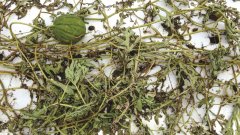
The middle section of the flower stem turns black and withers - it is black rot, what medicine can cure it
People who grow cucurbit plants all know that this kind of plant is prone to a disease, that is, the middle section of the flower stem turns black and withers along with fruit rot, and this disease is called gummy stem blight, also known as black rot. Geographic range: worldwide, but most common in temperate and tropical regions with higher rainfall and in greenhouses.
-
Drought in the middle and lower reaches of the Yangtze River: how to plant winter rapeseed without being affected? Experts offer advice
During this year's rapeseed sowing period, rainfall in some areas of China's Yangtze River Basin was lower than the same period last year, with persistent drought occurring, which has had a certain impact on rapeseed sowing and emergence. So how can winter rapeseed be planted in the drought-affected middle and lower reaches of the Yangtze River without being affected? To guide drought-affected areas
-
When Is Rice Planted? There Are Differences in Planting Times for Early, Middle and Late Rice
Abstract Rice can be divided by production season into early, middle and late rice. Early rice is generally sown at the end of March and the beginning of April, middle rice is generally sown from the beginning of April to the end of May, and late rice is generally sown in mid-to-late June. Different time periods can also be chosen for planting rice according to different regions, for example, the
-
What are the field management measures for summer corn in the middle and late stages
1) Timely intertillage and topdressing to meet nutrient needs. During the jointing to small trumpet stage (from 6 leaves unfolded to 10 leaves unfolded), apply fertilizer in combination with intertillage. Through intertillage, destroy wheat stubble, loosen the soil, and control weeds. Topdressing should be mainly nitrogen fertilizer; do not broadcast it on the soil surface. It should be concentrated near the roots
-
To grow peanuts well, management at the middle and late stages is key
In peanut planting and production, if middle and late stage management cannot keep up, it will lead to lower peanut yields, which is a factor that seriously restricts the expansion of peanut planting area. 1. Timely topdressing and hilling. From the beginning of flowering to full flowering, a lack of fertilizer in peanuts easily reduces the number of flowers and affects peg penetration into the soil for pod setting
-
Management Methods and Technical Key Points for Small Chili Peppers in the Middle and Late Stages
I. Land preparation and basal fertilizer application: Chili peppers should not be continuously cropped with solanaceous vegetables. Choose fields with deep soil, high organic matter content, loose soil, and good drainage for planting. Chili peppers have relatively high requirements for the three major nutrient elements: nitrogen, phosphorus, and potassium. Apply 3000--4000 kg of barnyard manure per mu as basal fertilizer,
-
Key Technical Points for the Feeding and Management of Geese at the Middle Goose Stage
Geese from 1 month of age to sexual maturity are called middle geese or growing geese. Middle geese have a large feed intake and strong digestive capacity; this is precisely the period of rapid growth of their bones, muscles, and large feathers. 1) Grazing: Before grazing, middle geese should undergo wing clipping, cutting off the metacarpal and phalangeal bones on one side or severing the extensor digitorum muscle and the extensor carpi radialis longus muscle; those whose wounds heal after 1 week can then be released onto water and grazed. The grazing area must have a sufficient quantity of green fodder and grain feed; grazing time should be chosen in the morning and evening, and at noon the geese should be driven to rest in the shade of trees beside a pond, and they should be released onto water after each full feeding. Where water-release conditions are poor, grass can be cut for feeding and the geese released onto water separately.
条件筛选