-

What are the methods for controlling viral diseases in orchids?
For the foreseeable future, viral diseases will remain a stubborn and difficult problem for orchid growers. The difficulty lies first in the value of orchids. Whether in batches or as individual plants, ornamental orchids are perhaps the most expensive artificially cultivated plants. Potted flowering orchids retail for about 5 to more than 100 US dollars per pot...
-
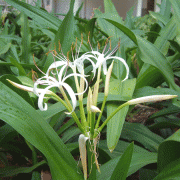
A Detailed Guide to the Propagation Methods and Care Techniques of the Giant Spider Lily
The giant spider lily has a sturdy, handsome plant form and elegant, pure-scented flowers, making it a large potted flower for decorating halls and meeting venues. Also known as Shiba Xueshi, Wenzhu Lan and White-flowered Spider Lily, it is a perennial evergreen herbaceous plant of the Amaryllidaceae family and the genus Crinum. It has a tunicated bulb, long and cylindrical. The leaves are basal and sword-shaped, mostly densely arranged in a rosette at the top of the bulb, with wavy edges. The plant height is about 1 m. The scape emerges from the leaf cluster, bearing an umbel subtended by two large spathes, with more than 20 flowers; the perianth tube is slender and upright, and fragrant. The flowering period is mostly in summer, and under conditions of sufficient water and fertilizer and moderate temperature and humidity, it can bloom continuously all year round. Article from: http://www....
-
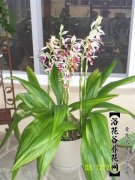
How to Grow Phaius Orchids? A Detailed Guide to the Correct Cultivation Methods
Phaius, also known as the nun's orchid, monkey orchid, or crane orchid, is a perennial herbaceous plant in the orchid family (Orchidaceae). It has large pseudobulbs, large leaves, and large flowers in a wide range of colors. Phaius is fairly widely distributed and its care is relatively undemanding; it can be grown outdoors and grows vigorously. For container growing, you can use a mix of leaf mold or mountain soil with a small amount of river sand and fertilizer...
-
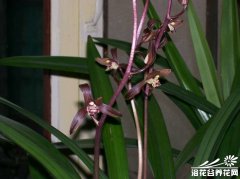
A detailed guide to the cultivation methods of Cymbidium sinense, teaching you to grow Cymbidium sinense with ease
Cymbidium sinense is also known as Baosui Orchid, Baisui Orchid, and Fengsui Orchid. The leaves of Cymbidium sinense are broad, generally up to 24.2 cm wide and about 2580 cm long. 25 leaves grow on the pseudobulb. The pseudobulb is relatively large, with a diameter of 1.5-2.5 cm. The leaves are glossy, with a cross-section in a shallow y shape or a flat leaf surface, and the leaf margins usually have no serrations. The flower stalk is upright, generally all taller...
-
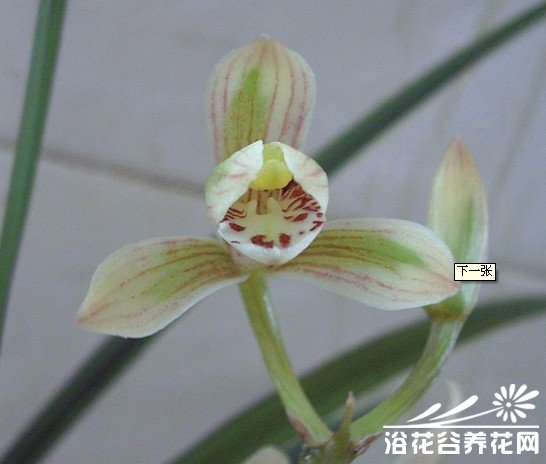
Illustrated guide to the common care methods for Four Seasons Orchid, Jianlan (Cymbidium ensifolium), and Shilan
1. Light control and cooling: Jianlan grows best at an annual average temperature between 15-23°C. Summer temperatures are hot, so use a 70-80% plastic shade net to cool things down. 2. Promoting cooling under high temperatures: for the high temperatures caused by overly strong light, add more layers and density of shading to encourage cooling; in summer and autumn, when light is strong, the air is stuffy and hot, and temperatures are high...
-
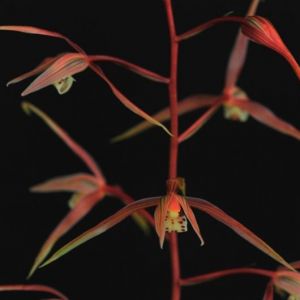
Introduction to the Characteristics and Cultivation Methods of the Nikko Cold Orchid Variety
Nikko is a representative variety of cold orchid (Cymbidium kanran) whose sepals and petals open in the folded-crane form, with peach-colored flowers.
-
What to Do When Your Orchid Won't Bloom? Master These Flower-Promoting Methods
To encourage orchids to bloom, you need to create a day-night temperature difference of about ten degrees Celsius, that is, daytime temperatures of 18 to 21 degrees Celsius and nighttime temperatures of 7 to 10 degrees Celsius, conditions under which they grow best and produce more flowers....
-
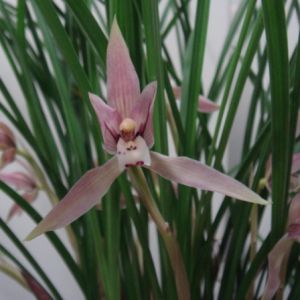
Introduction to the Characteristics and Care Methods of the Wufeng Cymbidium goeringii Variety
A colored-flower Cymbidium goeringii variety, with upright, slender leaves.
-
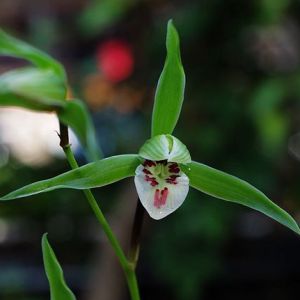
Introduction to the Characteristics and Care Methods of the Cuiyun Cold Orchid Variety
Fine-leaf cold orchid, slender stem with green flowers, the tongue does not drop when first opening, feels quite good; by today, the fourth day, the tongue has begun to hang down, and only then does one increasingly feel the full charm, the tongue white as snow, brightly contrasting with the jade-like outer petals, the inner petals not splaying apart, the shoulder petals in a straight line, the stem like a lamp wick, three flowers, the leaves arching and drooping.
-
What are the common pest and disease control methods for Dendrobium orchids?
1. Diseases: (1) Soft rot: also known as bacterial brown spot, it mostly infects from the rhizome, but can also occur on leaves. It starts as small water-soaked dark green spots, which gradually expand into brown, softened, rotting lesions. A secretion oozes from the rotting area and is accompanied by a foul odor. The pathogen can spread through watering. High temperature and high humidity favor the development of the disease,...
条件筛选