-
Here comes the succulent soil mix method, worth saving for later use
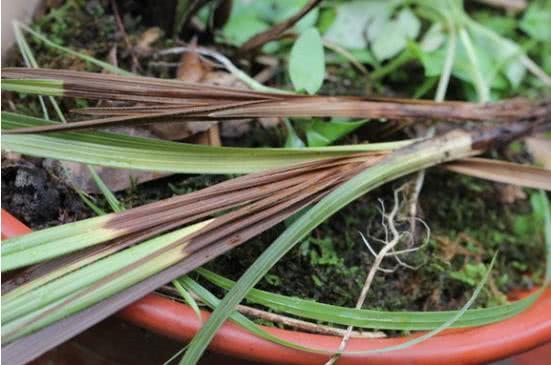
What is soft rot? Simply put, once an orchid contracts soft rot, its leaves turn brown (black) and also become soft and floppy, then gradually rot away. This disease is also highly destructive; in severe cases, the entire...
-
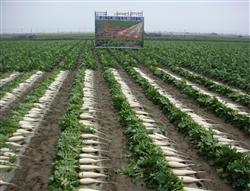
What are the main diseases of radishes? Detailed explanation of control methods
Radish is an annual or biennial herbaceous plant of the genus Raphanus in the Brassicaceae family, and is one of the main vegetables in the root vegetable category. Radish has a large uptake of nitrogen, phosphorus and potassium, and is a high-yielding crop with high fertilizer requirements. For every 4000 kg of radishes produced, approximately 8.5 kg of nitrogen, 3.3 kg of phosphorus pentoxide, and 11.3 kg of potassium oxide need to be absorbed from the soil...
-

How to Grow High-Quality Radishes? A Detailed Guide to the Planting Method
High-quality radishes are grown this way. These days, Zhang Yiming of Jianguo Village, Qiancao Subdistrict, Jiangyang District, Luzhou City, is beaming every day. Last winter he planted more than 1 mu of a high-quality long white radish variety from South Korea. In just two months, he now sells several hundred jin every day, sometimes over a thousand jin. By his rough calculation...
-
Watering Flowers in Hot Weather Must Be Done Right; Get the Method Wrong and 5 Kinds of Plants Will All Die
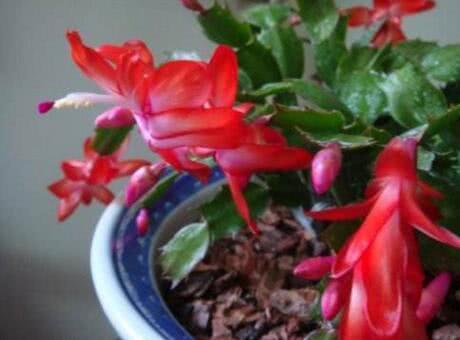
As people's living standards improve, more and more people have fallen in love with growing flowers, beautifying their homes and purifying the air. The most important thing is not that some elderly people, after retirement, can grow some flowers to enrich their later years and fill their hearts with jo...
-

With the right rose cutting method, the survival rate is high and you can easily grow several pots
A while ago I visited a friend's home and was truly amazed by the roses all over her balcony. When I asked, it turned out they were the result of cuttings. I believe many flower lovers propagate their own plants from cuttings, but some just never take root. So today Hua...
-
For sweet potatoes to yield high, the fertilization method is key
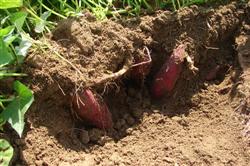
The demand of sweet potatoes for the three major elements nitrogen, phosphorus and potassium varies with the growth stage. Nitrogen fertilizer is absorbed more during the stem and leaf growth period and less during the tuber swelling period; phosphorus fertilizer is absorbed less in the middle stage of stem and leaf growth and more during the tuber swelling period; while potassium fertilizer absorption is greater than that of nitrogen and phosphorus from planting to harvest, and is even more pronounced during the tuber swelling...
-
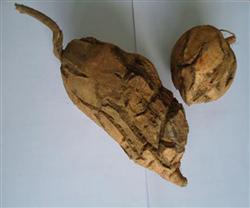
What are the control methods for sweet potato skin splitting
The diseases that cause sweet potato skin splitting include blank blister disease and nematode disease. Control measures: 1. Select resistant improved varieties. 2. Establish disease-free seed production fields and cultivate disease-free strong seedlings. Disinfect seed potatoes by soaking them in warm water at 50°C-54°C for 10 minutes. 3. Carry out soil disinfection. Use 1.5 kg of 80% dibromochloropropane per mu mixed with 100-150 kg of water to prepare a medicinal solution, or use 2.5 kg of 70% ethylene dibromide mixed with 200-300 kg of water to prepare a medicinal solution, apply the pesticide in furrows 20 days before planting and immediately cover with soil and form ridges. 4. Rotate crops. Rotation with peanuts gives better results and can be done for one year. Rotation with corn (2349, 8.00, 0.34%) and sesame requires a longer time, preferably 2-3 years.
-

Sweet potato seedbed arrangement matters: master the method for good seedling results
The adventitious buds on sweet potatoes are most numerous at the head end, fewer in the middle, and fewest at the tail end. When arranging seed potatoes flat or at a slant in the seedbed, follow the principle of head end up, tail end down, back side up, belly side down to increase the number of sprouts. If large and small tubers are arranged in the same seedbed, large tubers sprout slowly and produce few but sturdy seedlings, so they can be placed...
-

How to deal with leggy growth on bonsai? These methods you need to master
[Bonsai Enthusiast's Reflections] Text | Xiamen, Fujian @Zhou Yingzhi Every morning, give yourself a smile and tell yourself: a person should not only live as brilliantly as a diamond, but also be as strong as a diamond! Do not be timid and submissive, do not fret over imaginary troubles. Life...
-
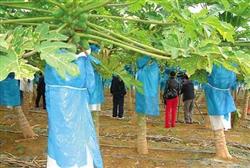
How to Protect Papaya from the Cold in Winter? Detailed Guide to Frost Protection Methods
Papaya is a tropical crop that thrives in hot climates and is intolerant of low temperatures and frost. When the temperature drops below 5°C, frost damage occurs, so it is very important to take the following protective measures: Apply a heavy overwintering fertilizer. For each tree, apply 10-15 kg of organic fertilizer made from a mixture of decomposed human and animal manure and plant ash, plus 1.5 kg of phosphate fertilizer, at a distance of 80-100 cm from the main trunk, dig a ring-shaped trench 20 cm deep and 35 cm wide, mix the fertilizer thoroughly with the soil that was dug out, and then fill it back into the trench.
条件筛选