How to deal with leggy growth on bonsai? These methods you need to master
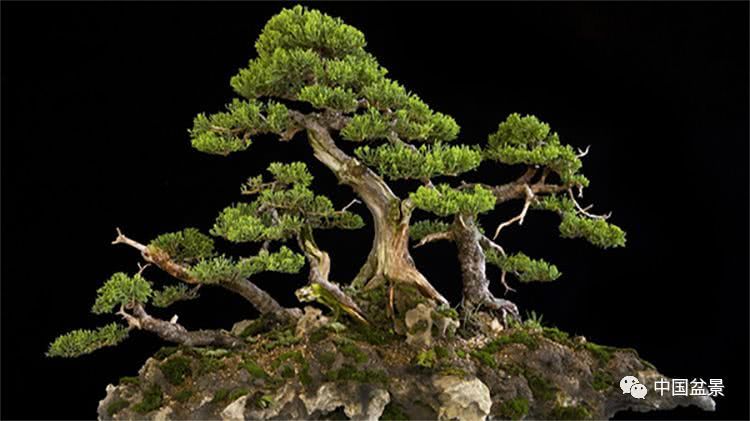
[Bonsai Enthusiast's Reflections]
Text | Xiamen, Fujian @Zhou Yingzhi
Every morning, give yourself a smile and tell yourself: a person should not only live as brilliantly as a diamond, but also be as strong as a diamond! Do not be timid and submissive, do not fret over imaginary troubles. Life is a process of tempering; without these bittersweet experiences, you will never mature! Therefore, we should shine in the sunshine, run in the wind and rain, grow through tears, and look forward while striving, saying to ourselves: yesterday was good, today is very good, tomorrow will be even better. Grateful for everything!
A leggy shoot (water sprout) refers to a vigorous branch that sprouts from a dormant bud on a perennial old branch. It was originally a professional term in fruit tree cultivation, and is now gradually being applied to the care of bonsai plants. Most leggy shoots are useless branches, but this article attempts to explore them from a favorable perspective.
Causes and manifestations of leggy shoots in bonsai
Leggy shoots occur in bonsai plants because the plant's normal growth mechanism has been broken, altered, or weakened. They are more prominently manifested in young trees, old trees, heavily pruned trees, and damaged or disabled trees.
1. Excess nutrients and imbalanced composition
The main nutrients plants need are nitrogen, phosphorus, and potassium. When nitrogen is sufficient, plants can synthesize more protein, promote cell division and growth, rapidly increase leaf area and accelerate photosynthesis, making plants grow vigorously. Phosphorus participates in photosynthesis, respiration, energy storage and transfer, cell division and enlargement within the plant, and can promote root formation and growth. Potassium can significantly improve the plant's absorption and utilization of nitrogen, and quickly convert it into protein, promoting reproductive growth.
2. Vigorous trees heavily pruned and main branches decapitated
According to the Lingnan bonsai styling method of "trunk chopping and branch cultivation," when the trunk or main branches of a tree stump have grown to a certain thickness, they must be shortened and decapitated; when branches meet the proportion, they must be heavily pruned, and the next level of branches must be regrown. These tree stumps are in the vigorous growth stage of cultivation. Once the stump is decapitated or heavily pruned, the balance between foliage and roots is broken. Although the root function is temporarily reduced, it urgently needs nutrients produced by photosynthesis through the leaves to sustain itself, so new vigorous branches rapidly grow from the nearest bud positions with the best cortex and vascular tissue, in order to reach a new balance as quickly as possible.
3. Bark damage and interrupted transport
Bark is an important organ for trees to protect the trunk from harm and to effectively transport various nutrients and water. When bark is damaged and pathogens invade, the tree's transport tissue is destroyed or interrupted, and it will seek relatively superior old bud points below the damaged area, rapidly growing new vigorous branches to quickly restore leaf photosynthesis and provide nutrients to the roots. In bonsai practice, there are often methods such as scoring the bark with a knife to promote budding and ring-barking to promote rooting, which are applications of the principle of disrupting the plant's transport system.
4. Tree aging and tissue degeneration
Overly aged tree stumps are generally not suitable for making bonsai, because their lifespan will not be very long. A small number of old stumps with excellent varieties and beautiful shapes require a long process of rejuvenation and cultivation, and can only be achieved with superb maintenance skills. When a tree stump is too aged, its physiological functions seriously degenerate, the tree body weakens, resistance decreases, and growth slows down. It is difficult for it to withstand harsh natural environments such as wind and rain, lightning, high temperatures, and freezing, and its ability to resist diseases, pests, and bacterial invasion is weak. Tissue structure ages, photosynthesis decreases, and once management is poor, it will lose branches, lose roots, or even die.
In the process of balanced growth of an old stump, due to the degeneration of absorption function, it is difficult to satisfy the growth of all roots and foliage. The dominant foliage and roots receive priority supply and grow preferentially, which is the main reason for the partial dieback of old stumps. When the water supply line of the trunk where the dominant foliage is located is damaged, one or more leggy shoots will grow below the damage point to sustain photosynthesis. Such leggy shoots generally grow in the middle and lower parts of partially dieback old stumps.
The above is an analysis of the main reasons why leggy shoots occur on tree stumps. It should be noted that if a tree stump frequently produces leggy shoots, it is often the result of multiple causes acting together.
(This article is compiled and recommended by "Bonsai World," copyright belongs to the original author)
Wonderful replay:
Chinese bonsai welcomes you!
Enjoy at any timethebonsai exhibition hall
Promote bonsai culture, exchange bonsai skills!
Appreciate bonsai art, share a happy life!