-
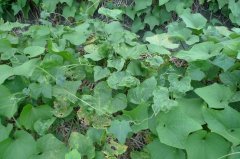
How to prevent and control gummy stem blight and viral diseases spreading in farmland due to temperature and continuous rainfall?
Recently, temperatures have gradually risen, and combined with continuous rainfall, the weather has been unstable. The Hualien District Agricultural Research and Extension Station has found that "gummy stem blight" and "viral diseases" are gradually spreading in the chayote shoot fields of the Ji'an area in Hualien County. Farmers are advised to take preventive measures as early as possible to avoid affecting
-

How to plant impatiens seeds, and what is the most suitable temperature?
Growing impatiens from seed: Impatiens are moderately difficult to grow from seed, but a little TLC produces satisfactory results. Impatiens need warm soil and light to germinate. A soil temperature (not room temperature) of 75 degrees Fahrenheit is perfect. If
-

How should vegetable production respond to low-temperature rain and snow weather?
According to the forecast of the National Meteorological Center, recently, under the combined influence of the eastward-moving southern branch trough and cold air, strong low-temperature and rain-and-snow weather processes have occurred in Southwest China, eastern Northwest China, North China, Northeast China, the Huang-Huai region, Jianghan, Jianghuai and other regions. This temperature drop and rain
-
What are the temperature requirements and precautions for growing celery?
Celery is a green, healthy vegetable, divided into water celery, Western celery and dryland celery, each with its own characteristics. It is cultivated in many parts of our country, and its requirements for the growing environment also differ. Let's take a look below at what the temperature requirements for growing celery are and what growing
-
How to correctly choose and use insecticides in hot and rainy weather?
Insecticides refer to chemical preparations used to control pests, mainly drugs for controlling agricultural pests and urban sanitary pests, with a long history of use, large dosage, and many varieties. So how to correctly use insecticides? What agents can be chosen in hot and rainy weather? 1.
-
What precautions should be taken when spraying pesticides in hot weather?
Summer is a period of vigorous growth for many plants, and it is also the peak period of damage from various pests and diseases. Rising temperatures also make it inconvenient to spray crops and can easily cause pesticide damage. So what precautions should be taken when spraying pesticides in hot weather? 1. Avoid high temperatures and strong light
-
How to Plant Pomegranate Seeds in Autumn? A Detailed Guide to Autumn Sowing Methods
It is now autumn, the temperature has dropped somewhat, and pomegranates have come into season. So do you know how to plant pomegranate seeds in autumn? 1. How to plant pomegranate seeds in autumn. To plant pomegranate seeds in autumn, you need to prepare clean arils. Then soak them in clean water for 6-10 days, spread the seeds on the soil and cover them with small stones. Water them thoroughly, and they will sprout in about 1 week. Note that a pomegranate tree grown from seeds will take 6 to 8 years to bloom and bear fruit.
-
How Do Cacti Survive Winter? A Detailed Guide to Winter Care Methods
After the beginning of winter, indoor temperatures drop sharply. Potted cacti grown at home should be placed near a south-facing window with ample light, long sunshine hours and higher temperatures. Generally, ground-dwelling cacti do not require very high temperatures during their winter dormancy. While keeping the potting soil relatively dry
-
When is the best sowing time for wheat? A detailed explanation of temperature and seeding rate
Summary The suitable sowing temperature for winter-type wheat varieties is 16-18°C, around September 27-October 5; the suitable temperature for semi-winter varieties is 16-17°C. From September 27-October 12; the suitable temperature for spring-leaning varieties is 16-15°C, around October 10-15, the suitable sowing rate for dry-stubble wheat fields is
-
When to Apply Foliar Fertilizer to Rice, and at What Temperature Should It Be Used?
Summary Foliar fertilizer can be sprayed on rice at the late booting, initial heading, grain-filling and full heading stages. During the heading and flowering stage, it should be sprayed in the morning before flowering and after 4 p.m., while at the late booting and grain-filling stages, it should be sprayed on sunny days before 11 a.m. and after 4 p.m. Generally, the suitable temperature for spraying foliar fertilizer is 8-25°C.
条件筛选