-

Detailed Explanation of Daily Technical Points for Pomelo Cultivation and Management
1. Strengthen spring shoots and promote their turning green and vigorous growth. When spring shoots are 4-7 cm long, spray 15% paclobutrazol at 600 times dilution to make the spring shoots short and sturdy and the flower clusters robust. During the leaf expansion stage of spring shoots, spray the tree canopy with Lufenwei to promote leaf greening. 2. Plastic film mulching to retain moisture and lower temperature. In summer and autumn, temperatures are high and soil moisture evaporation is great, so between orchard rows...
-
Pruning Methods and Technical Key Points for Young Bearing Apricot Trees
How to prune young bearing apricot trees? The main task of pruning young bearing apricot trees is to continue developing good scaffold branches, develop good fruiting branch groups, expand the canopy, promote canopy development, and promote early production. Young bearing trees still have a large growth volume, and pruning should still balance three aspects: shaping, expanding the canopy, and fruiting. In terms of pruning...
-
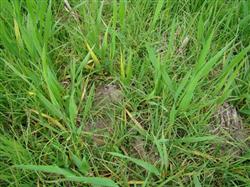
Detailed Explanation of the Key Technical Points of the "One Spray, Three Preventions" in the Late Stage of Wheat
I. Disease Occurrence Pattern Wheat rosette dwarf disease is a viral disease spread by the vector Laodelphax striatellus (small brown planthopper). The small brown planthopper has two peak periods of virus transmission and infection on wheat: the first peak period is after wheat emergence, and the second peak period is after wheat turns green again. As the temperature gradually rises, the overwintering generation of the small brown planthopper begins to move and feed on wheat seedlings, spreading...
-
Key Technical Points and Detailed Operation Methods for Apricot Tree Propagation
In recent years, as the market for major fruits such as apples and pears has gradually become saturated, the market potential for minor fruits is relatively large, especially with promising prospects for fresh-eating apricots and kernel apricots. Apricot trees are deeply favored by fruit growers for their strong adaptability, ease of cultivation, low investment and quick returns. Most rural areas use seedling propagation, whose offspring vary greatly and do not easily...
-
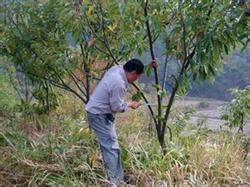
Detailed Explanation of Key Technical Points for Soil Testing and Formula Fertilization of Chestnut Trees
1. Main branch balancing (taking the three-main-branch open-center shape as an example). The main branches are the primary framework supporting all the branches. Before pruning, first carefully observe the orientation and growth vigor of the three main branches, have a clear picture in mind, and then make adjustments. For strong and vigorous main branches (with a large thickness ratio), strongly pull them to a wide angle, or use a side branch to replace the main branch extension head, combined with ring barking...
-
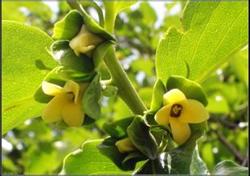
Persimmon Tree Disease Prevention and Control Methods and Key Technical Points
Fertilizer and water management during the flowering period in an ecological persimmon orchard is an indispensable specific measure. Its purpose is to push the persimmon tree's growth rhythm to a peak. By emphasizing nutrient supply, it achieves the best effect in preserving flowers and fruit. In this way, all inappropriate means and measures in the management of the persimmon orchard during the flowering period are eliminated. It not only effectively...
-
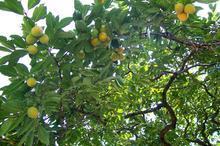
Key Technical Points for Foliar Topdressing After Persimmon Trees Set Fruit
Timely fertilization: When the fruit's transverse diameter reaches 4-5 cm and when the fruit size has basically become fixed, apply fruit-swelling fertilizer and pre-harvest fertilizer, mainly with quick-acting, quick-dissolving nitrogen-phosphorus-potassium fertilizer. For bearing trees over five years old, apply 1.5-2 kg of urea and 0.75-1 kg of potassium dihydrogen phosphate per tree, or 1-1.5 kg of nitrogen-phosphorus-potassium compound fertilizer, broadcast after rain, or...
-
Wheat Pest and Disease Control Methods and Key Technical Points
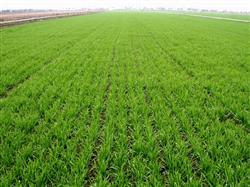
Spider Mites in Wheat [Distribution and Damage] There are mainly two species of spider mites in wheat, the winter grain mite [Penthaleus major (Duges)] and the brown wheat mite [Petrobia latens (Muller)]. The former belongs to the family Penthaleidae, order Acariformes, class Arachnida; the latter belongs to the family Tetranychidae. Both are distributed in wheat-growing regions across the country. In the north, the brown wheat mite predominates, while in the south...
-
Papaya Planting, Cultivation Methods and Technical Key Points
Planting and Cultivation 1. Site selection and land preparation: Choose a sunny, fertile, moist and well-drained location for planting. It can also be planted at field edges and corners, on hillsides, and around houses. For block planting, dig holes at a spacing of 1 m x 2 m, and apply 5-10 kg of farmyard manure mixed with soil in each hole as base fertilizer. Seedling nursery land...
-
Control Methods and Technical Key Points for Papaya Brown Rot
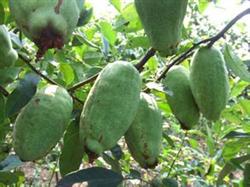
Generally planted in rows in the ground, but can also be grown as potted specimen plants. The best planting time is before bud break in early spring or after leaf fall in early winter. When lifting seedlings from the nursery, keeping the root system intact is one of the keys to successful planting. Generally, large seedlings for planting should be kept with a soil ball, while small seedlings should retain some native soil depending on the situation. After planting, the seedlings should be...
条件筛选