-

Management Methods and Technical Points for Walnut Seedlings After Grafting
From grafting in May and June to the grafted seedlings leaving the nursery in October, there are only a few short months. In order to ensure the robust growth of grafted seedlings and cultivate high-grade nursery stock, management needs to be strengthened. 1. Check survival and fill in grafts. About 1 week after walnut bud grafting, check whether the graft has survived. Fresh and plump grafted buds indicate successful grafting, while blackened grafted buds indicate failure, and timely re-grafting should be carried out.
-
Key Technical Points for Seedling Management During the Walnut Nursery Stage
Walnut seeds begin to sprout about 20 days after spring sowing and emerge completely by around 40 days. During this period, check the emergence of seedlings every day. Once the seedlings emerge from the soil, promptly cut open the plastic film with a small knife to prevent scalding the seedlings, and at the same time cover the cut film firmly with moist soil. Strengthening management during the seedling stage is the key to cultivating strong seedlings.
-
Key Technical Points for Scion Preparation in Conventional Walnut Propagation
1. Source of scions - Select superior varieties as mother trees for scion collection and establish a scion orchard. Cutting scions from a scion orchard ensures variety purity. Scion mother trees should be of pure variety, grow vigorously, and be free of pests and diseases. After collecting scions, they must be labeled to prevent mixing, because
-
Pre-sowing Treatment Methods and Technical Points for Walnut Seeds
Seeds kept in dry storage must be treated with appropriate measures before sowing to promote germination and shorten the sprouting period. Seeds after sand storage can be sown directly, but sowing after sprouting is more effective. (1) Cold water soaking Before spring sowing, soak the dry-stored seeds in cold water
-
What are the key technical points for growing watermelons in open fields
With the improvement of modern cultivation techniques, watermelons have basically become a product of greenhouses, but we should know that even though greenhouse-grown watermelons have many advantages, open-field watermelons still exist for various reasons. Open-field watermelons will encounter all kinds of
-
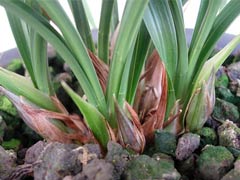
Orchid Blooming Period Management Methods and Technical Key Points
Orchid blooming period management is very important; a single careless move can cause bud blast. For Cymbidium goeringii and Cymbidium faberi, from the emergence of flower buds from the soil to the full opening of the petals, the process lasts nearly half a year. During this period, meticulous care is essential, as it directly determines whether the buds can develop normally and whether they can produce beautiful blooms. It involves not only technical issues related to blooming period care, but also...
-
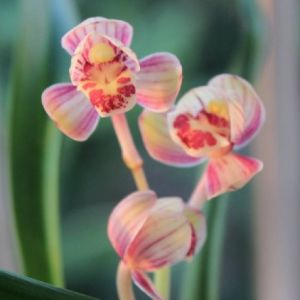
Key Technical Points of Red Moon Hybridization and Introduction to Its Variety Advantages
Red-flowered lotus-petal orchid "Red Moon", a hybrid of Guanshan He and Mayor Hong, was hybridized and propagated several years ago and is now gradually being released to the market. Because of its compact plant type, lotus-petal grass-like form, delicate flowers with bright colors, and good fragrance as well, it has been sought after by orchid lovers in the market since its introduction. Multiple bloomings have proven that this flower's stability is average, and some bloom poorly.
-
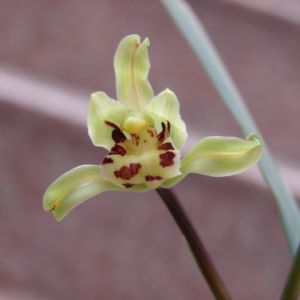
Methods and Key Technical Points for Cultivating Old Cymbidium faberi Plants
A Cymbidium kanran collected from the Wuyi Mountains range, known as "Duoyun" among Cymbidium kanran, a floating-petal type Cymbidium kanran. It was later named in "Jiangxi Cymbidium kanran" by Jiangxi orchid enthusiast: Lanxin friend Brother Yue Zhongxian, director of the Orchid Branch of the China Flower Association, deputy secretary-general of the Jiangxi Flower Association, and vice president and secretary-general of the Jiangxi Flower Association: Teacher Zheng Fengsheng, as: Jinggang...
-

Orchid Pest and Disease Control Methods and Key Technical Points
I. Anthracnose. This disease is the most common disease of orchids, mainly affecting the leaves. In the later stages, black dots appear on the lesions, eventually causing the diseased leaves to wither and turn yellow. The disease occurs frequently from May to June, during the plum rain season, or in years with abundant autumn rain or frequent typhoons from September to October....
-
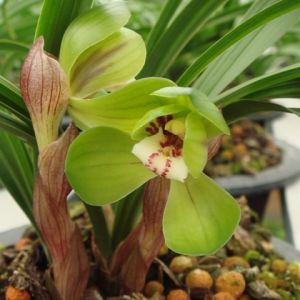
Detailed Explanation of the Hybridization Methods and Key Technical Points for Zhaoyuan He
Zhaoyuan He is a new lotus-petal variety cultivated by Tongxin, and both its father and mother plants are wild-collected orchids from Guizhou. Its flower shape and color resemble those of the traditional Cymbidium goeringii variety Dafugui, while the leaf shape is clearly different. This variety is a broad-leaved, medium-short type, with large flowers, emerald-green color, and excellent flower retention; its overall floral quality is on par with the traditional lotus-petal varieties of Jiangsu and Zhejiang.
条件筛选