-

Detailed Explanation of Technical Specifications for Pollution-Free Pesticide Use in Potatoes
1. Cultivating strong seedlings free of pests and diseases (1) Seed potato selection: For pollution-free potatoes, seed potatoes that are pest- and disease-resistant, disease-tolerant, and free of pest and disease damage should be selected. A seed-production field free of pests and diseases should be strictly established, and pest- and disease-free small whole seed potatoes should be cultivated in the pest- and disease-free seed-production field. The small whole seed potatoes kept for seed should be selected during storage. After the seed potatoes are taken out of the cellar, they should be strictly selected, using young and mature tubers as seed, and eliminating tubers with undesirable traits such as irregular shape, rough and aged skin, protruding eyes, and dull skin color. The quality of seed potatoes shall meet the requirements for improved grain crop varieties or above under GB8079-1987.
-
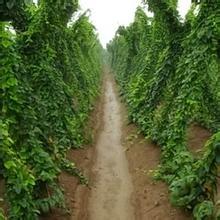
Fertilization technical specifications for pollution-free cultivation of yam
As long as several main aspects of production management are handled well, the planting benefits of yam will be greatly improved. In yam cultivation management, the key points are the application of base fertilizer, loose soil, treatment of yam seed pieces, timely topdressing, disease control, and taking measures to promote the growth of the rhizome as much as possible. 1. ...
-
Detailed Explanation of High-Yield Soybean Cultivation Technical Specifications
Soybean is a major oil crop in our province. Developing soybean production is of great significance for improving people's food composition, developing animal husbandry, and improving soil fertility through crop rotation. From the actual situation of our province, soybean production mainly relies on increasing per-unit yield to increase total output. To achieve the target of over 200 kg per mu, it is necessary to liberate soybean from corn fields, because intercropping and mixed cropping of soybean with corn is one of the reasons for the low per-unit yield of soybean in our province, so clean planting of entire fields should be promoted; second, actively promote high-yield cultivation techniques centered on equidistant sowing, with increased application of farmyard manure
-
How to raise the striped snakehead gudgeon (grouper)? A detailed explanation of pond aquaculture technical specifications
Grouper, also called the striped snakehead gudgeon, is an important economic species for aquaculture along the coast of the South China Sea in our country, so can grouper be raised in freshwater? How is it raised? What are the pond aquaculture technical specifications? 1. Fry rearing technology 1. Requirements for fry ponds: freshwater grouper fry rearing
-
Detailed Explanation of the Technical Specifications for Scientific Fertilization of Cowpea
Cowpea (scientific name Vigna unguiculata), commonly known as horn bean, ginger bean, belt bean, hanging bean pod. Cowpea is divided into two types, long cowpea and rice cowpea, and belongs to the legume family. Cowpea is an annual plant of the legume family. The stem has three types: dwarf, semi-vining, and vining. In southern cultivation, the vining type is predominant,
-
Detailed Explanation of Pollution-Free Fertilization Technical Specifications for Yam Cultivation
① Propagation technology: Yam propagation is divided into two types: sexual propagation and asexual propagation. Sexual propagation is mainly used for crossbreeding to obtain new high-yield, high-quality variety types; because it requires a long time, it is generally not suitable for use in production. Asexual propagation includes tuber cutting propagation methods, top
条件筛选