-

How to cultivate cotton during the squaring stage? A detailed explanation of the key technical points
In 2008, the climate during the cotton squaring stage was extremely unfavorable for cotton growth, with low temperatures and high humidity, causing cotton growth to lag 3-5 days behind the same period in previous years, with severe cotton diseases and generally weak growth. How to strengthen management during the squaring stage and build a good framework for high yield? The following points should be noted in management: Apply squaring fertilizer steadily: Apply fertilizer scientifically according to soil fertility conditions, base fertilizer application, and cotton growth. Focus on phosphorus and potassium fertilizers. For cotton fields with high soil fertility, sufficient base fertilizer, and vigorous growth, it is not suitable to apply nitrogen fertilizer as a top dressing; instead, 25-40 kg of cake fertilizer per mu may be appropriately applied.
-
How to strengthen cultivation and management during the cotton bud stage? Keep these technical key points in mind
After cotton transplanting this year, continuous drought and little rain, unstable temperatures, and a long seedling-hardening period seriously affected plant development. In addition, large populations of aphids and red spider mites caused severe damage, leading to a second seedling-hardening in cotton seedlings, with a few seedlings showing red stems all the way to the top and true leaves drying up and falling off. Recent rainfall has alleviated the drought, and seedling conditions have begun to improve. Transplanted cotton now has 7-9 true leaves and has begun to form buds, and cotton after wheat (rapeseed) has also begun to develop, but overall seedling conditions are not as good as in previous years. The bud stage is the most important period in the life of cotton, and the following cultivation and management measures should be emphasized
-
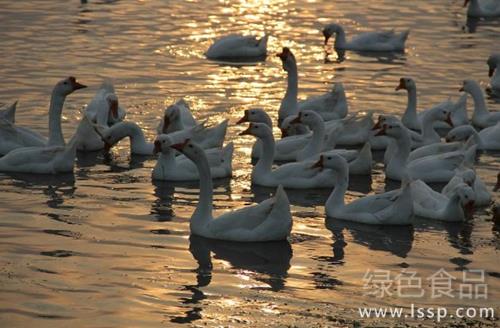
Master the key technical points of winter goose fattening, get good returns by marketing before the Spring Festival
Good returns from marketing winter geese before the Spring Festival; key technical points of winter goose fattening
-
What are the key technical points for winter rearing of broodstock?
Broodstock rearing is divided into stages such as post-spawning care, autumn rearing, winter rearing and spring rearing. Because winter temperatures are low, broodstock activity decreases, their feeding ability is weaker and they are prone to fish diseases; if management is poor, it will have a great impact on the next year's artificial hatching, fry and fingerling production, market-size fish farming and other production stages. The key technical points for doing a good job of winter broodstock rearing are: 1. Pond selection. Broodstock ponds require an adequate water source, a flat pond bottom, shelter from wind and exposure to sun, and good water and heat retention, with an area of 10-15 mu being suitable.
-
Prevention and Control Methods and Technical Key Points for Complications in Fingerling Fish
An unusual combination of complications - rotten gills, enteritis and hemorrhage - once occurred in fingerling fish in Sanhe Town, Hongze County, Huai'an City, Jiangsu Province, causing large-scale deaths of fingerlings. The specific details of the disease and its prevention and control measures are summarized below for everyone to discuss together. Onset time and symptoms: In early August, scattered dead fish appeared, and the diseased fish had Trichodina on their gill filaments, with no other symptoms. Around mid-August, mass mortality occurred, and all were grass carp fingerlings. The diseased fish turned dark in body color and showed a behavior of lying at the edge, floating weakly by the pond bank and stopping feeding. When the diseased fish were scooped up
-
Key Technical Points for No-Till Planting with Rice Straw Return
No-till technology with rice straw return refers to a simple planting method in which, after the rice harvest, the rice straw is spread evenly over the field, no plowing is done, and only chemical weed control is carried out before wheat can be sown. This technology was successfully developed in May 2000 through dedicated experimental research by the Chengdu Second Institute of Agricultural Sciences. The no-till wheat planting technology with rice straw return fully combines the advantages of straw return, no-till, and broadcasting, and scientifically assembles them into a complete new technology package, which has not yet been formally reported at home or abroad. Experimental research shows that this comprehensive supporting technology not only increases
-
Technical Key Points of Lotus Root Field Rotation and Crop Succession Cultivation Models
Lotus root is an important aquatic vegetable in China and also an important export-oriented vegetable for earning foreign exchange. It is widely cultivated in areas south of the Huang-Huai region, especially in the Yangtze River Basin and areas further south. It not only plays an important role in increasing farmers' income and improving agricultural efficiency, but also has important value in improving and beautifying the environment, and in wetland protection and utilization. Centering on lotus root and carrying out good rotation and crop succession is important for fully improving land utilization rate and economic benefits per unit area, reducing disease and pest damage, reducing pesticide use, improving soil and enhancing soil fertility.
-
Key Technical Points and Practical Methods for Soil Management in Jujube Orchards
Inter-row cultivation, weed control, loosening the soil and preserving moisture: For newly planted jujube orchards, a 1 m wide tree row should be established after planting, and this tree row should be widened year by year as the canopy expands. In pure jujube orchards planted at high density, short-stemmed leguminous plants or melon and vegetable crops can generally be intercropped during the first three years after planting. In jujube orchards using the jujube-grain intercropping system, crop intercropping can be carried out over the long term. In this way, soil management for jujube trees during the first three years mainly focuses on the tree row area, and afterwards soil management should cover the whole orchard. The primary issue in soil management is eliminating weeds, because the growth of
-
Detailed Explanation of the Key Technical Points for Jujube-Grain Intercropping
The key technique of jujube-grain intercropping is to properly regulate the conflicts between jujube trees and intercrops over fertilizer, water, and light, so as to achieve mutual benefit and reciprocity between jujube and grain and realize a double bumper harvest of both. 1. Master an appropriate planting density. Row spacing has a marked effect on air temperature, humidity, light, and wind speed, and is also an important factor affecting jujube and grain yields. Therefore, overall arrangements should be made according to cultivation purposes and local conditions. For jujube-oriented planting, a row spacing of 6 m is best; for grain-oriented planting, a row spacing of 15 m is best; for giving consideration to both jujube and grain, a row spacing of 8 m is best. 2. Select
-
Processing Methods and Technical Key Points for Almond Cream
(I) Process flow: raw materials → cleaning → shelling → sorting → soaking → peeling → rinsing → color protection → wet milling → debittering → draining → wet starch → drying → seasoning and flavoring → finished product (II) Technical requirements: The preliminary processing of raw materials is the same as for canned almonds. Wet milling: After color protection, rinse the almonds clean with water. Add 15 times the amount of water and grind into a slurry using a refiner. Debittering: Use heat to debitter and detoxify. The heating temperature is 70-80°C. To make HCN
条件筛选