-

Technical material prices rise later, environmental pressure is the main driver
As environmental awareness strengthens, ecological and environmental protection is being taken more and more seriously. At this year's Two Sessions it even became a hot topic. Recently, with the introduction of the new Environmental Protection Law, the pesticide market is quietly undergoing changes. Last week, domestic chlorpyrifos technical material prices were higher than before the trade show
-
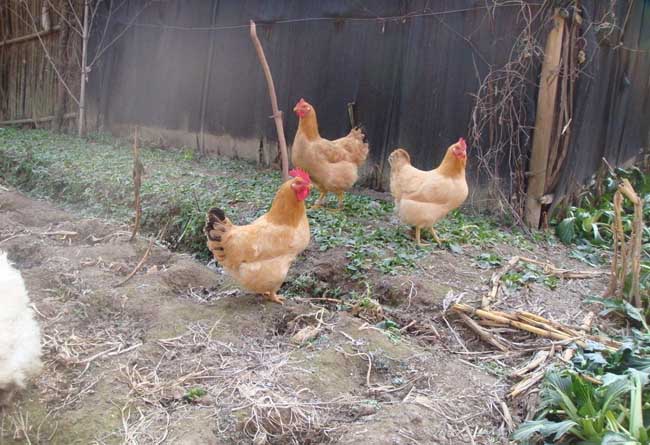
Free-range chicken farming technical materials download, master scientific rearing methods
Free-range chicken farming technical materials download
-
Detailed Explanation of the Key Technical Points for Raw-Material Cultivation of Shiitake Mushrooms
I. Significance of raw-material cultivation 1. The substrate has a wide range of sources and is easy to obtain locally, such as sawdust, cottonseed hulls, soybean stalk powder, corn cobs, etc. 2. The raw-material cultivation process is simple and greatly saves labor and working hours. 3. Raw-material cultivation has a short cycle and quick returns. From pressing the blocks or bagging and inoculating to fruiting generally takes only about 40 days. The substrate is not subjected to high-temperature sterilization, so the nutrients are not destroyed, and pile fermentation can decompose most macromolecular substances into small-molecule substances easily absorbed by the mycelium. At the same time, because an appropriate amount of fungicidal agent is added to the substrate, infection by contaminating microorganisms is also markedly reduced. 4. Raw-material cultivation has low cost, good quality, and high yield. Compared with cooked substrate, raw material increases yield by 27%, while production cost is reduced by 29%. II. Raw material preparation 1. Substrate formulas. Because shiitake is a wood-rotting fungus, in order to improve yield and quality, the substrate must contain more than 30% sawdust. The four substrate formulas are introduced as follows: (1) Sawdust 38 kg, wheat bran 10 kg, sugar 1 kg, gypsum 0.5 kg, superphosphate 0.5 kg, carbendazim 35 g. (2) Cottonseed hulls 20 kg, sawdust 19 kg, wheat bran 10 kg, sugar 0.75 kg, gypsum 0.5 kg, carbendazim 35 g. (3) Corn cobs 25 kg, sawdust 15 kg, wheat bran 8.5 kg, sugar 0.75 kg, gypsum 0.5 kg, urea 0.25 kg, carbendazim 35 g. (4) Rice straw (or wheat straw) powder 19.5 kg, sawdust 19.5 kg, wheat bran 9.25 kg, sugar 0.75 kg, gypsum 0.5 kg, carbendazim 35 g. 2. Pretreatment of sawdust. Sawdust is the raw material most favored by shiitake. Because sawdust is mixed with large amounts of components from pine, cypress, fir, and other such species, and the sawdust of these tree species contains terpenoid substances that inhibit mycelial growth, necessary measures must be taken to treat it when cultivating shiitake so that the mycelium can grow normally. The specific methods are as follows: (1) Limewater soaking method: its principle is that limewater has a relatively high pH, and its alkalinity can destroy the chemical structure of terpenoid substances. Generally, sawdust is soaked in 2% limewater for 12 hours-24 hours, then removed, rinsed with clean water, and sun-dried for later use. (2) Potassium permanganate solution soaking: its principle is that potassium permanganate can oxidize terpenoid substances. Generally, sawdust is soaked in 0.2%-0.3% potassium permanganate solution for about 12 hours, then removed, rinsed with clean water, and sun-dried for later use. (3) Boiling: boil sawdust in boiling water for about 15 minutes, remove it, rinse with clean water, and air-dry for later use. (4) Sun exposure: exposing sawdust to the sun for 60 days-90 days can also cause terpenoid substances to decompose and volatilize. 3. Pile fermentation (1) Functions: a. Through fermentation, some macromolecular substances can be degraded into small-molecule substances directly utilized by the mycelium. b. During fermentation, the temperature can reach 70°C, which can kill most contaminating microorganisms. c. During fermentation, terpenoid substances that inhibit mycelial growth can be degraded. (2) Process: mix the substrate uniformly according to the formula, then add water at a ratio of 1:1.3, mix well, and build a pile. The pile width is 1.2 m-2 m, the height is 1 m-1.5 m, in a trapezoidal shape, and the length depends on the amount of material and the site. The piling period is generally about 26 days, and the pile is generally turned 4 times-5 times, with the time intervals allocated as 7 days, 6 days, 5 days, 4 days, and 4 days. If the fermentation time is short, the material cannot fully decompose; if the fermentation time is long, the nutrient loss in the substrate is too great. Other materials are added in conjunction with pile turning, and the order is as follows: gypsum is added in two portions at the 1st and 2nd turnings; urea is added in 3 portions at pile building and the 1st and 2nd turnings; lime is added at the 3rd turning. Wheat bran, sugar, and carbendazim are added after the pile fermentation is completed and before bagging. The pile color is brown or coffee-colored, not black; the smell is mellow, without stench, sourness, or mustiness; the material is soft and elastic; the volume is reduced by 40% compared with the original, and the weight is reduced by about 30%. III. Disinfection of the mushroom house. The first disinfection is carried out before the substrate enters the mushroom house, and the second disinfection is carried out after it enters the mushroom house. In this way, contaminating microorganisms and pests in the mushroom house, bed frames, and substrate can be reduced to the greatest extent. The specific method is: for every 100 cubic meters of space, use sulfur 500 g, dichlorvos 100 g, and formaldehyde 200 g, mix with sawdust, heat, and fumigate sealed for 24 hours, then open doors and windows for ventilation, and only enter to operate after the medicinal odor in the mushroom house has dissipated. IV. Cultivation management 1. Pressing blocks or bagging. (1) Mixing materials: dissolve carbendazim in a small amount of clean water, add it with wheat bran to the substrate, gradually add an appropriate amount of clean water, and stir thoroughly and evenly. The water content in the substrate is about 60%, judged by water appearing between the fingers when the material is squeezed in the hand but not dripping, and the pH is 6.5-7, then mix in 10% spawn. (2) Pressing blocks or bagging: on a cement floor, first spread a layer of plastic film soaked in 0.2% potassium permanganate solution, place a wooden frame mold 33 cm long, 33 cm wide, and 8 cm high on the film, then sprinkle a 1 cm thick layer of spawn, pour the spawn-mixed substrate into the wooden frame, press flat slightly, sprinkle another 1 cm thick layer of spawn on the surface, preferably so that the substrate is not exposed, finally scrape flat with a wooden board and press firm, release the frame mold, and it becomes a spawn block 6 cm-7 cm thick, and finally fold the film well. If using bagging, first put the spawn-mixed substrate into the bag, then insert a hole in the center with a conical stick, and finally sprinkle a 1 cm thick layer of spawn at both ends of the substrate bag, preferably so that the substrate is not exposed, then tie the opening tightly to seal it. 2. Management during the mycelial culture period. The optimum temperature for mycelial growth is 25°C. During mycelial growth, the relative air humidity is required to be 60%-65%. Before the mycelium has fully colonized, avoid lifting the film, in order to prevent contamination by foreign microorganisms and to help maintain temperature. When the mycelium has fully colonized, turn the spawn block over and continue culturing for 4 days-5 days. When about 40% of the surface mycelium has turned brown, it can be placed on the shelves to induce fruiting. 3. Management during the fruiting period. The optimum temperature for fruiting is 12°C-18°C. A large day-night temperature difference can promote the formation of shiitake fruiting bodies. The relative air humidity in the mushroom house is maintained at about 90%. The specific measures taken are: spraying water on the floor and walls, and misting in the air. The water content of the spawn blocks should reach 50%-60%. As the culture time increases, the water content of the spawn blocks gradually decreases, but water must not be sprayed directly on the fruiting bodies, otherwise the fruiting bodies rot easily. If the water content of the spawn blocks drops below 40% and they feel very light when picked up by hand, then soak the spawn blocks in a water pool for 15 hours-20 hours so that they fully absorb water, then take them out and put them back on the shelves. Generally, 4 batches-5 batches of mushrooms are harvested, until the nutrients in the substrate are completely exhausted. 4. Harvesting. When the fruiting bodies have opened to 70%-80%, harvest them promptly. When harvesting, take care to pick the large ones and leave the small ones, combine harvesting with management, prevent damage to the surrounding small mushrooms and spawn blocks, and do not leave the base of the stipe on the spawn block, so as to avoid invasion by contaminating microorganisms that affects fruiting. 5. Spraying nutrient solution. (1) Formulas. No. 1 vigor agent: B9 0.5 g, vitamin B1 40 mg, urea 100 g, water 100 kg. No. 2 vigor agent: B9 1 g, vitamin B1 100 mg, magnesium sulfate 50 g, potassium dihydrogen phosphate 100 g, water 100 kg. (2) Method of use. After harvesting two flushes and stopping water for 2 days-3 days, use No. 1 vigor agent and spray continuously 2 times-3 times, using 0.25% nutrient solution per square meter, which can make the mycelium turn white and thicken.
-
Detailed Explanation of the Key Technical Points of the Fixed Bacterial Material Companion Planting Method for Gastrodia elata
The fixed bacterial material companion planting method for Gastrodia elata, also called the fixed material cultivation method, uses pits or boxes to cultivate 2 to 3 layers of bacterial material before planting the gastrodia. When planting, first remove the covering from the pit or box, take out the upper bacterial sticks layer by layer, leave the bottom layer of bacterial sticks undisturbed, then gently pull out the middle bacterial sticks, leaving one and skipping one, replace them with new wooden sticks, and plant the seed gastrodia close against both sides and both ends of the bacterial sticks. The spacing for planting large white gastrodia is 20 to 25 cm, for medium white gastrodia 7 to 9 cm, for small white gastrodia 4 to 6 cm, and rice gastrodia is broadcast scattered. Be careful to place the gastrodia seed close to where the fungal strands of the seedlings are dense. After planting the gastrodia, cover with soil
-
Identification Methods and Technical Key Points for Tea Plant Breeding Materials
Observe the traits of breeding materials, analyze the characteristics and features of various variant materials, select the superior and eliminate the inferior according to breeding objectives, and finally develop new varieties through comparative trials. The identification content is divided into 3 aspects: yield traits, quality traits and resistance. The yield traits of tea plants are mainly reflected in sprouting density and bud-leaf weight, growth speed, length of growth period, regeneration capacity after picking, and recovery capacity after suffering disasters or wounds; quality traits are mainly reflected in the chemical composition, color, pubescence,
-
Cultivation Methods and Technical Key Points for Gastrodia Seed Material
Gastrodia cannot nourish itself; it must rely on a symbiotic relationship with Armillaria mellea (honey fungus) to obtain nutrients for reproduction and growth. The parasitic Armillaria mellea can grow on about 200 species of tree trees, especially broadleaf forests. Generally, Armillaria mellea grows from the roots of cut trees, bamboo, or burned trees and bamboo, as well as dead trees fallen in the forest. Armillaria mellea must grow vigorously under certain moist conditions; soil moisture content should be no less than 45%-50%, and relative air humidity of 75%-80% is suitable. Armillaria mellea can also be cultured artificially, but the spawn must first be
-
-
-
-
条件筛选