-

Which peach and apricot varieties are suitable for courtyard planting?
Okubo Okubo originated in Japan and is now the main peach cultivar in North China. The fruit is nearly round, with an average single fruit weight of 220 g. The fruit apex is round and slightly concave, the suture is shallow and fairly distinct, the two sides are fairly symmetrical, and the fruit shape is uniform. The ground color of the skin is light greenish yellow, with red streaks. The flesh is milky white, with red on the sunny side, fine and soft in texture, juicy, with few fibers, aromatic, and freestone. The soluble solids content is 12%, and the quality is excellent. In the Beijing area, the fruit is harvested in late July. The fruit development period is 100 days. This
-
Xingguang Fuqiu Eggplant is an eggplant variety suitable for cultivation in summer and autumn
Xingguang Fuqiu Eggplant was developed by the Jiangsu Nanjing Xingguang Vegetable Research Institute. It is a mid-early maturing variety with long, thick club-shaped fruit and ink-black skin, generally about 30 cm long and about 8 cm thick, with a single fruit weight reaching up to more than 500 g. It has good market quality, strong disease resistance and adaptability, and is especially tolerant of heat, moisture, aging, and storage and transport. Because its benefits are extremely notable during the off-season for summer and autumn vegetable supply, it was named Xingguang Fuqiu Eggplant. Sow at the proper time and stagger the harvest for market. In the Yangtze River basin region, Xingguang Fuqiu Eggplant can be sown from mid-to-late September of the previous year to July of the current year
-
Detailed Explanation of High-Yield and Stable-Yield Cultivation Techniques for Tea Tree Mushroom
Tea tree mushroom has a certain cultivation area in Gaochun, Jintan and other places, but in recent years, affected by resources, technology, market and other factors, the cultivation area of tea tree mushroom has continued to decrease. From a technical perspective, the main factors affecting the high and stable yield of tea tree mushroom are: first, strain degeneration. The breeding work of tea tree mushroom is relatively lagging, the source of strains is single, and obvious degeneration has occurred. Second, the formula is unreasonable. In tea tree mushroom production, the substrate formula is highly arbitrary, especially the proportion of nitrogen nutrition is not properly grasped, which seriously affects the yield of tea tree mushroom. Third, the finished bag rate is low. Tea tree
-
What is the most suitable body weight for snakes used for breeding
Like other poultry and livestock, snakes that are too heavy or too light in body weight cannot be used for breeding. Snakes used for breeding must be in their youth, and the same species also has specific weight limits, so as to ensure the quality of the breeding snakes. Generally speaking, the body weight specifications of breeding snakes must be controlled as follows: small snake species about 100-150 g each; medium snake species 150-350 g each; large snake species about 250-700 g each. Those that are too large or too small cannot be included in the range of breeding snakes.
-
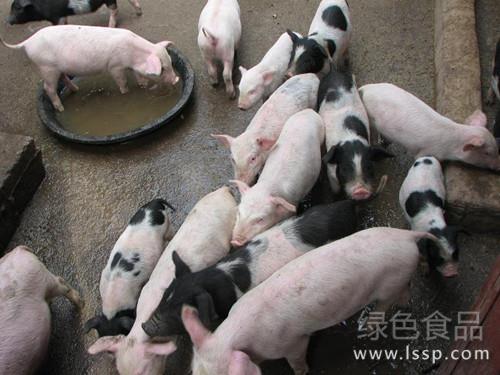
Why is it hard to raise finishing pigs in winter yet still profitable, and how can management be done well?
Raising pigs in winter is difficult but profitable; how to best manage finishing pigs
-
Detailed Explanation of the Morphological Characteristics and Suitable Growing Environment of Angelica sinensis
[Morphological Characteristics] Perennial herb. Plant height 1-1.5 m. Fleshy taproot system, main root distinct, cylindrical, outer skin yellowish-white, cross-section white, with a chrysanthemum pattern. Stem erect, purple at the base, with obvious longitudinal and transverse striations, divided into vegetative stems and flowering stems. Leaves are divided into basal leaves and stem leaves; basal leaves alternate, with the base enlarged into a sheath clasping the stem, purple-brown. The basal leaves and lower stem leaves are 2-3 times odd-pinnately compound, with toothed notches and coarse serrations along the edges. Compound umbel, terminal, each small umbel has 12-36 florets, white, schizocarp
-
Reasonable flower and fruit thinning of bayberry (Chinese bayberry, Myrica rubra) promotes stable and high yields
Bayberry (Chinese bayberry, Myrica rubra) bears fruit mainly on short and medium fruit branches. Because on these two types of bearing branches only the terminal bud is a leaf bud, while the rest mostly differentiate into flower buds, if they are allowed to set fruit naturally, they often bear excessively, the fruits are small and of poor quality, and it easily causes alternate bearing. To achieve stable and high yields, fruit thinning should be carried out. (1) The thinning period is generally in mid-to-late April, after fruit set is determined and before the fruits rapidly swell. (2) Thinning method: out of every 6 bearing branches, keep 3 to bear fruit and thin out 3, and each fruit-bearing branch keeps 2 fruits. (3) Thinning principle: keep fewer on the upper part of the canopy and more on the lower
-
Tips for Extracting Honey by Spinning: Suitable for Honey Harvesting in All Four Seasons
The main economic benefit of beekeeping comes from extracting honey by spinning. As the seasons change throughout the year, the methods of honey extraction also differ. In the Yangtze River basin, the basic principles for honey extraction are: early in spring, frequent in summer, steady in autumn, and stop in winter. 1. Early in spring. After the beginning of spring, the queen bee begins to lay eggs, worker bees go out to forage, and their enthusiasm for nurturing young bees rises day by day; especially for Chinese bees (Apis cerana), when the temperature is just turning warm but still cold, they fly around searching and collecting scattered nectar. They generally produce their first batch of mature honey around the end of March. Apart from feeding young bees and
-
Which edible mushroom varieties are suitable for cultivation in autumn and winter?
In autumn and winter, as mid-to-late rice, corn, cotton and sugarcane are harvested, not only is space and labor freed up for developing edible mushrooms, but waste materials such as straw, cottonseed hulls, bagasse, corn cobs and mixed wood shavings are also good raw materials for cultivating edible mushrooms. Therefore, autumn and winter are among the best periods for developing edible mushrooms. The button mushroom, commonly known as the mushroom, can be cultivated in open fields using mid-to-late rice paddies. Wheat straw, corn stalks, rice straw and thatch leaves can be used as raw materials; from composting to fruiting takes about 50 days.
-
What is the box tree pyralid, an insect found beside vegetable fields?
As spring warms and flowers bloom, insects begin to become active. During a recent science-and-technology outreach activity in the countryside, it was found that a pest called the box tree pyralid had begun to occur and cause damage on boxwood along the roadsides of the park. The box tree pyralid is one of the common pests on plants such as boxwood, small-leaved box, large-leaved box, littleleaf box, Chinese box, spoonleaf box, Korean box, and holly, and it occurs in Shanghai and other provinces and cities. In Shanghai it has 3 to 4 generations per year, with severe overlapping of generations. It usually becomes active in March in spring, begins pupating in mid-April, begins emerging in late April, and the first-generation lar
条件筛选