-

Fast rooting methods for rose cuttings and the suitable temperature
Roses are loved by many people who grow them, and they can also be propagated by cuttings. How do you get rose cuttings to root quickly? What is the rooting temperature for roses: How to get rose cuttings to root quickly: Whether you root them in water or in soil, you must first cut off the flower. Rooting depends on temperature.
-
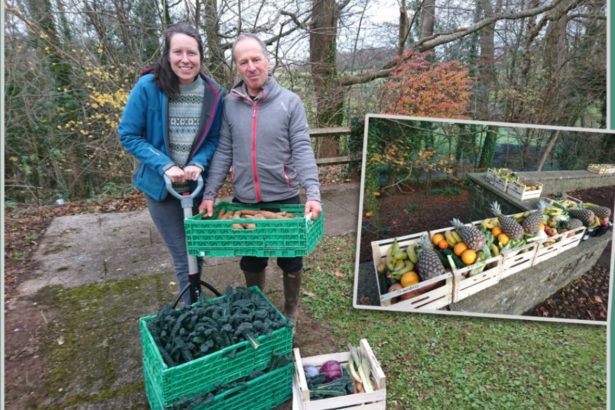
How do rejected fruit and vegetables get a new lease of life? A visit to the UK
A visit to the UK - giving rejected fruit and vegetables a "rebirth"
-
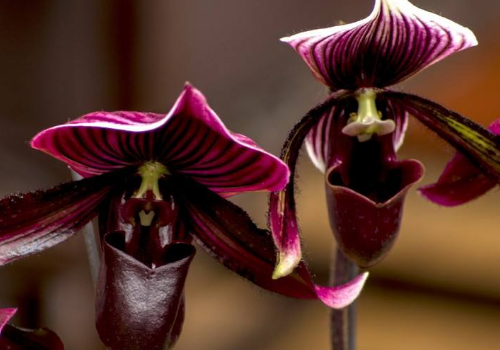
Is Paphiopedilum suitable for indoor growing, and is it harmful to the human body?
Paphiopedilum, also a type of plant, is one that many people like, and it looks really beautiful. So is Paphiopedilum suitable for indoor growing? Is it harmful to the human body: Is Paphiopedilum suitable for indoor growing: Paphiopedilum is a terrestrial plant; wild Paphiopedilum grows on rocks and trees, the plant is short, and it is extremely suitable for potting.
-
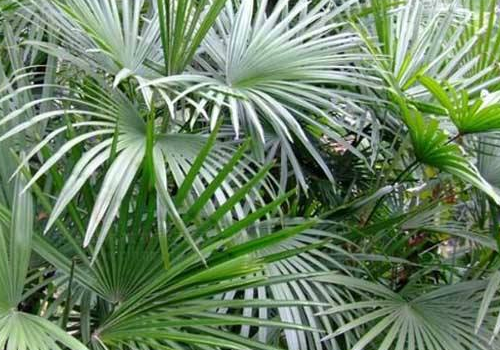
When to Divide Broadleaf Lady Palm and Why It Is Not Suitable for Growing at Home
Broadleaf lady palm is also one of the plants, and a great many people know about it. So when should broadleaf lady palm be divided? Why is it not suitable to grow at home: When to divide broadleaf lady palm: Broadleaf lady palm division propagation is generally carried out in spring when repotting. (The best time for division is March to April.
-
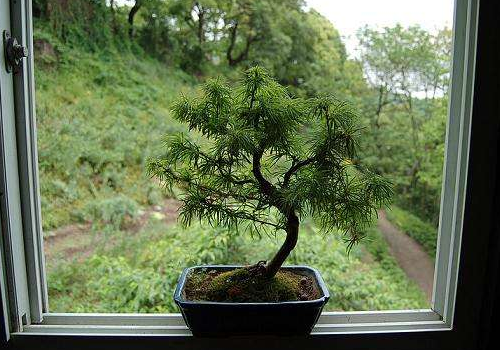
Is Araucaria suitable for growing indoors? Detailed guide to care precautions
Araucaria is not only commonly planted in parks and courtyards, but is also very popular as a potted plant. Is Araucaria suitable for growing indoors? Care precautions: Is Araucaria suitable for growing indoors: Araucaria is also a precious indoor potted decorative tree species, used to accent and decorate hall environments, looking very elegant. Small-sized Araucaria
-

Fruit and vegetable prices generally fall after the Spring Festival; building dedicated cold-chain fruit and vegetable trains to prevent fruit and vegetable prices from falling
Last year, Taipei Agricultural Products Marketing Corporation saw overall vegetable auction prices drop by 30% due to multiple factors such as a surge in fruit and vegetable supply, weak consumption, and consecutive market closures. This year, subsidies are expected to help Taipei Agricultural Products Marketing Corporation build a cold-chain system to extend the freshness period of fruits and vegetables. Let's take a look. Connecting production areas, using cold chain
-
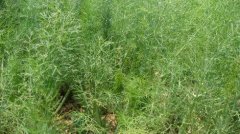
How to grow fennel? Fennel cultivation methods and suitable temperatures
Fennel is a major development-oriented cash crop in our prefecture, and many people grow fennel. So how do you grow fennel? Do you know? Below we introduce it from three aspects: the environmental requirements for fennel cultivation, the morphological characteristics of fennel, and the key points of fennel cultivation requirements
-

Introduction to New Varieties of Arugula, a Specialty Vegetable
Arugula is a rare specialty vegetable selected from local varieties by the Institute of Vegetables and Flowers, Chinese Academy of Agricultural Sciences. Characteristics: The taproot is well developed and the root system penetrates deep into the soil. The mature plant is 30--40 cm tall. The stem is round and covered with fine hairs, and the stem diameter is 0.2--0.4 cm. The leaves are deeply pinnately lobed with wavy margins, 10--15 cm long and 5--8 cm wide, and the petioles are 5--7 cm long. The flowers are yellow with black longitudinal stripes on the petals, and the fruit is a silique. Arugula prefers a warm, cool and humid climate. It is resistant
-
Morphological Characteristics of Polygonatum and Introduction to Suitable Growing Environments
[Morphological Characteristics] Perennial herb, plant height 30-120 cm. The whole plant is hairless. The rhizome is yellowish-white, slightly sweet in taste, thick and fleshy, growing horizontally, formed by several chicken-head-shaped sections connected into a shape thick at the head and tapering at the tail; the end bearing the stem is relatively thick, and after the stem withers it leaves a round stem scar like a chicken's eye; the nodes are distinct, with a few roots growing at the nodes. The stem is single, slightly curved, cylindrical. Leaves are usually in whorls of 4-5, sessile; the leaf blade is linear-lanceolate, with a curled tip, grayish bloom on the underside, parallel main veins, and the central vein thick and raised on the underside.
-
Recommended Pear Varieties: Excellent Cultivars Suitable for Cultivation in Eastern Hebei
Many pear varieties have been introduced successively. Through cultivation trials and demonstrations, we consider the following 8 varieties to be easy to flower, early to fruit and early to bear abundantly, of excellent quality, strongly resistant, easy to manage, and highly profitable, making them suitable for cultivation in the eastern Hebei region. 1. Zaosu Pear was bred in 1956 by the Institute of Pomology of the Chinese Academy of Agricultural Sciences, with the parents Pingguo Li x Shenbuzhi, named in 1969, and introduced to Qian'an City in 1985. The fruit is obovate with angular protrusions, with an average single fruit weight of 237 g. The ripe fruit has a green-yellow skin, a smooth surface, and white flesh. The flesh is crisp and tender, with few stone cells, juicy
条件筛选