-

Detailed Explanation of the Open-Field Cultivation Technique for Shiitake Mushrooms Using Substitute Materials
Recently, Gutian County in Fujian Province hosted the National Edible Fungi Technology Market. More than 700 people from research, production and management units as well as specialized household growers from 20 provinces, municipalities and autonomous regions gathered in Gutian. After visiting the county's field-cultivated shiitake mushrooms, everyone praised them without exception. Gutian County uses a new technique for open-field cultivation of shiitake mushrooms with substitute materials, and mushrooms emerge 70-80 days after inoculation. On average, every 100 kg of sawdust or cottonseed hulls can produce 8-12 kg of dried shiitake mushrooms, which is more than 10 times the per-unit yield of the old log cultivation method, and the production cycle has been shortened from the original more than two years to 10 months. The product's shape
-
Detailed Explanation of Key Points for Lightweight Cultivation Technology of Substitute-material Shiitake Mushrooms
Since the 1990s, the substitute-material flower shiitake cultivation technology successfully researched by the Qingyuan County Edible Fungi Research Center has been rapidly promoted and applied nationwide, making major contributions to poverty alleviation and prosperity in rural areas and to the transformation of shiitake production from quantity-oriented to quality-oriented. However, in substitute-material shiitake production, processes such as substrate log sterilization, inoculation operations, and manual bag cutting require large labor inputs, and problems such as low substrate log success rates, uneven fruiting, and deformed fruiting bodies have long constrained the development of shiitake production, especially creating major obstacles for intensive production. For this reason, our
-
Causes and Control Techniques of Rotting in Substitute-Material Shiitake Mushroom Logs
In recent years, varying degrees of log rotting (i.e., rotting and disintegration of logs during the spawn-running period) have occurred in some substitute-material shiitake mushroom production areas, causing waste of resources and economic losses for mushroom growers, and in some areas it has seriously threatened the development of the shiitake mushroom industry. For example, in Qingyuan County, the log rotting rates in 1999 and 2003 reached 17% and 31% respectively, with some individual growers exceeding 50%, resulting in severe losses. In response, we have conducted dedicated investigations and research since 1997, and have preliminarily identified the causes of log rotting and its control techniques. 1. Causes of log rotting
-
Boxwood: A Preliminary Study of a Famous Carving Wood and Its Substitutes
1 Basic Information on Boxwood (Buxus spp.) Boxwood belongs to the family Buxaceae and the genus Buxus, with the English name boxwood. It is an evergreen shrub or small tree, with about 70 or more species worldwide, distributed in Europe, Asia, tropical Africa, and Central America. China has about 17 species, and Yunnan about 8 species. According to the record in "Chinese Woods": "In the Shennongjia forest region of Hubei, the Wuyi Mountains of Jiangxi, and Sichuan Province, there are small-tree timber forests distributed or cultivated in continuous stands, and the Laoshan Forest Farm in Shandong has boxwood with a diameter at breast height of about 30 cm
-
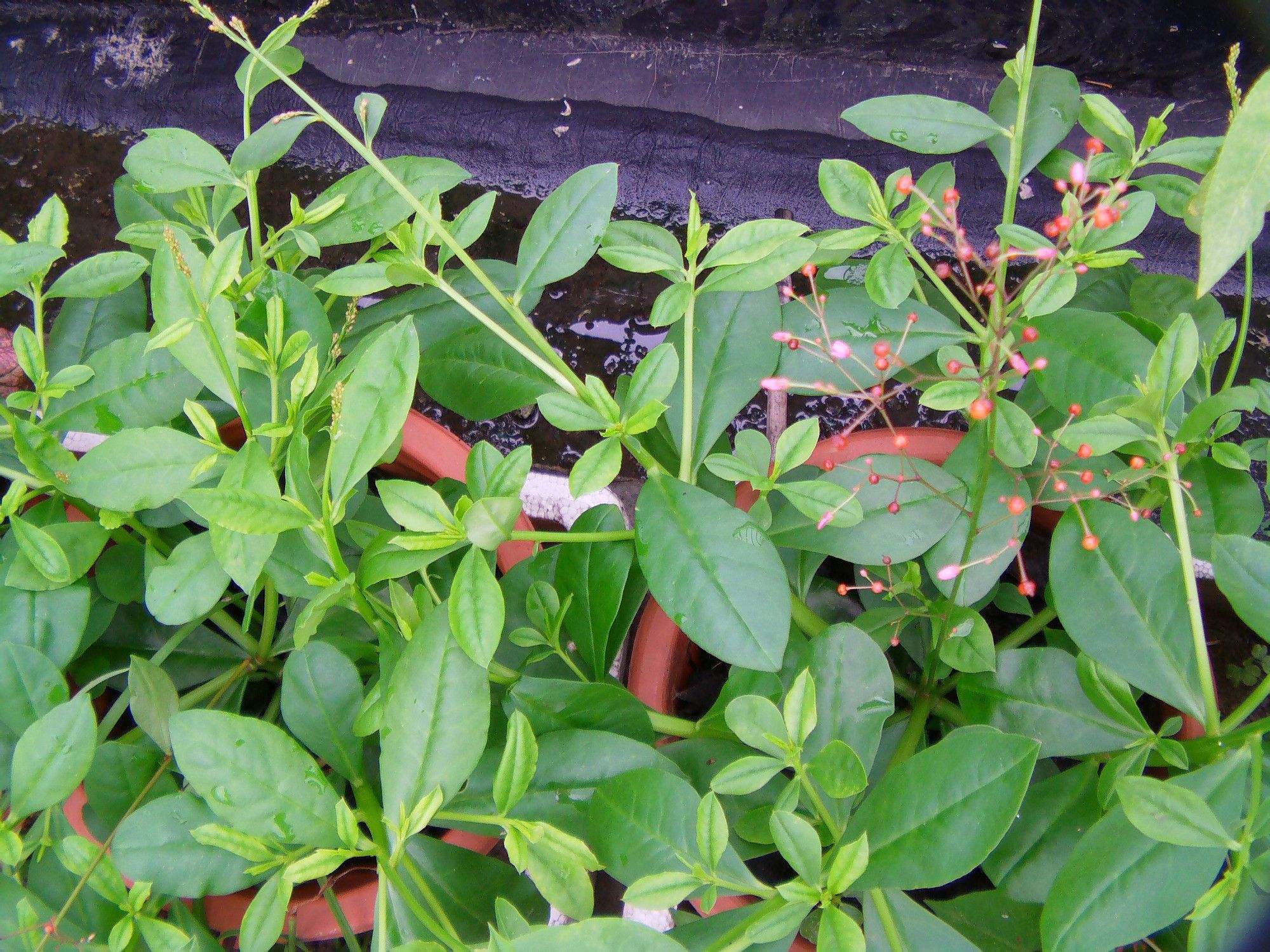
This American wild grass that closely resembles ginseng has invaded China and is used as a ginseng substitute
For those who grew up in the countryside, nature's gifts are truly abundant. Many fruit trees and plants that grow naturally on the mountains are not only beautiful but also bear fruit that can be picked and eaten. These naturally growing plants really...
-
Eight Detailed Methods for Controlling Mites in Substitute-Material Wood Ear Mushrooms
Rapeseed cake powder trap method: take an appropriate amount of rapeseed (0,-5025.00,-100.00%) cake, grind it into powder, put it in a hot wok, and stir-fry over low heat until the powder gives off a rich oil fragrance, then remove from the wok. On the surface of the growing substrate or bed where the mushroom mites are causing damage, cover with a wet cloth, then lay a piece of gauze on top of the wet cloth, sprinkle the fragrant rapeseed cake powder onto the gauze, and wait...
-
Analysis of the Concept of Disease- and Pest-Free Substitute-Material Shiitake and New Cultivation Techniques
The large-cup mushroom, also known as pig-stomach mushroom, has fruiting bodies that grow in clusters, cup-shaped or shallow funnel-shaped, pale yellow, with thick flesh and a thick stalk, crisp and tender and delicious, and rich in nutrients. Under natural conditions, the fruiting bodies appear from May to October, and it has the characteristics of both wood-rotting and soil-borne growth. Its cultivation essentials are briefly introduced as follows: 1. Seasonal arrangement: large-cup mushroom fruiting...
-
Detailed Explanation of the Low-Altitude Substitute-Material Cultivation Method for Gastrodia elata
Gastrodia elata is a rare and precious traditional Chinese medicine. In the past it relied on wild sources, growing in mountain forests above 500 m in elevation, and was very scarce and difficult to dig up; it now faces extinction. The development of artificial cultivation of Gastrodia elata has saved this precious species, but technically it still cannot escape high-altitude cultivation, and the raw material cannot be separated from log wood (...
-
Fishmeal is too expensive and you want to use small peptides as a substitute? First, understand what small peptides are
Fishmeal is too expensive, you want to use small peptides - what are small peptides?
-
How to Grow Wood Ear Mushrooms? Cultivation Conditions, Substitute Substrate Formulas and Ingredient Details
Cultivation Conditions for Wood Ear Mushrooms
条件筛选