-

Tainted Spicy Strips Factory Shut Down: The Dangers and Production Process of Spicy Strips Explained
Do you like eating spicy strips? Spicy strips are a favorite of many children, and some adults like them too, but did you know that the production of spicy strips may be very unhygienic, and that eating too many of them can be very harmful? On the CCTV gala on March 15
-

Can bamboo shoot strips be eaten raw in a cold salad? You'll understand after reading this
Fresh, tender, and crisp, you can never get enough. As the saying goes, "when tasting freshness, none can compare to spring bamboo shoots" - even Emperor Taizong of Tang back in the day longed for spring bamboo shoots day and night. Every year when spring bamboo shoots hit the market, he would rush to summon his ministers to a "bamboo shoot banquet." Generally, cold bamboo shoot strips refer to spring bamboo shoots, so can bamboo shoot strips be eaten raw in a cold salad?
-
Is gongcai the same vegetable as celtuce? Understanding the difference between the two in one article
Gongcai and lettuce strips look very similar in appearance, and they are also very easy to buy in vegetable markets. If you do not distinguish them carefully, some people may even think that gongcai is just celtuce strips, but that is not the case. These are actually two kinds of vegetables. Here is a brief introduction for everyone.
-
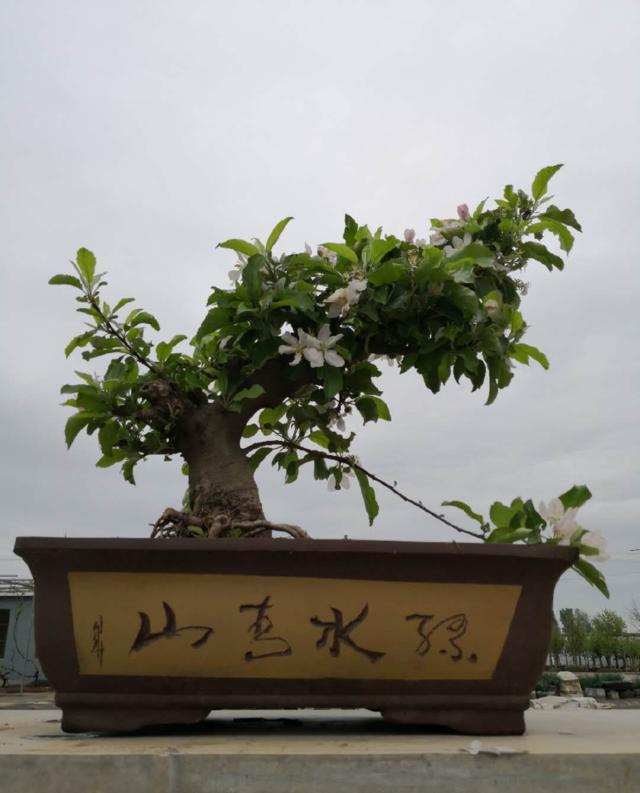
Apple, mulberry and grape bonsai may look unremarkable, yet at the Xushui base they sell for over 300 yuan a pot and demand still outstrips supply.
1. At the Kainian Fruit Tree Bonsai Garden in Xushui, Hebei, its founder Zhao Chen successfully launched potted apple fruit trees in 1998. Before the Spring Festival in 2002, the launch of off-season potted fruit trees was a domestic first. ...
-

Testing field corn with Cry1Ab/Ac protein test strips is not very feasible
According to a June 4 report in Ningxia Daily, the Pengyang County Agriculture and Animal Husbandry Bureau carried out field testing of genetically modified components in corn. Staff from the Pengyang County Seed Management Station went into the fields and tested corn varieties sold by seed companies in 6 townships with relatively large planting areas across the county...
-
How to make sesame fried fish strips and detailed steps
30 grams of sesame seeds, 150 grams of grass carp meat (snakehead fish also works), 1 egg. 500 grams of peanut oil (50 grams actually consumed), 10 grams of salt, 8 grams of MSG, a little pepper, 30 grams of cornstarch. 1. Peel the grass carp meat and cut it into thick strips, add salt, MSG, pepper, and a little cornstarch, and marinate for 10 minutes. 2. Beat the egg, add the remaining cornstarch and mix into a batter, then coat the marinated fish meat with the batter, and roll it in sesame seeds. 3. Heat a wok and add oil; when the oil temperature reaches 150 degrees, add the ingredients
-
Full process detailed explanation of the processing technology for Baizhi mushroom strips
I. Origin of the name: Baizhi mushroom strips, whose full name is "Siwei Baizhi mushroom strips," are named after the beef tripe-like food. They are made by cutting oyster mushroom caps into long mushroom strips 0.5-1 cm wide, resembling white beef tripe, and the flavor is mildly salty, mildly spicy, mildly sweet, and mildly sour as a ready-to-eat food or convenience food. II. Process flow: rinse oyster mushrooms -> shred and rinse -> color protection and blanching -> cool and fill jars -> pour in broth and seal -> sterilize and cool. III. Basic operating procedure: (1) Shred the caps. Harvest large oyster mushrooms at less than 80% maturity,
-
Production Method and Technical Key Points for Multi-Flavor Shiitake Mushroom Strips
During the processing of shiitake mushrooms, a large number of broken and fragmented mushroom stems are often removed. The protein, various amino acids and vitamin content of these stems are on par with the caps and gills, so discarding them is a great pity. For this reason, a method for making multi-flavor shiitake mushroom strips using them as raw material is introduced here. 1. Soaking Remove impurities as well as diseased and rotten parts from the broken mushroom stems, place them in clean water weighing twice as much, add an appropriate amount of vinegar, soak for 24 hours, then take them out and tear them into strips. Next, place them in a water tank and wash with running water, then remove and filter through a bamboo sieve, draining off the water. 2. Drying
-
How to make watermelon rind taste good? The method for making licorice watermelon rind strips
Watermelon rind is rich in carbohydrates, minerals and vitamins, and has effects such as clearing heat and detoxifying, and promoting urination. The following introduces the technique for making licorice watermelon rind strips: Cut into strips. Thoroughly wash fresh watermelon rind with clean water, drain off the water, remove the green outer skin and the red flesh, then use a stainless steel knife to cut the watermelon rind into strips 0.2 cm wide and 6 cm long. Salting. First mix sodium benzoate and table salt, in amounts of 0.1% and 10% of the weight of the watermelon rind strips respectively. Then, in a container, salt in the order of one layer of watermelon rind and one layer of mixed salt, with a somewhat larger amount of mixed salt on the topmost layer. The salting time is generally 24 to 48 hours. Rinsing. Put the salted watermelon rind strips into a container holding clean water, changing the water once every 1 hour, until the salt content in the watermelon rind strips drops to 1% (the salt content is tested with a handheld salinity refractometer). Sugar processing. Put the rinsed watermelon rind strips into a bamboo basket and drain off the water. Then, in a container, process with sugar in the order of one layer of watermelon rind strips and one layer of sucrose. The amount of sucrose used is 20% of the fresh watermelon rind strips, and the sugar processing time is 24 to 48 hours. Baking. Take out the sugar-processed watermelon rind, drain off the sugar liquid thoroughly, arrange it evenly on a baking tray, send it into the drying room, and bake at 65 to 70 degrees C until the moisture content of the watermelon rind is 25%. Auxiliary ingredient formula. Calculated per 100 kg of fresh watermelon rind strips, prepare the auxiliary ingredients: sodium saccharin 0.05 kg, monosodium glutamate 0.2 kg, citric acid 0.05 kg, table salt 0.5 kg, potassium sorbate 0.01 kg. Soaking the auxiliary ingredients. Place the dried watermelon rind strips in a container. Dissolve the auxiliary ingredients according to the formula in licorice water, pour into the container, and mix the watermelon rind strips thoroughly from top to bottom. On the second day, mix from top to bottom another 1 to 2 times, leave for 2 days, take out the watermelon rind strips and bake them. The licorice aqueous solution is made by boiling 4 kg of licorice and 25 kg of water per 100 kg of fresh watermelon rind strips, and filtering it. Baking. Evenly arrange the watermelon rind strips that have been soaked with auxiliary ingredients on a baking tray, and send them into the drying room for baking. It is suitable to control the drying room temperature at 60 to 65 degrees C. During baking, turn them several times, and when the moisture content of the product drops to about 25%, the baking is finished. Mixing in licorice powder. Cool the watermelon rind strips at room temperature. Mix licorice powder (used in an amount of 0.1% of the fresh watermelon rind strips) into the watermelon strips, and mix evenly to obtain the finished product.
-
Potato Food Processing Method: Protein-Fortified Potato Strips
Process flow: potatoes → washing → peeling → trimming → dicing or cutting into strips → pre-cooking → cooling → disulfide solution treatment → drying → puffing → adding flavor enhancers → packaging → finished product. Key operating points: ① Peeling: using alkali peeling or infrared radiation peeling gives better results. ② Shaping: cut into cubes, strips or other shapes according to product requirements. ③ Drying: the moisture content of the raw material should be strictly controlled; when the moisture of the raw material drops to 2.8-3.5%, drying can be stopped. ④ Puffing: use
条件筛选