-
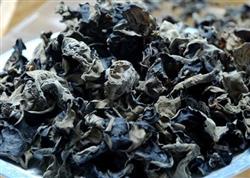
How to prevent and control insect pests during the storage period of wood ear mushrooms?
How to prevent and control insect pests during the storage of wood ear mushrooms? Please introduce detailed control methods. For methods of preventing and controlling insect pests during the storage of wood ear mushrooms, you can refer to the following methods: 1. Eliminate insect sources: The insect pests that damage wood ear mushrooms include the long-horned grain beetle, termites, grain moths, and so on. They often overwinter in warehouse cracks, debris, packaging materials, and other places, so before...
-
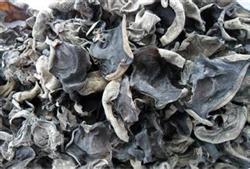
How to prevent and control pests during the storage of wood ear mushrooms?
How do you prevent and control pests in stored wood ear mushrooms? Please explain the methods. The following methods can be used for pest prevention and control when storing wood ear mushrooms: 1. Eliminate pest sources. The pests that damage wood ear mushrooms include the long-horned grain beetle, termites, grain moths, and so on. They often overwinter in warehouse cracks, debris, packaging materials, and other places, so before storing wood ear mushrooms, the indoor...
-
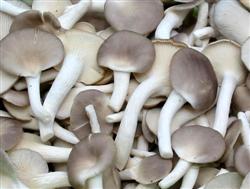
Pleurotus pulmonarius cultivation techniques: a detailed guide to harvesting and storage methods
How do you harvest and store Pleurotus pulmonarius? Here is an introduction. For harvesting and storing Pleurotus pulmonarius, you can refer to the following methods: begin harvesting when the fruiting body caps of Pleurotus pulmonarius are flat, the margins are incurved, the cap diameter is 2--2.5 cm, and they have not yet entered the rapid growth stage. Because Pleurotus pulmonarius produces clustered mushrooms, do not take the whole cluster off just to save time...
-

Key Cultivation Techniques for Converting a Cold Storage Facility into a Mushroom Farm
Cold storage facilities have good insulation and moisture retention, with easily controlled temperature and humidity and weak light, making them quite suitable for mushroom growth and development conditions. With slight modifications to the existing facilities inside the storage, year-round mushroom production can be achieved, with 3 cultivation cycles possible per year. 1 Cold storage conversion. Cold storage can be divided by temperature into high-temperature storage (fruit cold storage) and low-temperature storage (meat and aquatic product storage); by construction location, it can be divided into above-ground storage and cave storage. These cold storage facilities were originally designed and built for storing fruits and vegetables, and their performance is not quite suitable for mushroom cultivation, therefore
-
Many Methods for Preserving Edible Mushrooms: Master the Techniques to Extend Storage Life
Salt preservation: Freshly harvested oyster mushrooms, Phoenix-tail mushrooms and the like, after being cleaned up, are soaked in 0.6% salt water for about 10 minutes, then taken out, drained and stored in plastic bags, keeping fresh for 5-8 days. Rice-water film preservation: Add 1% soda ash or 5% baking soda to rice water, stir well, and cool to room temperature. Soak freshly picked mushrooms in the rice water, take them out after 5 minutes, and dry them in a cool, dry place; by then a thin film of rice water will form on the surface of the mushrooms, which can isolate air, and the mushrooms can generally keep fresh for 2-3 days. Ascorbic acid solution preservation
-
Key Technical Points for Quick-Freezing and Cold Storage Preservation of Edible Fungi
Quick-frozen storage of shiitake mushrooms: In recent years, shiitake mushroom production has flourished across both northern and southern parts of China. Since the popularization of bag-cultivated shiitake mushrooms in Fujian, provinces such as Zhejiang, Henan, and Hubei have successively developed bag-cultivated shiitake mushrooms with success. Quick-frozen storage of shiitake mushrooms has become an indispensable and important preservation technique in the production and sales chain. Quick-frozen storage of shiitake mushrooms is simpler and more convenient than that of button mushrooms. Generally, fresh mushrooms are pre-cooled in ice water, removed and drained, then quickly placed in an ultra-low-temperature ice storage at -50 to -60°C for quick-freezing, and then placed in a cold storage at -18 to -24°C for preservation, through
-
Rapid Freezing and Cold Storage Preservation Techniques for Edible Mushrooms
Shiitake mushroom production has flourished across both northern and southern regions of our country in recent years. Since the popularization of bag-cultivated shiitake in Fujian, the provinces of Zhejiang, Henan, Hubei and others have successively developed bag-cultivated shiitake with successful results. Quick-freezing storage of shiitake has become an indispensable and important preservation technique in the production and sales chain. Quick-freezing storage of shiitake is simpler and more convenient than that of button mushrooms. Generally, fresh mushrooms are pre-cooled in ice water, removed and drained, then rapidly placed in an ultra-low temperature freezer at -50 to -60°C for quick freezing, and then placed in a cold storage at -18 to -24°C for storage, entering consumers' homes through the "cold chain" system.
-
Detailed Explanation of the Baking and Storage Methods for Dried Shiitake Mushrooms
At present, bag-cultivated shiitake mushrooms have become a major pillar industry for economic development in many mountainous rural areas. However, during the shiitake cultivation process, due to insufficiently timely management, or encounters with abnormal climate and large temperature differences, some deformed mushrooms or low-quality shiitake mushrooms (collectively called "cai gu") are easily formed. If these low-quality mushrooms are not processed and are directly sold on the market as fresh mushrooms, the selling price is very low, and sales are poor. If they are baked into dried mushrooms, not only can their value increase, but sales are also good. However, due to improper baking methods, some farmers find that for the same dried mushrooms, prices often differ by several times. Over the past few years, the author has studied
-
Key Points of Preservation, Storage and Transportation Technology for Export Shiitake Mushrooms
1. Moisture removal Freshly picked shiitake mushrooms have a relatively high moisture content and must undergo moisture removal treatment. (1) Sun drying. Place the fresh mushrooms on a drying rack, with the caps tilted upward and arranged evenly. Drying time: 3-6 hours for autumn and winter mushrooms; 6-7 hours for spring mushrooms; 1-2 hours for summer mushrooms. (2) Hot air moisture removal. Place the mushrooms with caps facing down and spread evenly on a drying rack, then place them in a homemade hot air rotary kiln and remove moisture in a 40°C environment. (3) Use a moisture removal machine. For fresh mushrooms after moisture removal, when using large packaging, the moisture content must be 70%-80%
-
Harvesting, Processing and Storage Methods for Shiitake Mushrooms Cultivated on Substitute Substrate
(1) Harvesting time The time required from the appearance of mushroom buds to harvest varies with temperature and humidity; generally it takes 7-10 days from budding to maturity. Timely harvesting is an important part of shiitake cultivation, as harvesting too late or too early will affect both yield and quality. The harvesting stage should also be determined according to whether the mushrooms are sold fresh or dried. Generally, for dried mushroom sales and fresh mushrooms for the domestic market, it is best to harvest when the fruiting bodies are 60-80% mature, that is, when the veil has already broken and the cap still curls inward slightly; at this stage the quality is good and the value is high. When fresh mushrooms are for export
条件筛选