-

Beginners growing greenery: no matter how much you like them, don't start with these 4 beautiful flowers
When beginners first start growing greenery, they all want to pick some high-appeal ones, since just looking at them lifts your mood. But some flowers look beautiful while being an absolute "trial by fire" to grow, especially these four: azalea, camellia, gardenia, and Rieger begonia. I really suggest not rushing to get them, and waiting until you've built up some experience before taking on the challenge. Azalea: this flower
-

How to care for flowers after the Start of Autumn, and which flowers need their branches and leaves pruned in order to bloom?
Autumn has just arrived, and the temperature is noticeably lower than in June and July. At this time, the most suitable thing for flowers and plants is a "haircut," because being willing to prune now can stimulate more flower buds later. So what is the purpose of pruning, and what should be noted after pruning? After the Start of Autumn, for roses, pruning mainly
-
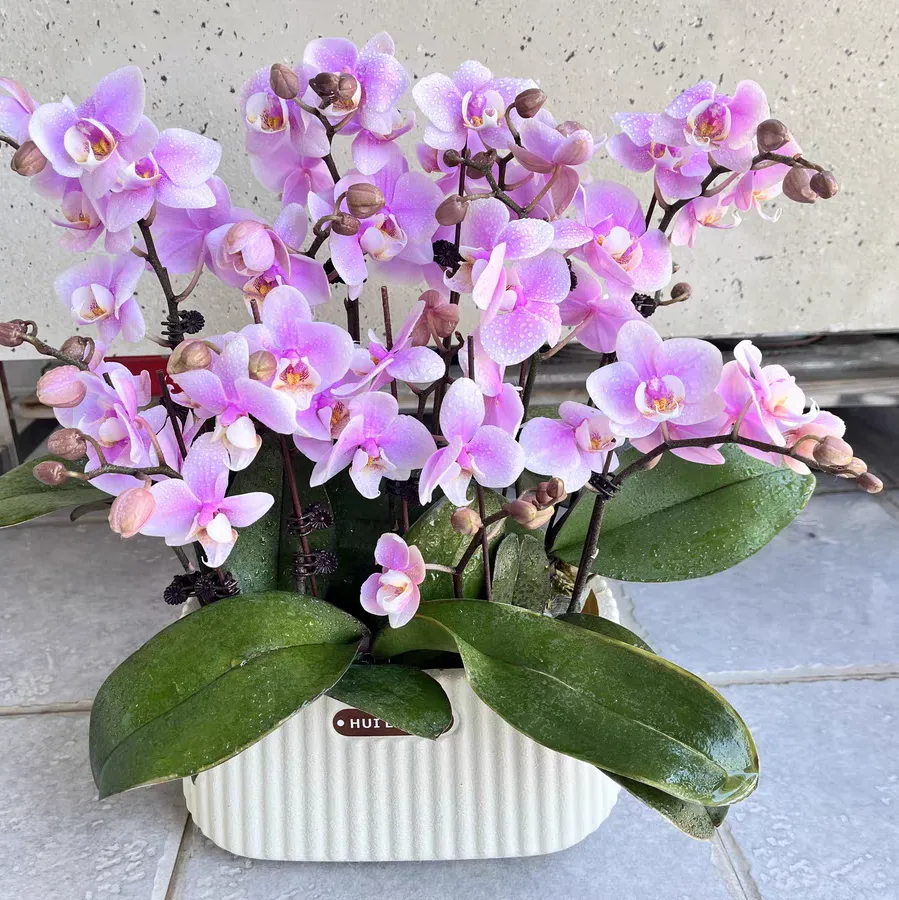
Can Phalaenopsis bloom if it starts to send out flower stalks in spring?
Phalaenopsis, as the "beauty" among flowers, is deeply loved by flower enthusiasts with its elegant flower posture and gorgeous colors. For many friends who
-
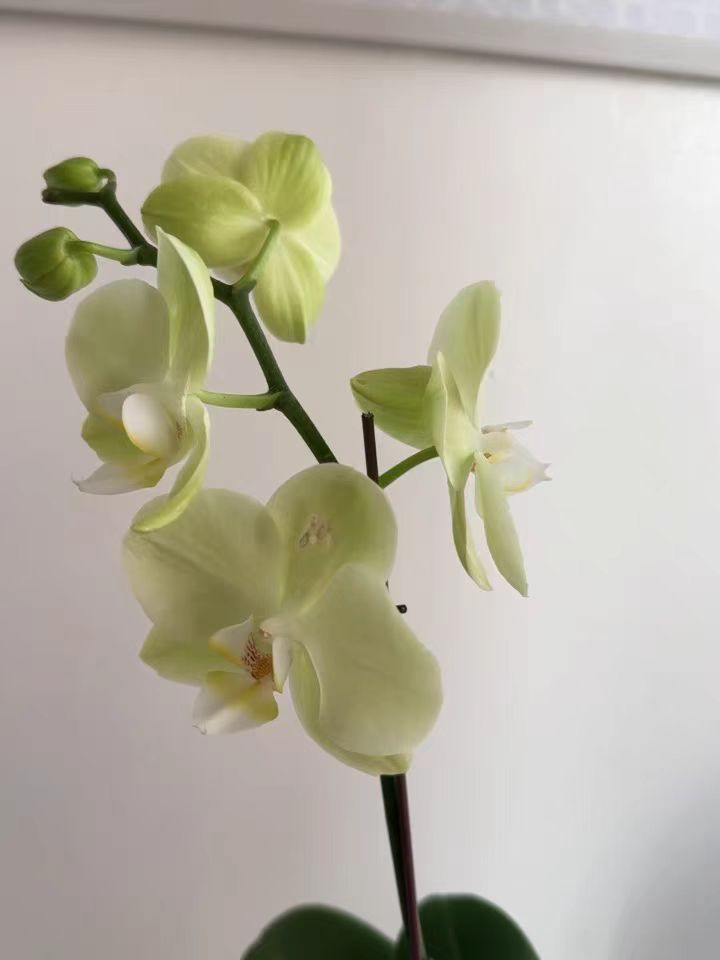
Can Phalaenopsis orchids be repotted when they start to grow flower spikes?
When Phalaenopsis orchids begin to grow flower spikes, it fills people with anticipation. However, regarding the maintenance of Phalaenopsis orchids after they
-

Is the Blue Star Phalaenopsis a summer-flowering orchid? Differences from fennel
The Blue Star Phalaenopsis, as a type of Phalaenopsis, indeed belongs to the summer-flowering varieties. Summer flowers refer to flowers that bloom in summer, and these flowers blossom in the hot summer; the Blue Star Phalaenopsis has light purple flowers and a relatively long flowering period. As a tropical flower, Phalaenopsis is naturally distributed in the low-latitude tropical islands of Asia,
-
Is the Phalaenopsis Blue Star toxic? A look at varieties and flowering periods
Phalaenopsis Blue Star is simply a star of the floral world! Its unique blue flowers, like elves from a dream, are unforgettable at first glance. First, let's talk about the toxicity everyone is concerned about: Phalaenopsis Blue Star is non-toxic, so you can absolutely take it home with peace of mind and let it add a touch of beauty and warmth to your life.
-

What happens if you don't wear gloves when pruning blue star flower? With growing methods and precautions
As everyone knows, among the flowers in nature, blue-toned floral materials are very rare. Today I'm sharing a "blue star flower" with unique blue blooms, which some flower shops also call "Cui Lu Li" (Ruellia simplex, Mexican petunia). Generally speaking, from late spring to early autumn, blue star flower is easy to find in flower markets. It is a herbaceous plant native to South America, and the ornamental period of fresh cut flowers can reach about 15 days. After the flowers bloom, they are very small and lovely, with petals layered one upon another, looking like an azure starry sky, and they are mostly used as filler flowers.
-

Is the white sap of the blue star flower toxic, and can it be eaten? Flower language and symbolism
The blue star flower (Oxypetalum coeruleum) belongs to the genus Oxypetalum in the family Apocynaceae and originates from tropical regions; it is an evergreen semi-climbing small shrub. Its plant height is 30-80 cm, the leaves are alternate, oblong, entire, with the leaf underside densely covered in white hairs; the flowers are axillary, gamopetalous, with a five-lobed blue corolla and a white star-shaped pattern in the center. It can bloom throughout the year, but each flower
-
-

Flowerhorn fry prices, how many can be kept in one tank, how to care for them, and their lifespan
The flowerhorn, with its slightly protruding head, has a unique appearance that is unforgettable, and in recent years it has gradually become a rising star among ornamental fish, deeply loved by Chinese people around the world, who keep it as a mascot symbolizing health and longevity. In fact, the flowerhorn was developed by crossbreeding, improving and fixing the genes of various American cichlids, a "mixed-blood" of multiple lineages, and according to its genes it can be divided into classic flowerhorn, flower horn, red flowerhorn, pearl flowerhorn, golden flower flowerhorn and so on. So, how much does a flowerhorn fry cost per fish? How many can be kept in one tank? How do you care for them? What is the maximum number of years they can be kept?
I. Flowerhorn fry prices
Depending on the strain, the price of flowerhorn fry varies.
Reference prices:
1. Pearl flowerhorn fry: 3-4 cm fry cost 8-15 yuan, poor-quality ones wholesale at 3 yuan each; 8-10 cm sub-adults range from 100-300, and generally 150 yuan will buy an ordinary pearl; if larger, 10-15 cm, around 200-300 yuan.
2. Golden flower flowerhorn fry: 8 cm ones of ordinary quality cost 400-600 yuan, and 7-10 cm golden flower prices fluctuate quite a bit, between 300-1000; the price of golden flower depends on the fish's genes and also on how well it has been raised.
3. Heavy metal flowerhorn fry: sub-adult fish cost between 200-500.
4. Yuanbao flowerhorn fry: 8 cm ones cost between 150-200 yuan; although this fish is not expensive, its body is round and very cute and adorable.
5. Rainbow flowerhorn fry: 3 cm seedlings are 50 yuan each, 6-8 cm ones with an obvious head hump cost between 300-400 yuan, and sub-adults over 10 cm are 300-1000 yuan.
6. Rainbow flowerhorn fry: 3 cm seedlings are about 35 yuan, and 6-8 cm ones with an obvious head hump cost between 300-400.
7. Thai gold flowerhorn fry: 3 cm seedlings are 25 yuan each, 6-8 cm ones are about 350-450 yuan, and if the golden line wraps the head and the quality is fairly good, the price ranges from 6500-800 yuan.
8. Red horse flowerhorn fry: 2-4 cm seedlings are 25-30 yuan each, 5-7 cm ones with an obvious head hump cost between 200-300 yuan, and if they have already faded their scales and have a good head shape, medium fish cost between 2000-4000 yuan; red horse has great potential for appreciation, which is one of the reasons many fish keepers take on the challenge of raising red horse.
9. Malay flowerhorn fry: 4 cm seedlings are 20 yuan each, and 8 cm ones cost between 150-400.
10. Emperor golden flower flowerhorn fry: 11-12 cm sub-adults cost between 500-800 yuan.
11. Texas flowerhorn fry: 3-4 cm seedlings are 30 yuan each, and for sub-adults prices also fluctuate quite a bit; poorer ones can be bought for 300, while good ones are around 2000.
Note: The above prices come from the internet and are for reference only; the actual price at the time of purchase prevails.
II. How many flowerhorns can be kept in one tank?
First, it depends on how large the individual flowerhorn is. In addition, flowerhorns are fierce fish, so they cannot be kept together, and if you want to keep several flowerhorns in one tank, the tank must be divided with glass panels into several small tanks. Taking a 10 cm flowerhorn as a calculation, after dividing, usually 4 can be kept, at most no more than 5, otherwise the space will be too crowded, which is bad for the flowerhorn's form. Suggestion: when keeping a flowerhorn, keep just one; with more space and more exercise, it will also greatly help with the development of the head hump.
III. How do you care for flowerhorns?
1. Choose a suitable aquarium: since the size of the space affects the growth rate and body shape of the flowerhorn, it is generally recommended to choose an aquarium of more than three feet, which will be conducive to the flowerhorn's growth; if it can also be matched with a black or blue background for the aquarium, it will let the flower horn display its most beautiful body color.
2. Choice of lighting duration: the length of the flowerhorn's daily lighting directly affects the vividness of its body color. Ordinary tropical fish generally grow in the wild with long lighting hours, and when they are brought home to be kept, remember to make sure the daily lighting time reaches about ten hours, so as to ensure they have beautiful coloration and a healthy body.
3. Choice of filtration system: good water quality is the basic condition for the flowerhorn's survival. The quality of the water filtration system directly determines whether the water quality is clean, the dissolved oxygen situation in the water, and how well the beneficial bacteria that maintain stable water quality grow in the water. Generally speaking, bottom filtration is more effective, and it is recommended to use bottom filtration, which also saves on maintenance work.
4. Control of water temperature: flowerhorns generally have a growth temperature controlled at 32-34 degrees during the fry stage, 28-30 degrees during the sub-adult stage, and 26-28 degrees during the adult stage. Being familiar with the growth temperature of each stage and being able to control the water temperature well at the corresponding stage can provide the necessary conditions for the flowerhorn's rapid growth.
5. Regular water changes: in order to let the flowerhorn grow healthily and quickly, it is best to change the water regularly. Flowerhorns are generally given a water change about every three days, replacing about a quarter with new water each time. This can reduce the nitrate content in the fish tank and avoid the probability of head hole disease, swollen mouth and protruding eyes.
6. Pay attention to diet and hygiene: try to feed live food, small shrimp, bloodworms, etc., do not feed food containing pigments, try to keep to small frequent meals, neither too full nor too hungry, and always pay attention to food hygiene to prevent disease.
7. Reasonable choice of substrate sand: substrate sand can appropriately regulate the pH value of the water. Generally the substrate sand thickness is more than 2 cm. For flowerhorns that prefer weakly alkaline water quality, such as pearl flowerhorns, it is best to use coral sand as the substrate sand, which can keep the pH between 7.2-7.6. If it is a flowerhorn that prefers weakly acidic water quality, volcanic rock or chicken-blood stone can be chosen as the substrate sand, which can keep the pH between 6.5-7.0.
8. Disease prevention: the main sources that can cause flowerhorn disease are water temperature and diet. On one hand, pay attention to small frequent meals and food hygiene; on the other hand, if the water temperature cannot meet the requirements, a temperature controller can be installed in the water to prevent the flowerhorn from getting white spot disease due to the water temperature not meeting the standard.
IV. What is the maximum number of years a flowerhorn can be kept?
1. The lifespan of the flowerhorn
Generally speaking, the average lifespan of a flowerhorn is about 6-10 years. But it is said that if a flowerhorn is kept in a good environment, its lifespan can be nearly 30 years, but this can only serve as a reference for now. Because the flowerhorn is a new breed developed not long ago, the maximum lifespan of the flowerhorn cannot yet be verified. However, based on analysis of the family and strain to which the flowerhorn belongs, the average lifespan of the flowerhorn should be between 6-10 years.
2. The lifespan of the golden flower flowerhorn
Generally speaking, the golden flower strain has an average lifespan of about 8 years, with an ornamental period within 5 years; the pearl strain has an average lifespan of 4-5 years, with an ornamental period within 2 and a half years.
3. Factors affecting the lifespan of the flowerhorn
The length of a flowerhorn's lifespan is closely related to the following factors:
1) Depending on the strain of the flowerhorn, different varieties of flowerhorn have different lifespans;
2) The flowerhorn's living environment and whether good water quality can be maintained;
3) The keeper's management methods;
4) The feed given, and so on.
条件筛选