-

How can farmers overcome the difficulty of spraying pesticides? Specialized plant protection services are the key
In recent years, China's plant protection machinery is undergoing profound changes. With the application of small remote-controlled aircraft, helicopters and large self-propelled boom sprayers, plant protection operations have begun to realize the transformation from people carrying machines to machines carrying people. On August 12, hosted by Sino-Agri Leading Biosciences
-
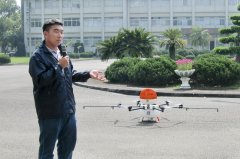
Agricultural drones have wide applications, excelling at spraying, fertilizing and disaster surveying
Nowadays drones are being used more and more widely, and they are also used in agriculture. Let's take a look together. Unmanned aerial vehicles are seen as a promising new capable assistant for the future development of agriculture. Not only has the Civil Aeronautics Administration been busy drafting regulations, under which anything above 250 grams will in future require real-name registration, but all sectors are also actively investing in developing agricultural and other uses of drones. The Agricultural Research Institute of the Council of Agriculture, Executive Yuan, has set up a drone team and is currently building experimental data; in future it is expected to establish a set of operating manuals for farmers to refer to.
-
Do tea leaves have pesticide residues? Should you discard the first infusion?
Pesticides are now found everywhere on agricultural products, and even tea leaves contain pesticides. Some people discard the first infusion when brewing tea, pouring it away and not drinking it. Is this correct? How can you reduce the chance of ingesting pesticides when drinking tea? Director of the Tea Research and Extension Station of the Council of Agriculture
-
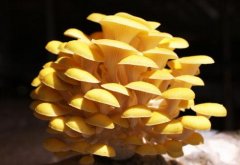
Cultivation method for golden oyster mushroom (Pleurotus citrinopileatus) spawn: which sawdust is best, and does spraying more water make it grow faster?
Mushrooms growing in indoor plants are caused by fungi. Mushrooms are the fruiting bodies of fungi. One of the most common mushrooms found in indoor plants is the golden oyster mushroom (Pleurotus citrinopileatus) spawn. This is a pale yellow mushroom with a pleated or flat cap, depending on how mature they are.
-
Common Pests and Diseases at Each Grape Growth Stage: Spraying and Control Timing
Grape is a very common cash crop, and many people grow grapes. But grape pest and disease problems give many fruit growers a headache. Let's take a look below at which common pests and diseases occur at each grape growth stage, and what to spray. 1. Bud break stage. When the winter buds swell but
-
What precautions should be taken when spraying pesticides in hot weather?
Summer is a period of vigorous growth for many plants, and it is also the peak period of damage from various pests and diseases. Rising temperatures also make it inconvenient to spray crops and can easily cause pesticide damage. So what precautions should be taken when spraying pesticides in hot weather? 1. Avoid high temperatures and strong light
-
How long after spraying foliar fertilizer before it is safe from rain
It depends on the instructions for the foliar fertilizer. If there is no special note, then after it rains there is no need to re-spray. If the precautions state that re-spraying is required when rain occurs 4-6 hours after spraying, then you need to re-spray. Generally, it is only safe from rain 4-5 hours after application.
-
What season is cucumber a vegetable of? Solutions for pesticide phytotoxicity
Cucumbers are crisp and tasty, and can be eaten raw or stir-fried, both ways taste very good, and they are deeply loved by consumers. Cucumber is also one of the foods favored by people who are losing weight, low in fat and highly satiating. Cucumbers are planted in all parts of our country. Let us take a look below at whether cucumbers are
-
When is the most suitable time to spray herbicide on wheat?
Abstract For weeding wheat, generally choose the period after greening (regrowth) and before jointing, that is, late February to mid-March. Before spraying, first check the local weather forecast, and choose clear and good weather with no rain, snow, or strong wind for spraying, when the daily average temperature is stable at 6°C-10°C, at 10 a.m.
-
Soybean Field Herbicide Formula and Optimal Spraying Time
Abstract The herbicide formula for soybean fields is: acetochlor 2kg + fomesafen 1.5kg + thifensulfuron-methyl 20g per mu. Herbicides can be applied after soybean sowing and before emergence, or as a post-emergence stem and leaf treatment at the 3-5 leaf stage of weeds. The pesticide should be sprayed evenly. Generally, it is suitable to apply herbicides on sunny or cloudy days, with no wind or a breeze below level 3, when the temperature is stable above 10°C, and when there is no dew on the leaf surface.
条件筛选