-
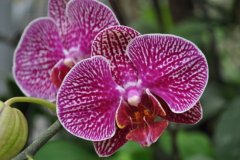
The French spotted Phalaenopsis is beautiful; what are its characteristics?
I believe many orchid enthusiasts are unfamiliar with the term French leopard-spotted Phalaenopsis; the older generation all know this type of orchid, which is a fine variety among Phalaenopsis. Now I will talk about this type of orchid. The French spot is actually a Phalaenopsis with fine leopard-like spots on the middle part of the petals, while
-
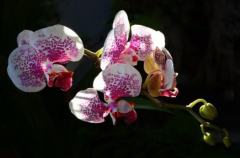
Spotted Phalaenopsis Introduction: Pictures of Phalaenopsis Orchids with Spotted Flowers
Spotted-flower Phalaenopsis, have you ever grown one? This type of Phalaenopsis belongs to the striped-flower group of Phalaenopsis. This orchid was not discovered in our country; it is native to Malaysia. Spotted orchid - just hearing the name tells you it has to do with spots on the flowers. They are generally white flowers with several large red blotches, which is why they are called spotted orchids. Its flowering season is in spring, the lip is red, and the throat is yellow; this orchid is still found only in Malaysia. Its growing location is also quite distinctive: it grows as an epiphyte on trees in mountain rainforests at an altitude of 300-500 m.
-

What are the cultivation methods and precautions for Dieffenbachia seguine (spotted dumb cane)?
Summary Soil: Mix 60% leaf mold, 30% sand, and 10% barnyard manure for cultivation. Light: Needs 2-3 hours of scattered sunlight daily. Temperature: The optimal growth temperature is 20-30°C. Water: Keep the potting soil moist. Ventilation: Place in a ventilated area for cultivation. Fertilization: Apply every half month
-
How to grow Dieffenbachia (spotted dumb cane) in water? Methods and precautions
Dieffenbachia has relatively large leaves and very bright colors, with extremely high ornamental value, so many plant-loving friends will grow a pot of it at home. It can be grown in soil, and it can also be grown in soil, but most friends like growing it in water, and it is said that this way the ornamental effect
-
How to Grow and Care for Dieffenbachia (Spotted Dumb Cane)
If you plant any plant without following the laws of its growth, the end result will be only one: all your previous efforts will be wasted. Dieffenbachia is a relatively easy plant to grow, but growing dieffenbachia still involves many techniques
-
Black-spotted Frog Breeding Technical Manual: Help You Master Scientific Breeding Methods
Abstract Site selection for breeding black-spotted frogs: choose a place with abundant water and good water quality, with a reliable power supply. Build the black-spotted frog breeding pond: dig trenches and build ponds according to the terrain, lay a layer of black anti-seepage plastic film on the pond bottom, and set up a net above the pond. Create
-
Key Technical Points and Daily Management Methods for Black-Spotted Frog Farming
Abstract Select an earthen pond or rectangular cement pond for farming. Shade boards need to be built over the pond surface, and a small amount of floating aquatic plants can be placed in the pond water. Place the collected fertilized eggs of the black-spotted frog into the disinfected ring ditch of the farming pond for hatching, and keep the water temperature at around 20-25°C. After the black-spotted frog tad
-
How Long Does It Take for Black-Spotted Frogs to Be Ready for Market? A Detailed Explanation of the Farming Cycle
Abstract: Farmed black-spotted frogs can generally be marketed in about 6 months. After spawning, black-spotted frogs hatch into tadpoles, and the tadpoles generally complete metamorphosis in about 60 days. At this point, careful rearing is carried out, and appropriately feeding animal-based feed during the farming period can make the black-spotted frogs
-
A Detailed Explanation of Black-spotted Frog Breeding Technology and Management Key Points
Abstract: The breeding environment for the black-spotted frog (Rana nigromaculata): the pond is required to have high dissolved oxygen content, the suitable growth temperature is 20-30°C, and it likes to live in a warm, humid environment overgrown with weeds. Daily management: it fears direct sunlight, so concealed places can be set up in the pond, and vegetables etc. can be planted around it
-
Key Technical Points for Pond Culture of the Orange-spotted Grouper
Orange-spotted grouper (Epinephelus coioides), locally called green grouper or grouper, is currently one of the best varieties for grouper culture. The grouper adapts to a salinity of 15-41, with an optimum salinity of 25-33, and adapts to a water temperature of 6-38°C, with an optimum water temperature of 20-30°C. It can tolerate a low temperature of 6°C, but does not feed below 14°C.
条件筛选