-

What to Do If Silkworms Don't Spin Cocoons? Causes and Solutions
In silkworm rearing, the phenomenon of silkworms not spinning cocoons occurs from time to time, causing certain losses to sericulture production. First, the causes of silkworms not spinning cocoons must be identified, and then measures taken for prevention and control. The main causes are: 1. Pathological factors. For example, flacherie and soft rot infect and develop before mounting, destroying the secretory function of the silkworm's silk glands; or pathogens produce large amounts of toxic metabolites in the silkworm body, paralyzing the nerves so that the silkworm cannot spin silk and form a cocoon. 2. Physiological factors. Abnormal middle silk glands, mainly due to excessively high rearing temperature,
-
How to prevent fish from gasping at the surface? A detailed guide to practical and effective measures
Discharge an appropriate amount of pond water and add fresh water; the suitable time for adding water is around 2-3 p.m. Use aerators reasonably, stop fertilizing, and control fish feeding. Splash quicklime water in small amounts several times to adjust the pH of the water body. Use chlorine dioxide twice in succession to disinfect the water body; before disinfection, an appropriate amount of oxygen enhancer and microecological preparations may be applied.
-
Detailed Explanation of Cultivation Points and Planting Techniques for New Zealand Spinach
Land preparation, base fertilizer application and bed making are the same as for ordinary spinach. In spring, sow early at the right time; early sowing means early harvest, and sowing between February and March is preferable. New Zealand spinach can be sown directly or raised as seedlings for transplanting. Because its root regeneration capacity is weak and seedlings recover slowly after transplanting, direct sowing is mostly used. Sowing methods include broadcast sowing, row sowing and hill sowing, with hill sowing being more common. First open holes 2-3 cm deep, with row spacing and plant spacing of 50 x 30 cm, and sow 4-5 seeds per hole. The seed coat is hard and poorly permeable to water, so it is advisable to soak the seeds for 24 hours before sowing. It generally takes more than 20 days to emerge. When the seedlings have 4-5 true leaves, they can be thinned and harvested
-
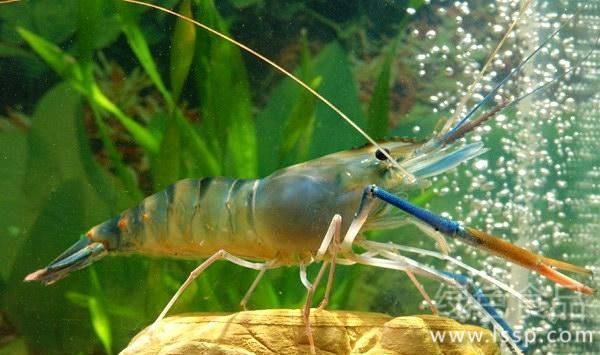
To achieve high yield and good profits from freshwater shrimp and river crabs, grasping six key points is very important
For high yield and good profits from freshwater shrimp and river crabs, grasping the "six key points" is very important
-
Detailed Explanation of New Zealand Spinach Cultivation Techniques and Management Points
(1) Seed preparation: If New Zealand spinach seeds are plentiful, dense sowing or dense planting may be considered, followed by thinning and harvesting, which can increase early-stage yield. New Zealand spinach can be direct-sown or raised as seedlings and transplanted. If New Zealand spinach seeds are insufficient, it is best to raise seedlings and transplant. Direct sowing requires 4-5 jin of seeds. For raising seedlings, plug trays or nutrition pots should be used to reduce root damage, requiring 1.5 kg of seeds. Raising seedlings can save seeds and also allow earlier sowing. Although New Zealand spinach is slow to recover after transplanting, its survival rate is very high. (2) Land preparation, fertilization, and bed making: Because New Zealand spinach has a long growing period, sufficient base fertilizer should be applied
-
Detailed Explanation of the Characteristics and Growth Traits of New Zealand Spinach
New Zealand spinach, also known as New Zealand spinach, foreign spinach, summer spinach, etc. It is an annual semi-trailing herbaceous plant of the genus Tetragonia in the family Aizoaceae. It originated in Oceania. Wild species are currently found in New Zealand, Southeast Asia, and Chile. It is distributed across Asia, the Americas, and Europe, but is not widely cultivated. New Zealand spinach has the characteristics of vigorous growth, strong heat resistance, relatively good drought tolerance, few pests and diseases, and easy cultivation. Its tender stems and leaves are used for food, suitable for cold dishes, stir-frying, and making soup, and it is rich in nutrients. Every 100 grams of the edible portion contains 1.5 grams of protein, 0.2 grams of fat, and 4,400 international units of vitamin A. Vitamin
-
A Detailed Guide to the Occurrence Characteristics and Control Techniques of the Tea Black Spiny Whitefly
The black spiny whitefly mainly feeds on tea plant sap from the undersides of leaves as larvae and excretes honeydew, which attracts sooty mold fungi and induces sooty mold disease; in severe cases, the tea plants turn pitch black. Affected tea plants have reduced photosynthetic efficiency, lower sprouting density, delayed sprouting, thin and weak buds and leaves, and severe leaf drop, which not only affects tea yield and quality but also seriously affects the vigor of the tea plants. I. Occurrence Characteristics This pest has 4 generations per year, overwintering as mature larvae on the undersides of tea leaves, pupating in March of the following year; the peak periods of the 1st to 4th generation larvae are in late May, mid-July, late August, and late September to early October, respectively.
-
Harvesting and Fresh-keeping Methods for Cut Leaves of Japanese Spindle
[Other Chinese Names] Yagi, Dongqing Weimao, Fufangshu, Haiweimao, Huangzhualongshu, Jiaweimao, Maixiang, Japanese Euonymus, Sijiqing, Zhengmu [Family and Genus] Celastraceae, Euonymus [Place of Origin] Japan, China [Plant Characteristics] Japanese spindle is an evergreen shrub or small tree. The plant height can reach 8 m. The branchlets are green. The simple leaves are opposite, obovate or narrowly oblong, 3-6 cm long, with an acute or obtuse apex, a broad wedge-shaped base, and finely blunt-toothed margins, smooth, leathery. [Cut Leaf Harvesting] Harvested part
-
Several Causes of Fish Gasping at the Surface and Their Prevention and Treatment Methods
Fish "gasping at the surface" is a phenomenon that frequently occurs in aquaculture production, and it is also an important sign for judging whether fish are diseased and whether water quality has changed. However, many farmers, after discovering pond fish "gasping at the surface," do not understand the cause and simply apply medication based on "experience," which often proves ineffective and may even cause mass mortality. In fact, fish "gasping at the surface" can be caused by multiple factors. According to the cause, "gasping at the surface" can be divided into the following 3 types. 1. Hypoxia-induced gasping. Hypoxia-induced gasping is caused by excessively low dissolved oxygen content in the water, causing cultured fish to swim to the relatively higher surface
-
What are the patterns of silkworms spinning silk and forming cocoons? A full explanation of the process
The life of a silkworm goes through 4 stages: egg, larva, pupa and adult. The larval stage of the silkworm is what people call the silkworm baby stage. What is usually called sericulture refers to the rearing of the larvae. From hatching to cocoon spinning, the larva must go through 4 molts. People therefore divide the course of the larva into 5 instars. During the period before molting, the silkworm does not eat or move, which is called sleeping. From the first to the fourth instar, the silkworm must sleep 4 times; in the later stage of the fifth instar, it no longer sleeps, but spins silk and forms a cocoon, and pupates inside the cocoon, thereby completing the larval stage of the silkworm. Newly hatched silkworms are called ant silkworms, and newly molted
条件筛选