-

How Do Spiders Survive the Winter? A Detailed Explanation of Spider Overwintering Methods
Spiders are the most abundant predatory natural enemies in terrestrial ecosystems, capable of preying on some pests harmful to agriculture, and play a role that cannot be ignored in maintaining the stability of agricultural and forestry ecosystems. There are many kinds of spiders; according to records, there are 3821 genera and 42
-
How Do Spiders Reproduce? A Detailed Explanation of Reproduction Methods and Process
Spiders reproduce by laying eggs. Before reproducing, they first use spider silk to make something like a "birthing mat," then lay the eggs on it and cover them. The spiderlings that hatch from the egg shells remain inside the egg sac, and they must undergo 1 molt inside the egg sac before leaving it.
-
How to Keep Jumping Spiders? A Complete Guide to Practical Care Methods
Jumping spiders belong to the order Araneae. They are very tiny, yet they run like the wind. Although they are small as animals, they make up the largest family in the order Araneae. So how do you keep a jumping spider? Let's take a look together! 1. How to Keep Jumping Spiders To keep jumping spiders, you can prepare some
-
Is a spider in the house good luck or bad luck? An analysis of spiders' natural enemies
When it comes to spiders, everyone is surely familiar with them. They are almost everywhere, and with their wide variety of species and endlessly diverse shapes, many people are rather afraid of spiders. At home, people sometimes just swat them dead. So is a spider in the house good luck or bad luck? What are its natural enemies? 1.
-
How to Keep Spiders? A Detailed Guide to Care Methods and Tips
Besides some conventional pets, many people also like to keep uncommon animals as pets, and spiders are one of them. How do you keep spiders, which don't seem easy to get close to? 1. How to keep spiders. 1. Prepare a ventilated enclosure, and place coconut coir, sterile soil and other substrates inside. According to the habits of the spider species, place hiding holes and fake trees. Spiders need to catch their own prey. There is no need to put too many unnecessary items in the enclosure. 2. Keep the rearing temperature between 17-25°C and the humidity at around 65%. You can place a small water cup, and put a little cotton in the cup. 3. Mainly feed crickets, locusts, moths, etc. Clean up leftover food debris and regularly replace the coconut coir. This kind of substrate easily breeds bacteria, and if not replaced in time, it can easily cause spiders to get sick or even die.
-
What are bees afraid of? These common factors are worth knowing
Bees are afraid of spiders, praying mantises, dragonflies, frogs, toads, hornets and some small insect-eating birds. They are also afraid of the smell of garlic, smoke, alcohol, gasoline and vinegar. In addition, bees are also very afraid of foam, because once foam gets on a bee's wings,
-
What are the habits of spiders? A comprehensive look at the life patterns of spiders
Spiders mostly live under the eaves or among grasses and trees. They often spin webs facing places that let in light and air, because such places have more insects passing through, allowing them to catch more insects as food. What food do spiders like to eat? Spiders mostly feed on insects, other spiders
-
What are the ten most terrifying venomous spiders in the world?
Many people are afraid of spiders, an animal that not only looks terrifying but is also venomous, and the potency of the venom varies with species, sex, individual size, maturity and season. So, what are the ten most terrifying venomous spiders in the world? Here we introduce them for you.
-

Organic tea gardens have more spiders in both number and species than conventional ones, with better biodiversity
Spiders are natural enemies of tea pests such as the tea mosquito bug (Helopeltis spp.), and tea gardens with abundant spider ecology help eliminate tea pests and are also an important indicator of tea garden biodiversity. Over the past two years, the Endemic Species Research Institute of the Council of Agriculture conducted field spider surveys in the tea areas of Yuchi Township, Nantou County, and
-
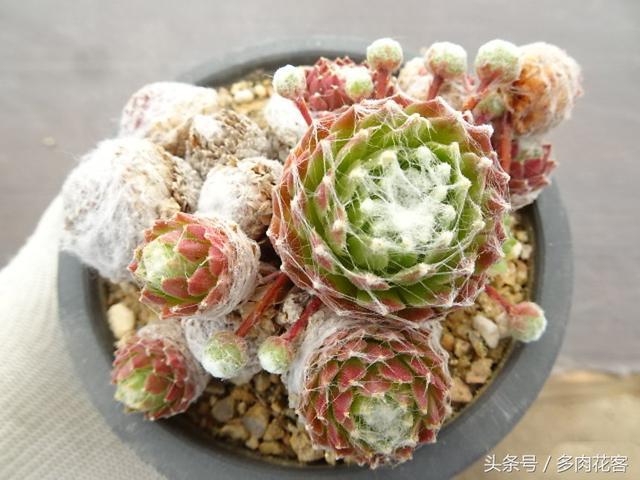
My succulent is covered in spiderwebs. Has it been taken over by spiders?
Has my succulent been taken over by spiders? Why are there so many spiderwebs Are you kidding me? Right, happy Children's Day. This succulent isn't bad, quite pretty. I'll show you how it looks after summer, that's all I can do...
条件筛选