-

Exploring the Artificial Breeding of Chinese Sturgeon: The Ganzhou Dam Spawning Pool
Artificial Breeding of Chinese Sturgeon at the Ganzhou Dam Spawning Pool
-
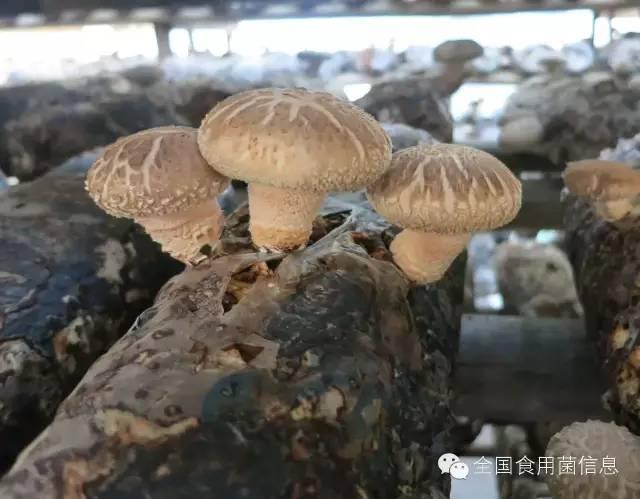
New shiitake variety Qingke 212: short spawn run, high yield - can it replace 808?
Another short-spawn-run, high-yield shiitake variety "Qingke 212" - can it replace "808"?
-

Mushrooms Fragrant, Mushroom Spawn Cultivation Blooming with Vitality
Mushroom Spawn Blooming, Mushrooms Fragrant
-
What are the causes of contamination in Lingzhi (Ganoderma) spawning?
1. Damage contamination (1) Container damage: mechanical damage caused by failure to handle with care during filling, sterilization, inoculation, transport and cultivation. (2) Air-pocket damage: rapid heating, pressure rise or rapid cooling during sterilization; excessive exhaust speed, causing bags to swell with air and rupture. 2. Cotton plug contamination (1) Cotton plug contamination: the test tube mouth is stained with culture medium or the bottle (bag) mouth is not clean, or the culture medium comes into contact with the cotton plug. (2) Cotton plug dampened: improper stacking during sterilization, too much water added, or unreasonably built sterilization stove, or culture
-
Cultivation Season and Spawn Selection Methods for Straw Mushrooms
I. Cultivation Season The optimum temperature for the mycelial growth of straw mushrooms is 30°C-35°C, and the optimum temperature for fruiting body growth is 28°C-30°C. It takes more than 1 month from stacking the substrate to the end of fruiting. Among the currently artificially cultivated edible fungi, it is the mushroom type with the higher temperature requirement and the shortest growth cycle. An appropriate cultivation period can be chosen according to the temperature requirements of straw mushrooms and the different cultivation conditions in each region. II. Spawn Selection It is very important to select high-quality, high-yield varieties according to local conditions and actual circumstances. The criteria for variety selection are high yield, good quality, and strong stress resistance.
-
Preparation method of secondary spawn and production spawn of straw mushroom
Secondary spawn is the spawn made by transferring primary spawn into secondary spawn substrate. Secondary spawn can be used directly as production spawn. Generally, secondary spawn is transferred to the same kind of substrate for expanded culture to become production spawn. Secondary spawn is generally placed in 750 ml mushroom bottles or plastic bags. (1) Preparation of substrate. Formula 1: rice straw 90%, bran (rice bran) 9%, gypsum powder 1%. The preparation method is to select golden-yellow, non-moldy dry rice straw, cut it into 3 cm lengths, soak it in clean water for about 12 hours to
-
Don't Forget to Protect Broodstock During Induced Spawning
Reducing the death of broodstock during induced spawning is an important technical task for fry producers. In production practice we have found that there are two reasons for the death of broodstock during induced spawning: first, the broodstock consumes a great deal of energy during the spawning and reproduction process, and combined with the side effects of the inducing drugs, the body's resistance declines; if the fish is severely injured, various pathogens will seize the opportunity to infect the fish, causing disease and leading to death. Second, the broodstock's constitution is poor, the gonadal development is not good, or the water temperature varies greatly during induced spawning, and the dosage of the inducing drugs is improper
-
What to do when pinheads grow on the spawn blocks after inoculating straw mushrooms
2-3 days after inoculating straw mushrooms, many white pinheads grow on the spawn blocks exposed above the compost, causing the spawn to age and affecting the spawn's mycelial germination, or the mycelium grows but does not colonize the compost. The cause is that the spawn is stimulated by strong light, causing some hyphae to knot prematurely and form pinheads. Control method: when inoculating, do not leave the spawn exposed; it should be sown 2-3 cm deep into the compost, and a straw mulch should be used to shade and keep warm, preventing stimulation by strong light.
-
How can you tell good straw mushroom spawn from bad? You need to know these few methods
Before cultivating straw mushrooms, the quality of the spawn must be assessed, and high-quality spawn should be selected whenever possible. The appearance of high-quality spawn is: thick and sturdy hyphae, uniform development of the upper and lower hyphae, and aerial hyphae that are white or semi-transparent. The specific identification methods are: 1. For spawn used for cultivation, the spawn age is around 30 days, the hyphae are thick, sturdy and dense white, there are light brown chlamydospores on the hyphae, and after removing the cotton plug, the aroma of straw mushrooms can be smelled. This kind of spawn is high-quality spawn; after sowing, it colonises the substrate quickly and grows vigorously. If there are very few chlamydospores, it means the hyphae are still young and tender, and it can be left to continue growing
-
What are the quality requirements for straw mushroom spawn production?
Whether the straw mushroom spawn is isolated by yourself or introduced from elsewhere, it must undergo a fruiting test, and only after confirming it is a high-yielding, high-quality strain may it be expanded for culturing, so as to avoid economic losses. Quality requirements for qualified spawn (for reference): (1) The mycelium is pale yellow and transparent, with many or no chlamydospores (varying depending on the variety), the mycelium is evenly distributed throughout the bottle, and the moisture content of the substrate is suitable (about 65%). (2) The spawn age is appropriate, fresh, robust, and strong in growth vigor. (3) Free of contaminating microorganisms and pests. Any of the following conditions
条件筛选