-
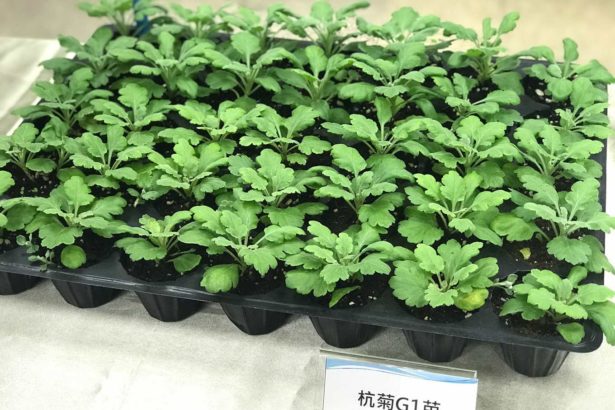
High rate of unqualified pesticide residues in Hangzhou chrysanthemum; seedling nursery develops healthy seedlings to safeguard from the source
High rate of unqualified pesticide residues in Hangzhou chrysanthemum, change from the source! Seedling nursery develops healthy seedlings for more peace of mind when planting
-

Local revitalization policy should be formally codified into law, channeling resources to disadvantaged regions and people
Rural and Local Revitalization 07 / The "Local Revitalization Policy" should be formally codified into law, guiding national resources to disadvantaged regions and people
-
Regional revitalization policy should be legislated to channel national resources to disadvantaged regions and people
Rural and Regional Revitalization 07/The "Regional Revitalization Policy" should be legislated to channel national resources to disadvantaged regions and people
-

What jujube resources does Beijing have? A detailed guide
Fresh-eating jujubes The jujubes planted in Beijing's urban districts are mainly early- and mid-maturing fresh-eating varieties, such as Langjiayuan jujube, Jidan jujube, Gaga jujube, Mayabai jujube, Hongcunbai jujube, Changxindianbai jujube and others. They ripen around the Mid-Autumn Festival on the 15th day of the 8th lunar month (mid-September on the solar calendar). Old Beijingers call this "beating big jujubes on August 15." Langjiayuan jujube is a native and famous product of Beijing and one of the most suitable famous jujube varieties for fresh eating. Its fruit shape is well-proportioned and attractive, its juice is sweet, its flesh is crisp, and its stone is small. When fully ripe it turns entirely red. In the Qing Dynasty it was a tribute to the imperial palace. Its economic value
-
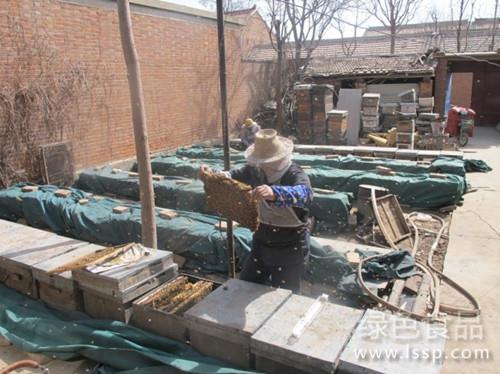
Key points for spring bee management: how to restore colony strength and make use of nectar sources
How to restore colony strength and make use of nectar sources: key points for spring bee management
-
A new late japonica rice variety Xiushui 110 achieves source-sink optimization through morphological type innovation
Xiushui 110 was bred by the Yao Haigen project team of the Jiaxing Academy of Agricultural Sciences in Zhejiang Province using the hybridization method, with the combination Jia 59 Tianza/Bing 95-13. In 2001 it passed variety approval by the Shanghai Municipal Variety Approval Committee, and in 2002 it passed variety approval by the Zhejiang Provincial Variety Approval Committee. In 2004 it received a post-variety subsidy from the Ministry of Science and Technology and the Ministry of Agriculture for the selection and breeding of new high-quality specialized crop varieties and research on breeding technology. In 2004 it won the first prize of the Zhejiang Provincial Science and Technology Award. 1 Morphological type innovation, achieving source-sink optimization
-
Introduction to the Cotton "Dong A" Genic Male Sterile Germplasm Resource
In 1972, a male sterile cotton plant was discovered in the field, and after 3 years and 6 seasons of research, the cotton "Dong A" genic male sterile germplasm was successfully developed. Its male sterility trait is mainly controlled by a pair of recessive nuclear genes. It has the characteristics of stable inheritance of male sterility, easy transfer, strong combining ability, a wide range of restorer lines, a population male sterile plant rate of about 50 percent, and 100 percent male sterility per individual plant. It also has good yield potential and wide adaptability. Using the Dong A genic male sterile germplasm, 1 derivative male sterile line was developed. Among them, several derivative male sterile lines were further combined and screened to produce 12 hybrid
-
Detailed Explanation of Feed Sources and Scientific Feeding Methods for Raccoon Dogs
1 Feed Sources 1.1 Legumes Except for poisonous fish such as pufferfish, most marine and freshwater fish can be used as feed for raccoon dogs. In addition to high protein content, fish also contain fat, vitamin A, vitamin D, and inorganic salts. Their digestibility is almost the same as that of meat, and the energy content varies greatly depending on the fish species. Fresh fish fed raw has higher nutritional value than cooked, but some marine fish and most freshwater fish contain thiaminase, which can destroy vitamin B1. Long-term raw feeding can easily cause vitamin B2 deficiency.
-
How can wild tangli resources be developed and utilized? See the approach in Simao, Yunnan
Tangli is a local name in Simao, Yunnan. It includes several species and also has several folk names, such as tangli thorn, mountain pear, boshali, sour pear, etc. Tangli belongs to the genus Pyrus in the Rosaceae family and is a wild fruit with great development and utilization value. Tangli is distributed across all prefectures and prefectures of Yunnan, growing in mountain forests and wildlands. In some places it naturally forms forests or patches, with abundant reserves. At present, tangli trees in Yunnan are used as rootstock for cultivated pears, the flowers are eaten as a wild vegetable, and the fruit can ripen on the tree. Local people gather it and eat it fresh: in winter there are
-
What are the prospects for developing and utilising the resources of silvervine actinidia?
China is rich in kiwifruit resources and has a long history of cultivation, but these are mainly concentrated in the south. The kiwifruit species produced in Northeast China are mainly three: silvervine actinidia (Actinidia polygama Planch), hardy kiwifruit (A. arguta Planch) and kolomikta vine (A. kolomikta Maxim). Judging from the current propagation, cultivation and utilisation of Northeast China kiwifruit, relevant research is lacking; hardy kiwifruit and kolomikta vine have been introduced and planted sporadically in China, with no successful experience yet
条件筛选