-
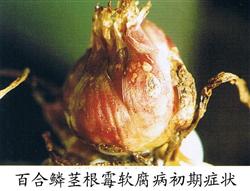
In lily cultivation, what is Rhizopus soft rot of lily bulbs?
What is Rhizopus soft rot of lily bulbs? What harm does Rhizopus soft rot of lily bulbs cause? How is Rhizopus soft rot of lily bulbs prevented and controlled? Netizens are invited to share prevention and control methods. The harm of Rhizopus soft rot of lily bulbs: during storage or transport of lily bulbs, water-soaked spots first appear on the outer skin, then the color darkens,...
-

What are the control methods for soft rot in desert rose?
Desert rose soft rot is a major disease affecting desert rose. The desert rose has gorgeous flowers, blooms profusely, and is a short, sturdy plant; especially the root and stem portions have an ancient, vigorous posture, making it an excellent succulent plant for tropical regions. It has been introduced into our country for more than 10 years and grows well, but the occurrence and damage of its soft rot often causes the entire plant...
-

Detailed Explanation of the Harm and Control Methods of Soft Rot in Orchids
Generally speaking, if an orchid grows very robustly and its root system is very well developed, its disease resistance is relatively strong. If the orchid does not grow well and, on top of that, care is not adequate, then it becomes very prone to disease. In the current season, if ventilation is poor, orchids are very likely to develop soft rot. Soft rot is seriously harmful...
-
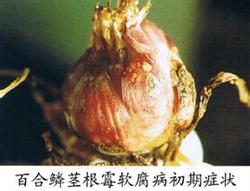
How to prevent and control Rhizopus soft rot of lily bulbs
I. Symptoms of damage: During storage or transportation of lily bulbs, water-soaked spots initially form on the outer skin, which later darken in color and have a slightly pungent odor. The bulbs become soft, and in severe cases, destructive rotting of the bulbs occurs. Sometimes a thick layer of mycelium grows on the bulbs, which is the sporangiophores and sporangia of the pathogen. II. Morphological characteristics of the pathogen...
-

How to prevent and control bacterial soft rot in lilies
Symptoms: The disease affects the bulbs, causing bulb soft rot. Pathogen: The pathogen is Erwinia carotovora (Jones) Bergey et al., a bacterium. Disease pattern: The pathogenic bacteria survive in the soil and in infected plants, spread by rain splash, and invade through plant wounds. Damp conditions favour the occurrence and spread of the disease. Control: ① Plant healthy bulbs in well-drained sites. ② Avoid causing wounds during planting and management,
-
How to prevent and control stem soft rot in lilies?
This disease occurs during the storage and transport of lily bulbs. Symptoms: In the early stage of infection, the affected scales develop water-soaked spots, which later turn dark brown, and the bulb softens and rots. In the late stage, a thick mold layer grows on the surface of the lesions, and within the mold layer many sporangia are produced that are initially white and later turn black. Pathogen: The pathogens are Rhizopus stolonifer (Ehrenb. ex Fr.) Vuill. and Rhizopus nigricans Ehrenb.
条件筛选