In lily cultivation, what is Rhizopus soft rot of lily bulbs?
What is Rhizopus soft rot of lily bulbs? What harm does Rhizopus soft rot of lily bulbs cause? How is Rhizopus soft rot of lily bulbs prevented and controlled? Netizens are invited to share prevention and control methods. The harm of Rhizopus soft rot of lily bulbs: during storage or transport of lily bulbs, water-soaked spots first appear on the outer skin, then the color darkens,...
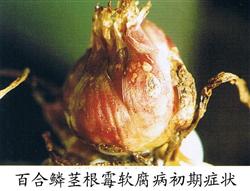 What is Rhizopus soft rot of lily bulbs? What harm does Rhizopus soft rot of lily bulbs cause? How is Rhizopus soft rot of lily bulbs prevented and controlled? Netizens are invited to share prevention and control methods
The harm of Rhizopus soft rot of lily bulbs:
During storage or transport of lily bulbs, water-soaked spots first appear on the outer skin, then the color darkens and there is a slight pungent odor, the bulbs become soft, and in severe cases destructive bulb rot occurs; sometimes a thick layer of mycelium, namely the sporangia and sporangiophores of the pathogen, grows on the bulbs.
Causes of Rhizopus soft rot of lily bulbs:
This fungus exists in the air or adheres to infested bulbs, soil attached to bulbs, packaging materials, dead branches and other parts. The pathogen invades the outer skin of the bulb through wounds, the mycelium spreads to the base of the bulb, and from there spreads to other scales; the sporangia spores in the diseased parts are spread by airflow for secondary infection.
The optimum temperature for disease onset is 15-25°C, with relative humidity of 76-86%. Under poorly ventilated conditions, the bulbs can rot completely within 2-4 days.
Prevention and control methods for Rhizopus soft rot of lily bulbs:
(1) When harvesting bulbs, do everything possible to reduce wounds; during storage, maintain a cellar temperature of 8-10°C and relative humidity of 70-75%.
(2) Bulbs of Oriental lilies can be placed in a 50% benomyl solution at 27-29°C (add 50 g of benomyl per 4.6 L of water) and soaked for 15-25 minutes, which can control Rhizopus stolonifer as well as Penicillium, Fusarium, etc. Other varieties should be tested first before use.
Click to get more lily cultivation techniques
Click to get more flower cultivation techniques