-

Pre-storage Treatment of Potatoes and Several Practical Storage Methods Explained
1. Pre-storage treatment Pretreating the tubers before storage can inhibit potato sprouting and plays a very good role in ensuring storage results. (1) Sun-drying After harvesting, potato tubers can be spread out in the field to dry briefly, releasing some moisture to facilitate storage and transport. Generally, sun-drying for 4h can significantly reduce the incidence of disease during storage. If sun-drying lasts too long, the tubers will lose water and wilt, which is unfavorable for storage. (2) Pre-storage Potatoes harvested in summer coincide with the hot season; after harvest, the potato tubers should be piled in a cool, ventilated room, cellar or shade shed for pre-storage. For
-
How is potato processed? An introduction to several common processing methods
I. Making jam from potatoes. First wash the potatoes clean, remove any rotten or sprouted parts, then peel off the skin, place them in a steamer and steam until cooked, then take them out and spread them to cool. Next, rub them through a grater into a uniform potato mash and set aside. Put white granulated sugar, water and sour water (that is, the sour water used in a vinegar workshop; mix a small amount of thin rice porridge with bran, place it in a vat, transfer it from vat to vat for one week, once a day, and the filtered sour water is used as a vinegar starter) into a pot and boil until 110°C, then pour the potatoes into the pot, and use an iron shovel to constantly turn them, pressing while stir-frying, until the potatoes
-
Several foreign methods of dry rice cultivation can be used for reference.
Hole planting method for dry rice cultivation. This new method was invented by the Tice Farm in New Orleans, USA. Specific operation: on moist no-till land, use a small hole-punching seeder (machine) to punch a hole about 3cm in diameter and 13-15cm deep in the soil. While punching the hole, immediately sow 1-2 rice seeds, then cover the hole with soil and fertilizer, and fill the hole with water while keeping the soil around the hole only moist. Under normal circumstances, no water needs to be given within 40 days after sowing, so that the rice roots grow deep and have a strong root system, which can effectively
-
How to Propagate Lotus Root? A Detailed Explanation of Several Common Methods
-- Lotus seed propagation. Since lotus seeds are covered with a hard shell, first crack open the sunken end of the shell, then soak it in water at 26-30°C to promote germination. Once the sprout emerges, it must still be kept submerged in water to prevent dehydration and shriveling; when it grows to 4 leaves and 1 rhizome runner, it can be planted out in the field. Because lotus seed propagation grows slowly in the early stage, seedlings must be raised in a protected area 1 month in advance so that lotus roots of commercial value can form in the same year. -- Whole lotus root propagation. Plant the entire main lotus root together with its daughter roots and granddaughter roots at a certain row and plant spacing; the planting method is to insert the top end into the mud, with the tail tip exposed
-

A detailed introduction to several propagation methods for lotus root
Several propagation methods for lotus root
-
Introduction to several common propagation methods for lotus root
-- Lotus seed propagation. Since lotus seeds are covered with a hard shell, first crack the sunken end of the shell, then soak it in water at 26-30°C to promote germination. Once the sprout grows, it must still be kept in water to prevent dehydration and shriveling. When it reaches 4 leaves and 1 runner, it can be planted out in the field. Because lotus seed propagation grows slowly in the early stage, seedlings must be raised in a protected area 1 month in advance to form lotus root of commercial value in the same year. -- Whole lotus root propagation. Plant the entire main lotus root together with its daughter lotus roots and granddaughter lotus roots at a certain row and plant spacing. The planting method is to insert the top end
-
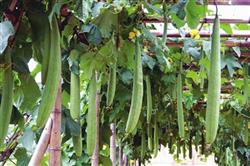
Several Cultivation Methods for Achieving High Yields of Greenhouse Luffa
1. Variety selection. For greenhouse luffa, it is advisable to choose varieties with vigorous plant growth, cold tolerance and strong adaptability, such as the cylindrical luffa. 2. Land preparation and fertilization. Before sowing, in combination with plowing, apply more than 5000 kg of high-quality farmyard manure per mu; after leveling and harrowing evenly, open furrows along the planting rows, and apply another 50 kg of superphosphate and 25 kg of potassium sulfate per mu, ...
条件筛选