-

Detailed Explanation of the Key Management Techniques for Snake Self-Breeding and Self-Rearing
The following points should be noted in the self-breeding and self-rearing of snakes: 1. Seed selection: Every spring, robust and plump female snakes should be selected as breeding snakes. Regardless of whether they are venomous or non-venomous snakes, they generally lay eggs from late June to July. Before and after laying eggs, the female snakes should be fed nutrient-rich food containing plenty of calcium, and they should be allowed to eat and drink their fill as much as possible. Whether the female snake has mated need not be considered; once a female snake mates, she can produce fertilized eggs for five years. 2. Incubation: To prevent the snake eggs from drying out and becoming sunken, the eggs laid should be promptly placed in an incubation vat for artificial incubation,
-
Self-pesticide potatoes successfully cultivated in Belarus
Scientists in Belarus have become the first in the world to cultivate potatoes that can automatically kill pests. A scientist involved in the research said that through experiments they successfully transplanted a special gene into the potato plant, and this gene can continuously produce a toxin lethal to the Colorado potato beetle (the toxin is harmless to humans). Therefore, when the Colorado potato beetle begins to damage the potato stems and leaves, the toxin quickly penetrates the insect's body and poisons it to death.
-
What livestock and poultry diseases can honeysuckle (Japanese honeysuckle, Lonicera japonica) and common selfheal (Prunella vulgaris) treat?
Honeysuckle and common selfheal have the functions of clearing heat and detoxifying, clearing the liver and reducing internal heat, and dispelling wind and unblocking collaterals, and they have a strong inhibitory effect on bacilli and some viruses. Used alone or in combination, they can treat a variety of livestock and poultry diseases. 1. Rabbit heatstroke: 10-15 g each of honeysuckle, common selfheal and Jinji grass, decocted in water and given orally. 2. Piglet white scour: 100 g honeysuckle added to 1000 mL water, decocted down to 500 mL, mix the liquid together with the residue into the feed and feed it to the sow. Feed once each morning and evening, for 2 consecutive days; the cure rate reaches over 98%. 3. Pig eye opacity: affected pig's eye
-
Detailed Explanation of Techniques for Self-Breeding Rice Field Eel Fry
1. Selection and Cultivation of Parent Eels. Eels used for breeding must have a robust physique and swim actively. The body color is best in coarse black mud, yellow-brown, or black speckled, green-brown. The source of parent eels should be those caught in cages the same day with relatively small wounds. Rice field eels (Monopterus albus) have sex reversal characteristics; 1-winter-age and 2-winter-age rice field eels are basically female, and after 2-winter-age rice field eels spawn, the proportion of males gradually increases, until at 6-winter-age they are basically male. During the non-spawning season, it is difficult to distinguish male from female; generally, body length and body weight are used as standards, generally body length 37-50 cm, weight 7
-
New breakthrough in the treatment of self-biting syndrome in foxes, raccoon dogs and minks
Self-biting syndrome is a common disease of captive fur-bearing animals such as foxes and minks. In recent years, it has occurred in many farms and households in China, causing great economic losses. There had been no specific prevention or treatment measures for this disease, and the key point was that the cause had not been identified. Regarding the cause, people had put forward many hypotheses or claims, but these had not truly served to guide prevention and treatment. Since the early 1990s, researchers have carried out some research work on the cause of the disease. In the course of research and experiments, the cause of self-biting syndrome was identified,
-
Discovery of a Wild Self-Seeding Fertile Pinellia Plant and Analysis of Its Utilization Prospects
Since 1988, we have conducted surveys of wild Pinellia ternata variety resources in the Yimeng Mountain area and research on artificial cultivation techniques. During many years of investigation and study, we discovered a single Pinellia ternata plant that can self-pollinate and set seed under wild conditions. After artificial domestication and cultivation, one 1.5 g Pinellia tuber can produce 40 to 50 seeds in one year, thereby solving the problems of low natural seed-setting rate and the lack of five usable [varieties] in production, and opening a path for improving the propagation rate of Pinellia ternata. 1 Botanical characteristics: the plant is 10 cm tall
-
What are the key points of self-breeding and self-raising management techniques for snakes?
The following points should be noted in the self-breeding and self-raising techniques for snakes: 1. Seed selection: Every spring, healthy and plump female snakes should be selected as breeding snakes. Regardless of whether they are venomous or non-venomous, they generally lay eggs from late June to July. Before and after laying eggs, female snakes should be fed nutrient-rich food containing plenty of calcium, and they should be allowed to eat and drink their fill as much as possible. Whether the female snake has mated need not be considered; once a female snake mates, she can produce fertilized eggs for five years. 2. Incubation: To prevent the snake eggs from drying out and becoming sunken, the eggs laid should be promptly placed in an incubation jar for artificial incubation. Temperature must be maintained, and they should be checked and turned regularly.
-
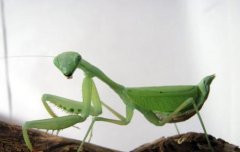
Can you raise a baby mantis yourself? A detailed guide to mantis rearing methods
Using fruit flies to rear baby mantises - have you ever heard of this method of rearing mantises? If you want to learn this ecological rearing method, then let's take a look together. Predatory natural enemies are part of the predatory food chain, such as the mantis stalking the cicada while the oriole watches from behind.
-
Chengfan 3WSH-1050 Self-Propelled Sprayer Price Quotes and Buying Points
Dealer price quotes for the Chengfan 3WSH-1050 self-propelled wet and dry field dual-use sprayer are affected by configuration, region, production batch and other factors. This article introduces the machine's suitable applications, how its price is made up, and points to note when buying, so you can buy with full clarity.
-
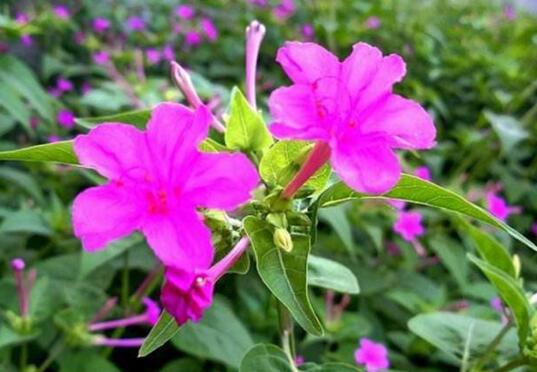
How does the four o'clock flower (Mirabilis jalapa) reproduce? It can self-sow or be sown by hand.
We know that among the effects and uses of the four o'clock flower, its roots and seeds are very useful; the roots have the effect of clearing heat and detoxifying. The powder in the seeds can remove acne and pimples. In fact, besides these uses, they have another purpose, and that is reproduction.
条件筛选