-

The Most Complete Self-Check Table of Breeding Parameters, a Must-Have for Quick Reference by Farmers
Many times we talk about management, talk about nutrition, talk about health care, talk about medication, yet whether a pig farm is run well is judged more by its indicators. Production indicators directly...
-

Detailed Explanation of the Key Management Techniques for Snake Self-Breeding and Self-Rearing
The following points should be noted in the self-breeding and self-rearing of snakes: 1. Seed selection: Every spring, robust and plump female snakes should be selected as breeding snakes. Regardless of whether they are venomous or non-venomous snakes, they generally lay eggs from late June to July. Before and after laying eggs, the female snakes should be fed nutrient-rich food containing plenty of calcium, and they should be allowed to eat and drink their fill as much as possible. Whether the female snake has mated need not be considered; once a female snake mates, she can produce fertilized eggs for five years. 2. Incubation: To prevent the snake eggs from drying out and becoming sunken, the eggs laid should be promptly placed in an incubation vat for artificial incubation,
-
Detailed Explanation of Techniques for Self-Breeding Rice Field Eel Fry
1. Selection and Cultivation of Parent Eels. Eels used for breeding must have a robust physique and swim actively. The body color is best in coarse black mud, yellow-brown, or black speckled, green-brown. The source of parent eels should be those caught in cages the same day with relatively small wounds. Rice field eels (Monopterus albus) have sex reversal characteristics; 1-winter-age and 2-winter-age rice field eels are basically female, and after 2-winter-age rice field eels spawn, the proportion of males gradually increases, until at 6-winter-age they are basically male. During the non-spawning season, it is difficult to distinguish male from female; generally, body length and body weight are used as standards, generally body length 37-50 cm, weight 7
-
New breakthrough in the treatment of self-biting syndrome in foxes, raccoon dogs and minks
Self-biting syndrome is a common disease of captive fur-bearing animals such as foxes and minks. In recent years, it has occurred in many farms and households in China, causing great economic losses. There had been no specific prevention or treatment measures for this disease, and the key point was that the cause had not been identified. Regarding the cause, people had put forward many hypotheses or claims, but these had not truly served to guide prevention and treatment. Since the early 1990s, researchers have carried out some research work on the cause of the disease. In the course of research and experiments, the cause of self-biting syndrome was identified,
-
What are the key points of self-breeding and self-raising management techniques for snakes?
The following points should be noted in the self-breeding and self-raising techniques for snakes: 1. Seed selection: Every spring, healthy and plump female snakes should be selected as breeding snakes. Regardless of whether they are venomous or non-venomous, they generally lay eggs from late June to July. Before and after laying eggs, female snakes should be fed nutrient-rich food containing plenty of calcium, and they should be allowed to eat and drink their fill as much as possible. Whether the female snake has mated need not be considered; once a female snake mates, she can produce fertilized eggs for five years. 2. Incubation: To prevent the snake eggs from drying out and becoming sunken, the eggs laid should be promptly placed in an incubation jar for artificial incubation. Temperature must be maintained, and they should be checked and turned regularly.
-
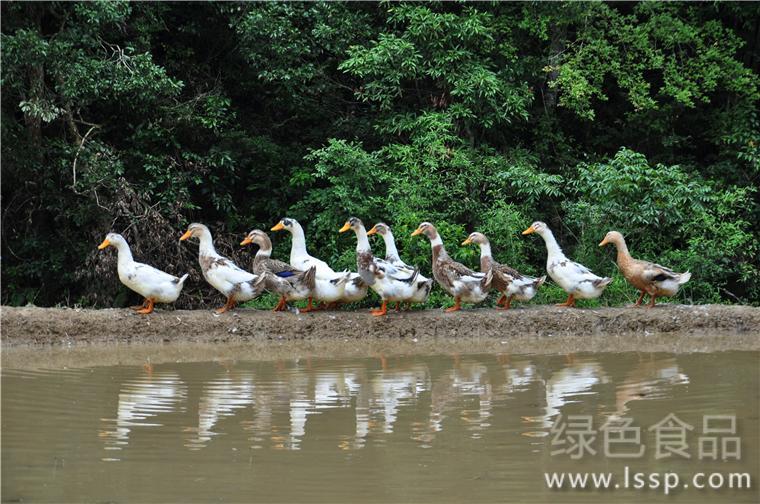
Self-mixing duck feed methods and the nutritional needs and precautions of ducks at different stages
Self-mixing duck feed to meet the nutritional needs of ducks at different stages and precautions
条件筛选