-

The Latest Guide to Rice Seedling-Stage Management Techniques and Methods
Seedbed Temperature Management 1. From sowing until the first leaf tip emerges, focus on heat preservation. Keep the temperature inside the shed at 28-30°C, with the optimum at 25-28°C; maintain 25°C at the 2-leaf stage and 20-22°C at the 3-leaf stage, with the minimum not lower than 10°C. Night temperatures are low, so measures such as turning on electric lights inside the greenhouse
-
Detailed Explanation of the Key Technical Points of the Super "Send-Off" Pesticide Technique for Rice Seedling Beds
Super "Send-Off" Pesticide Technique for Rice Seedling Beds
-
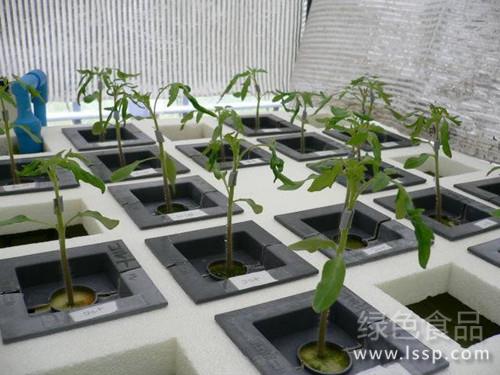
Tomato water cuttings for seedling raising save seedbeds, with fast propagation speed and good results
Less seedbed area and fast propagation speed: tomato water cuttings are both fast and good
-
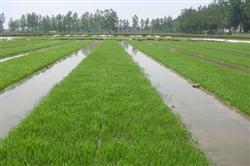
How to carry out chemical weed control in rice seedling beds
How is chemical weed control used in rice seedling beds? Please give an introduction. Chemical weed control in rice seedling beds saves labor, saves effort, and gives good results. However, in production, if the method of use is improper, it will cause herbicide damage, and in severe cases the seedlings must be destroyed and re-raised. Therefore, chemical weed control in seedling beds must master the following use techniques: different seedling-raising methods require different selected herb...
-
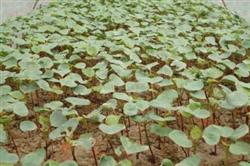
To grow strong cotton seedlings, the seedbed must be protected against five major threats
Common problems in cotton nutrient-cup seedbeds are mainly manifested as drought, waterlogging, disease, fertilizer burn, herbicide damage, and cold damage to seedlings, heat injury to seedlings, and spindly seedlings. The preventive measures are as follows: The moisture content of the cup soil should be moderate. The nutrient-cup seedbed should be located where both drainage and irrigation are convenient. The ideal moisture content of the cup soil is such that it forms a ball when squeezed by hand and breaks apart when dropped to the ground. ...
-
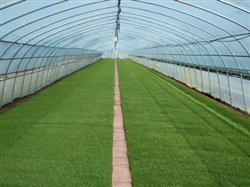
Operating and Maintenance Methods for Rice Seedling-Raising Greenhouse Seedbeds
The rice seedling-raising seedbed greenhouse is mainly composed of a greenhouse frame, light-transmitting covering materials (including plastic film, plastic panels, PC boards, etc.), several individual seedbeds and a spray irrigation system. This device features a compact structure, high land utilization rate and convenient operation. Operating methods 1. Before installation, the site must be leveled...
-
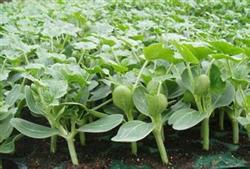
Four key steps to master for raising watermelon seedlings in a heated hotbed
Raising watermelon seedlings in a heated hotbed has the characteristics of fast warming, even temperature, low cost and simple operation. It can cultivate robust watermelon seedlings in January and February when the air temperature is very low, and its seedling-raising effect is similar to that of an electric heating hotbed. 1. Build the seedbed. First dig a bed pool 4.5 m long from east to west, 1.6 m wide from north to south and 0.2 m deep...
-
Key technical points for preventing five hazards and protecting three types of seedlings in cotton seedling beds
Common problems in cotton nutrient bowl seedling beds are mainly manifested as drought, waterlogging, disease, fertilizer, pesticide and frozen seedlings, burned seedlings, and spindly seedlings. 1. Prevent the "five hazards" 1. The water content in the bowls should be moderate. The nutrient bowl seedling bed should be selected in a place convenient for both drainage and irrigation. The water content in the bowls is best when the soil can be pinched into a ball by hand and falls apart upon hitting the ground; 2. After sowing cotton and covering with soil. Water thoroughly in one application, and water until it slowly infiltrates downward; 3. After covering with film, ensure sufficient soil moisture. Do not uncover the film at will, and do not uncover the film until the seedlings emerge completely; 4. Around the seedling bed, drain surface water and filter waterlogged water
-
How should rice seedling beds be managed to cultivate strong seedlings?
I. Water management in seedling beds: For dry-raised seedlings, generally no supplemental water is needed during the seedling stage. Adhere to dry raising and dry management to improve the drought tolerance of the seedlings. At the same time, pay attention to watering well three times: water thoroughly with "bottom moisture water" before sowing, water well with "film-removal water" when removing the film, and water well with "leaf-rolling water" during drought. At the 1-2 leaf stage, control water appropriately to promote downward growth of seminal roots; at the 2-3 leaf stage, pay attention to supplemental water to prevent seedling death; after the 3-4 leaf stage, strictly control water and use dry raising to cultivate physiologically strong seedlings. To prevent excessive rainwater from making dry raising and dry management impossible, small arched sheds or greenhouses can be used to strictly control water for dry raising.
-
Methods for Selecting and Preparing Land for Notoginseng Seedling Beds
Choose a shady slope on the back side, with a gradient of about 5°-10°, well-drained soil, loose texture, and a granular structure of red soil or brown-red soil. A slightly acidic soil with a pH of 5.5-7.0 is suitable, while heavy clay soil easily causes root rot and should not be used. Plow the land multiple times 2-3 months before sowing to a depth of 30 cm to let the soil weather, and at the same time thoroughly remove weeds, tree roots, and stones. In conjunction with plowing, apply 75 kg of lime per mu or 25 g/m2 of 50% carbendazim wettable powder mixed into the soil for soil disinfection treatment.
条件筛选